Heater and Humidifier Combo: A Smart Home Comfort Guide
Learn about heater and humidifier combo systems: how they work, sizing tips, installation basics, cost considerations, and maintenance guidance for homes.


TL;DR: A heater and humidifier combo merges heating and moisture control into one unit, saving space and simplifying operation. It can improve indoor comfort in dry climates, but may offer less precise humidity control than separate devices. For small to medium spaces, a well-sized combo provides convenient, streamlined maintenance.
What is a heater and humidifier combo?
A heater and humidifier combo is a single appliance that provides warmth while regulating indoor humidity. This integrated approach helps maintain comfortable temperatures and avoids the problem of overly dry air that commonly occurs in heated spaces. According to Heater Cost, these combined units can reduce clutter and simplify operation, making it easier for homeowners, renters, and property managers to manage climate control. When sized correctly for the room, a well-designed combo can deliver steady humidity levels and a more balanced indoor climate with a smaller footprint than two stand-alone devices. However, the trade-off is reduced flexibility: you may not achieve the same level of humidity precision as using separate heater and humidifier units, and improper sizing can lead to under-humidification or overheating.
In dry climates or compact living spaces, a heater and humidifier combo can offer practical, space-saving comfort and cleaner air without the need for multiple appliances.
When to consider a combo vs separate devices?
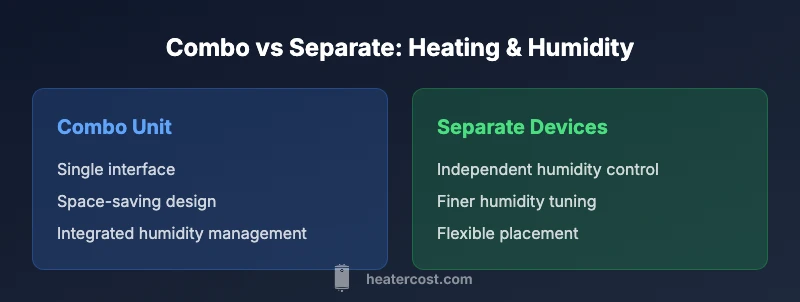
Choosing between a combo unit and separate heater and humidifier devices depends on several factors. If your space is limited, you value a simplified control interface, and your humidity needs are moderate, a combo can be a sensible fit. In contrast, if you require precise zone-based humidity control across multiple rooms, or you have especially dry air or high moisture loads (e.g., plants, winter activities), separate devices may give you more flexibility. The Heater Cost team notes that the decision often comes down to space, climate, and daily routines. For renters or small homes with a single living area, a compact combo can cover both heating and humidity needs with less clutter and fewer remote controls. However, for larger homes or environments with varied humidity requirements, sticking with separate devices typically yields finer control and better performance over time.
A practical way to decide is to map your rooms, list your humidity targets, and consider whether a single control panel can reasonably manage all spaces. If you anticipate frequent adjustments or multi-room balancing, separate devices may be more adaptable. For those prioritizing simplicity and a clean setup, a well-selected heater and humidifier combo can be a solid choice.
Key features to evaluate in a heater and humidifier combo
When reviewing any heater and humidifier combo, focus on features that affect comfort, reliability, and upkeep. Look for:
- Integrated humidity sensor and auto-control so the unit maintains a target relative humidity (RH) without constant manual tweaks.
- Multiple operating modes (eco, boost, sleep) to balance comfort and efficiency.
- Safe, automatic shutoff and tip-over protection, plus overheating safeguards.
- Accessible maintenance indicators and easy-to-clean components.
- A reasonable water reservoir size and low-maintenance filtration options.
- Clear, intuitive controls and a single power cord to minimize clutter.
- Sizing guidance or a built-in calculator to help match the unit to room volume.
Even with a single unit, your ideal combo should align with the space’s dimensions, climate, and occupant needs.
Installation considerations and safety
Proper installation is essential for performance and safety. Place the unit away from flammable materials and ensure adequate clearance for air intake and exhaust. Electrical or gas connections should follow local codes, and a dedicated circuit may be required for larger models. If the unit includes a water reservoir, locate it near a convenient water supply and ensure proper drainage or overflow protection. Regular venting or humidity venting requirements should be observed to avoid moisture buildup in walls or ceilings. For safety, choose a model with automatic shutoff, tip-over protection, and child-proof controls where applicable. In multi-story homes, consider placement that minimizes warm, humid air colliding with cooler surfaces to prevent condensation and mold risks.
Energy efficiency and operating costs
Energy efficiency in a heater and humidifier combo hinges on proper sizing and smart control. An appropriately sized unit avoids oversizing, which wastes energy by fighting constant humidity shifts. Look for units with efficient heat exchange and humidity management that reduce cycling and keep rooms comfortable without overworking the system. Humidity optimization can also prevent drafty or stuffy rooms, which in turn reduces the need for supplemental heating. While exact energy costs vary by climate and usage, selecting an efficient model and using it in modes tailored to your daily routine can lower overall operating expenses and improve indoor air quality over time.
Maintenance, filtration, and longevity
Maintenance is easier when you choose a single unit with accessible internals and simple cleaning routines. Regular tasks include checking the water reservoir for mineral buildup, replacing or cleaning filters if applicable, and sanitizing the reservoir to prevent microbial growth. Follow the manufacturer’s schedule for descaling if you notice mineral deposits or reduced humidity output. Keep the exterior clean to prevent dust from entering fans, and inspect seals periodically for leaks. A well-maintained combo unit tends to sustain performance longer and minimizes the risk of unexpected downtime. Record maintenance dates to establish a proactive service cadence.
Common myths and troubleshooting
Myth: A combo unit cannot meet all humidity needs. Reality: When sized correctly, most combos maintain comfortable RH in a typical living space, though larger or multi-zone homes may require additional devices. Myth: Humidity control is intrusive. Reality: Modern units often feature auto-humidity modes that adjust output to maintain target RH with minimal user input. Troubleshooting tips: check the water level, verify the humidity sensor is calibrated, ensure vents are unobstructed, and reset the unit if it seems unresponsive. If humidity remains unstable, consult the manual or contact support to verify sizing and settings.
Practical setup examples for different homes
Example A: A small apartment with a single living area. A compact heater and humidifier combo can keep the room warm while maintaining comfortable humidity without multiple devices. Example B: A mid-sized two-bedroom home. A mid-range combo placed in the living area can manage humidity for common spaces, with portable humidifiers in bedrooms if zone humidity drifts. Example C: A climate with very dry winters. A high-capacity combo may be suitable for central living areas, supplemented by portable units in bedrooms during peak dry periods. Each setup requires careful sizing to avoid overhumidification in winter and under-humidification in transitional seasons.
Choosing the right model for climate and home size
To pick the right model, start with room volume estimates and target RH ranges. Avoid oversized models that heat quickly but over-humidify, and prefer units with adaptive control that adjust to occupancy and humidity fluctuations. Consider the climate: in drier regions, you’ll benefit from stronger humidity management, while in humid climates you may prioritize dehumidification compatibility in the same unit. Look for reputable brands, clear warranty terms, and reliable service networks. Finally, verify installation requirements and electrical specifications to ensure compatibility with your home’s wiring and safety standards.
Comparison
| Feature | Combo unit | Separate devices |
|---|---|---|
| Integrated controls | Yes (single interface) | No (two interfaces) |
| Humidity control | Auto RH targeting with sensor | Manual or independent humidity controls |
| Maintenance effort | Lower (one device) | Higher (two devices) |
| Noise and space | Compact footprint with single housing | Potentially larger footprint with two units |
| Energy efficiency | Optimized when sized correctly | Depends on two devices’ operation |
| Price range | Higher upfront for a single unit | Lower upfront for two separate devices |
| Best for | Small to medium spaces seeking convenience | Larger spaces or zoned humidity needs |
The Good
- Single interface simplifies operation and reduces clutter
- Space-saving footprint ideal for compact homes
- Integrated humidity management can improve comfort despite dry air
- Fewer devices to monitor and maintain over time
- Potentially smoother humidity control when properly sized
Negatives
- Higher upfront cost for a combined unit
- Less flexibility for zone-specific humidity control
- If the unit fails, you may lose both heating and humidity functions
- Humidity settings can impact perceived heating efficiency if not balanced
Heater and humidifier combo is a strong fit for compact spaces seeking convenience and balanced humidity, especially in dry climates.
Choose a combo when you value a simple setup and fewer devices. For multi-room homes or precise zone control, separate devices may offer better flexibility and fine-tuned performance.
Got Questions?
What is a heater-humidifier combo and how does it work?
A heater-humidifier combo combines heating and moisture control in a single unit, designed to maintain comfortable warmth while preventing overly dry air. It uses an integrated humidity sensor to adjust output and aims to simplify installation and daily use. The system is most effective when properly sized for the space.
A heater-humidifier combo merges warmth and humidity in one unit, keeping comfort simple with auto humidity control.
Is a combo more energy-efficient than separate devices?
Efficiency depends on proper sizing and smart control. A correctly sized combo minimizes cycling and balances heat with humidity, potentially reducing overall energy use compared with poorly matched separate devices.
Efficiency hinges on right size and smart control; when sized well, it can save energy compared to mismatched separate units.
Can one unit heat multiple rooms effectively?
Most heater-humidifier combos are designed for a single primary living area. Larger homes or multiple zones may require additional units or separate devices to achieve uniform comfort.
Usually best for one main space; larger homes may need more devices for even comfort.
What safety features should I look for?
Look for automatic shutoff, tip-over protection, overheat prevention, and child-safe controls. A clearly labeled humidity range and alert indicators add extra safety and convenience.
Seek automatic shutoff, tip-over protection, and clear humidity indicators for safer operation.
How difficult is maintenance for a combo unit?
Maintenance is generally simpler with a single unit, including reservoir cleaning and filter checks if applicable. Follow manufacturer guidance to avoid mineral buildup and ensure consistent humidity output.
Maintenance is usually simpler because it’s one unit; just follow the care instructions.
What are typical price ranges and warranty considerations?
Prices vary by capacity and features, typically higher upfront for a single integrated unit. Check warranty terms and service coverage to protect your investment and ensure support if a component fails.
Prices vary; expect higher upfront for a combo. Verify warranty terms for protection and service.
The Essentials
- Consider a combo for space-saving and simplified operation
- Ensure proper sizing to achieve stable humidity without overshooting
- Weigh upfront costs against long-term maintenance and flexibility
- Prioritize safety features and easy maintenance when evaluating models