Garage Furnace Costs: Install, Maintenance & Tips
Estimate garage furnace costs—from installation and permits to maintenance and energy use. This Heater Cost guide helps homeowners plan upgrades and compare options.


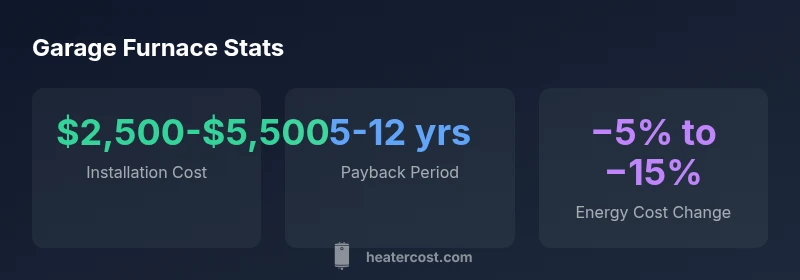
The typical garage furnace installation costs range from $2,500 to $5,500, depending on unit type, ductwork, and permit fees. When choosing, homeowners should consider efficiency, installation complexity, and local energy costs. Heater Cost analysis shows that higher-efficiency models may save money over time, especially in harsher climates. Matching the right furnace to your garage size, climate, and insulation can prevent temperature swings and reduce long-term bills.
Understanding Garage Furnace Types
According to Heater Cost, a garage furnace is typically installed in a detached or attached garage with adequate clearance, safety venting, and a carbon monoxide detector. The most common options are natural gas or propane furnaces and electric furnaces. In many homes, a purpose built cabinet is mounted near the workspace or along an interior wall with simple duct connections to protect indoor living spaces from temperature swings. For homeowners, understanding the basic type differences helps when evaluating quotes from HVAC pros and planning for future upgrades. Gas furnaces provide reliable heat in cold climates, electric units are quieter and easier to install in smaller garages, and dual fuel configurations can combine advantages. When choosing between options, consider fuel availability, local energy costs, and the space you must heat. The discussion also highlights safety features, such as CO detectors and proper ventilation strategies that protect the adjoining living areas.
Sizing, Load Calculation, and Efficiency
Size matters for a garage furnace. An oversized unit heats the space quickly but wastes energy and shortens equipment life, while an undersized unit struggles during cold snaps. A professional should perform a load calculation (often a manual J calculation) and consider insulation levels in the garage, ceiling height, and door openings. Efficiency matters too: higher efficiency models convert more of the fuel into usable heat and typically operate with lower running costs over time. In practice, many homeowners find that upgrading to a more efficient unit yields meaningful energy savings even in modestly insulated garages. Efficiency ratings indicate potential savings, but climate and usage patterns determine real results. The role of proper duct design and sealing should not be underestimated, as leaky ducts undermine performance and raise bills.
Installation, Permits, and Code Compliance
Garage installations are subject to local building codes and permit requirements. Costs vary with permit type, whether new gas lines or electrical work is needed, and whether ductwork must be extended or retrofitted. The installer should verify clearances from walls, ceilings, and flammable materials, and ensure proper venting and combustion air access. Consider carbon monoxide detectors and alarms as essential safety features. As a rule, keep the furnace away from living spaces and ensure accessible service clearances. Securing permits early can prevent delays and avoid costly changes later, according to Heater Cost analysis. Working with a licensed professional helps ensure compliance with local codes and accurate sizing.
Cost Components: Equipment, Labor, and Accessories
A garage furnace project comprises multiple cost layers beyond the equipment price. Major elements include the furnace unit, installation labor, venting and gas line work, electrical connections, ductwork or zone controls, and potentially a new thermostat or smart controller. Many quotes also include a basic startup and a one-year service window. In addition, you may incur costs for safety features such as CO detectors, leak tests, and combustion air upgrades. While some homeowners attempt DIY projects for smaller tasks, furnace installation should be performed by licensed professionals to meet code requirements and safety standards. The breakdown helps homeowners compare apples to apples when requesting estimates.
Operating Costs and Energy Savings
Operating costs depend on fuel type, local energy prices, and usage patterns. A garage furnace generally consumes more energy during extreme winter spells, but high efficiency units typically offset some of that cost with better heat extraction and lower waste. Retrofitting insulation, sealing leaks, and using a programmable thermostat can further reduce energy consumption. In regions with dramatic temperature swings, even incremental improvements in insulation and aerodynamics around the garage can yield noticeable savings. Heater Cost analysis emphasizes evaluating long-term savings rather than just upfront price, especially when comparing mid-range versus premium models.
Maintenance and Longevity
Regular maintenance extends the life of a garage furnace and preserves safety. Homeowners should schedule annual professional inspections, replace air filters as needed, clean or replace burners, test safety switches, and verify CO detectors are functioning. Cleaning ducts and verifying proper airflow helps maintain efficiency and comfort. A well maintained unit tends to run more reliably and with fewer interruptions, reducing the risk of emergency service calls. The maintenance interval may vary by model and usage, but a proactive plan minimizes unexpected breakdowns and keeps operating costs predictable.
Planning Your Garage Furnace Project
Start with a professional energy assessment and a clear scope of work. Collect multiple quotes, verify licensing and insurance, and request a detailed itemized breakdown that includes equipment, labor, permits, venting, duct modifications, and any required electrical work. Confirm warranty terms and the installer’s clean up and post installation support. Establish a rough timeline for ordering parts, scheduling permits, and performing the installation. With careful planning, you can align installation with the heating season and minimize downtime for your home.
Final Considerations: Replace or Repair?
If your existing garage furnace is aging or requires frequent repairs, replacing with a higher efficiency model can offer longer term value. Evaluate total cost of ownership, including the expected lifespan, energy costs, and maintenance needs. A reliable dealer can provide a cost comparison that considers your garage size, climate, and insulation. Heater Cost recommends weighing upfront investment against the potential energy savings and improved comfort over time.
Garage furnace cost and cost-saving overview
| Aspect | Typical Range | Notes |
|---|---|---|
| Installation Cost | $2,500-$5,500 | Includes unit, labor, and basic permits |
| Payback Period | 5-12 years | Depends on climate and energy prices |
| Annual Maintenance | $100-$200 | Regular service required for longevity |
| Energy Cost Change | −5% to −15% | Savings with higher efficiency |
Got Questions?
What is the typical cost to install a garage furnace?
Cost varies by unit type, ductwork, and permit requirements. Expect a broad range and obtain multiple quotes.
Garage furnace installation costs vary; get several quotes and check permits.
Is it safe to install a furnace in a detached garage?
Yes, with proper clearances, venting, fuel supply, and CO detectors. A licensed installer ensures compliance with safety codes.
Yes, with proper safety clearances and detectors installed by a pro.
Do garage furnaces require permits?
Most jurisdictions require permits for new gas lines, electrical work, or duct alterations. Check local codes before starting.
Permits are typically required; check your local codes before starting.
Can I install a garage furnace myself?
Furnace installation should be performed by licensed professionals due to safety and code requirements.
It’s best to hire a licensed pro for safety and compliance.
What maintenance does a garage furnace need?
Annual professional inspection, regular air filter changes, burner cleaning, and CO detector tests keep it safe and efficient.
Annual checkups, regular filter changes, and detector tests keep it running well.
“A properly sized and maintained garage furnace can be a reliable, cost-effective heat source for a detached space. The key is balancing upfront costs with long-term energy savings.”
The Essentials
- Get multiple quotes before committing to a model
- Aim for high efficiency to maximize long-term savings
- Budget permits and ductwork when planning installation
- Ensure proper ventilation and CO monitoring in the garage
- Schedule annual maintenance to protect longevity