How to Clean Heater Ducts: A Complete Guide for 2026
Learn how to safely clean heater ducts, assess DIY viability, and maintain indoor air quality. This guide covers practical steps, safety, costs, and maintenance for homeowners in 2026.


With this guide you will learn how to safely clean heater ducts, decide when DIY is appropriate, and what tools you'll need. You'll complete a prep check, access the ductwork, remove debris, and verify your system's performance. The article emphasizes safety, proper containment, post-clean maintenance, and protecting indoor air quality for healthier homes, and reducing allergy symptoms in the family.
What clean heater ducts means and why it matters
Clean heater ducts refer to removing dust, debris, mold, and other contaminants from the air distribution paths that feed your home heating system. When these ducts stay dirty, your furnace or heat pump has to work harder to push air, which can raise energy costs, reduce comfort, and degrade indoor air quality. For homeowners, the phrase clean heater ducts should be more than a goal; it signals ongoing maintenance of your heating system and home environment. According to Heater Cost, regular attention to duct cleanliness can help you track the condition of the system, identify potential problems early, and keep your HVAC running efficiently. While a full cleaning isn’t always necessary, many homes benefit from periodic inspection plus targeted cleaning of registers, plenums, and accessible duct runs. Before you start, understand what parts you are cleaning and what you’re not cleaning; some components, such as insulated ducts with embedded asbestos in old houses, require professional handling. By the end of this guide, you’ll know when DIY is appropriate, what tools to gather, and how to verify that the job has been done properly.
Contaminants found in ducts
Ducts can accumulate a variety of contaminants over time, including household dust, pollen, pet dander, and skin cells. More concerning are signs of mold growth or moisture damage, which can release spores and odors into living spaces. Debris from rodents or insects can also become lodged within sections of the ductwork. The presence of these contaminants not only affects air quality but can lead to allergy flare-ups, respiratory irritation, and odors that linger after heating cycles. Regular inspections help identify buildup before it becomes a bigger problem. If you suspect mold or significant moisture intrusion, it’s wise to consult a professional and consider a more thorough assessment.
Safety considerations and when to call a pro
Safety should be the top priority when cleaning heater ducts. Access panels may require tools and careful handling to avoid damaging ductwork. Working near electrical components, pressure housings, or insulation carries risks if you drip water or cleaners onto live parts. If your system contains asbestos-containing materials (common in very old homes), do not attempt DIY cleaning; licensed professionals must handle the work. Signs you should hire a pro include extensive mold, unknown insulation conditions, or ducts that are damaged, separated, or improperly sealed. A professional service can perform a thorough cleaning using specialized equipment and follow safety protocols to minimize exposure to dust and allergens.
How duct cleaning works (overview)
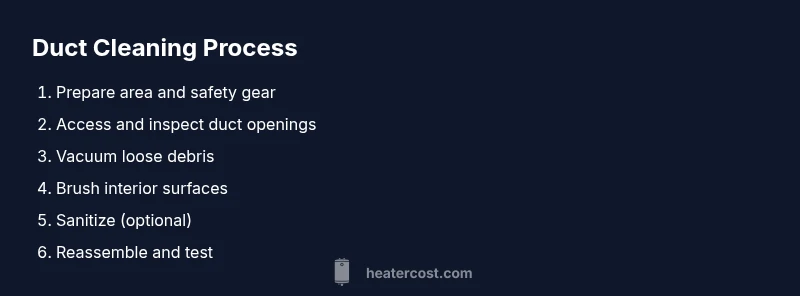
Duct cleaning generally involves accessing duct runs, attaching a containment system to prevent dust from escaping into living spaces, and then cleaning interior surfaces with a combination of suction, brushes, and sometimes sanitizer. The process aims to remove accumulated dust, debris, and microbial growth. In some cases, technicians will clean registers and diffusers separately for improved air distribution. A quality cleaning should result in cleaner supply air, easier system operation, and better indoor comfort. The overview below serves as a roadmap for what to expect during a professional cleaning or a careful DIY job.
Signs your ducts might need cleaning
Look for visible dust buildup around registers, musty odors when the system runs, increased dust in living spaces shortly after cleaning, or reduced airflow from vents. Energy bills creeping up without obvious cause can also signal clogged ducts. If you notice signs of moisture or mold, address the moisture source first and seek professional assessment. Regular maintenance, including filter changes and annual inspections, can prevent many of these issues from escalating.
Cleaning different duct materials and configurations
Metal ducts are typically easier to clean than flexible or insulated ducts, which can trap dust in folds and insulation. If ducts are lined with fiberglass or mineral wool, avoid aggressive brushing that could loosen fibers; instead, work with soft brushes and low-pressure suction. For compact or hard-to-reach runs, technicians may use specialized cameras or access points to guide cleaning. Always respect manufacturer guidelines for cleaning products and avoid soaking insulation materials, which can promote mold growth and damage.
DIY vs professional cleaning: decision framework
DIY cleaning is reasonable for small homes with accessible, metal ductwork and no moisture or mold issues. It’s essential to use proper PPE, containment, and a plan to avoid dispersing dust into living areas. If your ductwork is extensive, has moisture problems, or you encounter mold or asbestos concerns, hire a licensed pro. A professional will have higher suction power, specialized brushes, and air-quality testing options to verify results. Use your judgment and the complexity of your system to decide.
Costs, time, and value: what to expect
Costs for duct cleaning vary widely based on home size, duct length, accessibility, and whether sanitizers or mold remediation are involved. Typical ranges often depend on the scope of the project and regional labor rates. Energy costs may see a modest improvement after a thorough cleaning, especially if airflow was restricted. Based on Heater Cost analysis, 2026, you can expect a range rather than a precise number and should budget for contingencies if issues like moisture or mold are found. The potential for improved indoor air quality and system efficiency often justifies the investment when the home is older or heavily lived-in.
How to choose a reputable duct cleaning service
Start with licensed, insured providers who offer written estimates and transparency about containment practices. Check references and read reviews focused on indoor air quality and safety. Ensure technicians use HEPA-equipped vacuums and avoid high-ozone sanitizers unless clearly indicated as safe and necessary. Ask about the cleaning method, the extent of duct cleaning (registers, plenums, main trunks), and whether any cameras will be used to verify results. A reliable company will discuss potential risks and set realistic expectations.
Maintenance after cleaning and preventive tips
To protect your investment, replace or upgrade air filters regularly, seal leaks around supply registers, and keep moisture in check through proper humidity control. Regular inspections—at least once a year—help catch early signs of buildup, while keeping a record of cleaning dates can guide future maintenance. If you have pets or live in a dusty environment, more frequent checks may be warranted. Establish a routine that combines filter changes, visual checks of accessible duct sections, and a reminder to schedule a professional assessment when you notice signs of contamination or reduced airflow.
Authority sources and references
For more information on duct cleaning and indoor air quality, consult reputable sources such as the U.S. Department of Energy and the U.S. Environmental Protection Agency. These organizations provide guidance on when cleaning is appropriate and how to mitigate risks associated with duct work. See the linked resources under Authority Sources for details.
Tools & Materials
- HEPA-filtered shop vacuum(Efficient dust capture; attach proper hose for ducts)
- Non-marring screwdriver set(Access panels and registers)
- Duct cleaning brush kit(Soft bristles to avoid damage)
- Flexible duct brush (metal ducts)(Reach interior bends)
- Microfiber cloths(Wipe surfaces and diffusers)
- Safety PPE (gloves, safety goggles, N95 mask)(Protect from dust and debris)
- Drop cloths or plastic sheeting(Contain dust and debris)
- Ladder or sturdy step stool(Safe access to ceiling vents)
- Gloves and cleaning solution(Mild detergent for diffusers if needed)
- Sealant tape/duct tape(Seal minor leaks after cleaning)
Steps
Estimated time: 2-4 hours
- 1
Prepare the workspace and safety gear
Shut down the HVAC system and power. Clear furniture and lay drop cloths. Put on PPE and ventilate the area to reduce dust exposure. Focus on a path to vents and plan your route.
Tip: Double-check the power is off and test the airflow by briefly opening a register after shutdown. - 2
Access and inspect duct openings
Remove panels or registers to gain access to visible duct runs. Note any moisture, mold, or obvious damage. Photograph problem areas for reference and mark any entries you plan to clean.
Tip: Use proper ladder safety; avoid overreaching to prevent falls. - 3
Vacuum loose debris from ducts
Attach a long vacuum nozzle and gently remove dust near the openings. Vacuum from accessible sections toward the central trunk to minimize dust migration. Stop if you encounter resistance or damaged insulation.
Tip: Keep the vacuum running with a tight seal; avoid pushing debris deeper into the system. - 4
Brush interior surfaces and diffusers
Use a duct brush to loosen embedded dust inside accessible ducts and diffusers. Work in short strokes and vacuum up debris as you go. Do not bend or crush insulation during this step.
Tip: Be gentle with fiberglass or mineral wool insulation to avoid fiber release. - 5
Optional sanitization and deodorizing
If you choose sanitizers, apply per product instructions, avoiding contact with damp insulation. Allow treated areas to dry thoroughly before reassembly.
Tip: Only use products designed for HVAC use; follow label directions carefully. - 6
Reassemble, test, and replace filters
Reinstall panels and registers, restore power, and run the system to observe airflow and noises. Replace or upgrade filters to maintain air quality and prevent immediate re-contamination.
Tip: Document the cleaning date and set a filter replacement schedule.
Got Questions?
Is it safe to clean ductwork yourself?
DIY cleaning can be safe for simple, accessible ducts if you follow proper PPE, containment, and avoid disturbing insulation or mold. Complex systems or signs of moisture require professional assessment.
DIY cleaning can be safe for simple ducts if you wear PPE and control dust; for moisture or mold, call a pro.
How often should heater ducts be cleaned?
There’s no one-size-fits-all interval. Homes with pets, high dust, or moisture issues may benefit from every 3-5 years. Otherwise, annual inspections help catch buildup early.
Annual inspections help catch buildup early; more frequent cleaning may be needed with pets or dust.
What signs indicate ducts need cleaning?
Visible dust around vents, musty odors, increased allergy symptoms, or reduced airflow are common signs. If you see moisture or mold, address moisture first.
Look for musty smells, more dust, and weaker airflow; moisture or mold means call a pro.
Will cleaning improve energy efficiency?
Cleaner ducts can improve airflow and reduce strain on the furnace, potentially lowering energy use. The degree of improvement varies by system and home.
Cleaner ducts can improve airflow and reduce energy use, but gains vary by home.
Should I use chemical sanitizers in ducts?
Some sanitizers are approved for HVAC use, but they aren’t always necessary and can cause odors or residue. Follow manufacturer guidelines and consult a pro.
Sanitizers may be used in some cases, but check guidelines and consult a pro.
How do I pick a reputable duct cleaning company?
Look for licensed, insured technicians, clear written estimates, and transparent containment practices. Ask for before/after photos and references, and beware aggressive upselling.
Choose licensed, insured pros with clear estimates and good references.
Watch Video
The Essentials
- Plan safety-first and cover the work area.
- DIY is feasible for simple, accessible ducts with metal paths.
- Professional cleaning is recommended for mold, moisture, or complex systems.
- Regular maintenance extends cleaning benefits and improves air quality.
- The Heater Cost team recommends annual check-ins for aging systems.