Is Underfloor Heating Easy to Install: A Practical Homeowner Guide
Discover whether underfloor heating is easy to install, compare electric and hydronic systems, plan for subfloors and insulation, estimate costs, and learn step-by-step setup tips from Heater Cost.


Is underfloor heating easy to install? For DIY-minded homeowners, electric mats in small spaces can be doable, but larger or retrofit projects—especially hydronic systems—typically require professional planning, permits, and skilled trades. This guide outlines what to expect, which system suits your home, and when to hire a pro. According to Heater Cost, success hinges on planning, tools, and clear scope.
Is Underfloor Heating Easy to Install? What Homeowners Should Know
Is underfloor heating easy to install? The answer hinges on system type, subfloor, and project scope. According to Heater Cost, some DIY-friendly electric mats can be laid in smaller rooms by a capable homeowner, while hydronic loops—especially in retrofits or slab installations—usually demand professional planning, permits, and trades. The Heater Cost team found that the most important factors are pre-project planning, accurate heat-loss calculations, and respecting manufacturer installation guidelines. When you frame the question around your space, budget, and timeline, you’ll see that there are genuinely approachable paths for DIYers in some cases, and clearly professional routes for others.
The takeaway is not to rush through the planning phase. If you’re retrofitting into a finished space, expect practical constraints such as floor height changes, impact on existing flooring, and potential disruption. For new builds, there’s more room to align layout, insulation, and room-by-room zoning with the heating strategy. Throughout this article we’ll differentiate between electric and hydronic systems, highlight planning considerations, and offer a realistic sense of effort, time, and potential cost without assuming perfect conditions.
Tools & Materials
- Measuring tape (minimum 5 m / 16 ft)(Accurate room measurements and layout drafts for heating zones)
- Utility knife or straight edge(Cutting mats and insulation boards cleanly without damaging cables)
- Pliers and wire cutters(Wiring connections and sensor leads need clean cuts and secure connections)
- Digital multimeter or voltage tester(Electrical checks and safety verification before energizing the system)
- Thermostat with floor sensor (programmable)(Controls and feedback for room-by-room comfort)
- Underfloor heating mats/cables (electric) or PEX tubing and manifold (hydronic)(Choose the system type that matches your space and budget)
- Floor insulation and reflective barrier(Improves efficiency and reduces heat loss into the substrate)
- Floor covering compatible with underfloor heating(Check manufacturer guidelines for adhesives and tolerances)
- Gloves and safety goggles(Personal protective equipment for cutting and installation)
- Chasing tools or router (for concrete/subfloor channels, if retrofitting)(Optional for retrofit projects where channels must be created)
Steps
Estimated time: 4-8 hours (plus possible additional time for retrofits and permits)
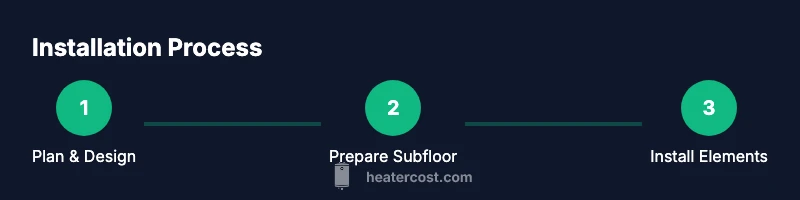
- 1
Assess space and system choice
Evaluate room sizes, floor types, and whether you are installing electric mats or a hydronic system. Confirm ceiling height, door thresholds, and furniture layout to determine heat zones and zoning strategy. This step sets the scope and budget before any material buys.
Tip: Document room-by-room heat objectives and note any non-structural flooring constraints. - 2
Plan layout and zoning
Map heating zones to rooms or subareas, considering heat loss and desired comfort levels. For hydronic systems, plan pipe routing and manifold locations; for electric systems, plan mat or cable placement and spacing.
Tip: Create a simple sketch with zones and temperature targets to guide cable or pipe placement. - 3
Prepare subfloor and insulation
Ensure the subfloor is clean, dry, and structurally sound. Install insulation boards and a reflective barrier where applicable to maximize efficiency and reduce heat loss.
Tip: Use moisture barriers in concrete slabs and sealed edges to prevent cold spots. - 4
Install heating elements
Lay electric mats or lay PEX tubing as per the plan. Secure cables and route to the thermostat sensor locations. For electric mats, ensure proper overlap and spacing; for hydronic, connect loops to the manifold.
Tip: Do not cross cables or create sharp bends; maintain manufacturer-recommended layouts. - 5
Connect controls and sensors
Install floor sensors and connect the thermostat. Ensure safety clearances and proper grounding. Program initial temperature targets and test individual zones before covering with flooring.
Tip: Run a preliminary test with the system off, then perform a controlled energize test under supervision. - 6
Test, seal, and finish
Power up and verify heat distribution across zones. Allow the floor to reach stable temperatures before installing final flooring per manufacturer guidelines. Document settings for future reference.
Tip: Keep a log of commissioning data and any anomaly readings.
Got Questions?
Is underfloor heating easy to install for a DIY homeowner?
In small spaces with electric mats, a confident DIYer can handle installation following manufacturer instructions. Larger or retrofit projects, especially hydronic systems, typically require professional planning, permits, and trades.
In some small electric setups, DIY is feasible, but larger projects usually need a pro.
What components do I need for electric underfloor heating?
You’ll need heating mats or cables, a compatible thermostat with a floor sensor, a conductive adhesive or thin-set as recommended by the manufacturer, insulation, and appropriate floor covering. Proper electrical connections and zoning are essential.
Electric mats, thermostat with sensor, insulation, and floor covering are the essentials.
Do I need permits to install underfloor heating?
Local requirements vary. Many jurisdictions require permits for hydronic installations or any electrical work beyond simple replacements. Check with your local building department and an electrician before cutting into floors or slabs.
Check with your local building department; permits are often needed for hydronic and electrical work.
Which flooring types work best with underfloor heating?
Most floors work, but the ideal pairing depends on the system. Ceramic, porcelain tile, and engineered wood generally perform well, while solid wood may require careful temperature limits to prevent damage.
Tiles and engineered wood are common favorites, but always follow manufacturer temperature guidelines.
Can I retrofit underfloor heating under existing floors?
Retrofitting is possible in many cases but often more complex and disruptive than new construction. You may need to remove or lift flooring, adapt subfloor, and reroute wiring or piping.
Retrofitting can be done, but it can be more involved and may require professional planning.
How long does underfloor heating last and what maintenance is required?
Underfloor heating systems are designed for long life, with most components lasting many years. Regular thermostat checks, sensor calibration, and periodic system testing are recommended to ensure consistent performance.
With regular checks and proper maintenance, it lasts a long time.
Watch Video
The Essentials
- Plan carefully before buying materials
- Choose electric or hydronic based on space and retrofit needs
- Insulation and proper floor covering are crucial for efficiency
- Expect some DIY feasibility in small electric installs, but potentially professional help for larger jobs
- Schedule permits if required by local building codes