Radiant Floor Heating Systems: A Comprehensive Guide
Explore radiant floor heating systems, compare hydronic and electric options, estimate installation costs, and learn how insulation, controls, and maintenance affect comfort and energy use.


According to Heater Cost Analysis, 2026, radiant floor heating systems provide uniform warmth across rooms, using electric mats or hydronic tubing embedded in the floor. They’re typically more efficient than traditional radiators when paired with insulation and a programmable thermostat. Installation and material costs vary with system type and home size, but homeowners often see long-term energy savings.
How radiant floor heating systems work
Radiant floor heating systems warm a space from the floor up, delivering comfortable heat with minimal air movement. Electric variants use heating mats or film embedded in the floor layers, while hydronic systems circulate warm water through tubing laid in a concrete or subfloor structure. Heat radiates upward, balancing room temperatures with zoning and thermostat control. The building envelope—insulation, air sealing, and floor finish—plays a critical role in performance and energy use. In well-insulated homes, radiant floors can maintain steady comfort at lower ambient temperatures, reducing energy demand and improving overall efficiency.
Hydronic vs electric radiant floors: which is right for you?
Choosing between hydronic and electric radiant floors hinges on project scope and long-term goals. Hydronic systems are often preferred for large spaces or whole-home heating, typically installed during new construction or major remodels; they rely on a boiler or heat pump to circulate warm water through tubing installed beneath the floor. Electric systems are common for retrofit projects or smaller areas like bathrooms or kitchens, with mats or films that heat quickly and install with relatively low disruption. Electricity costs drive operating expenses for electric systems, while hydronic costs depend on boiler efficiency, fuel prices, and system design. In practice, a hybrid approach or zoning strategy can offer the best balance of upfront cost and long-term comfort.
Key benefits for homes and energy efficiency
Radiant floor heating delivers uniform heat, minimizes drafts, and creates a warm, comfortable environment. When paired with proper insulation and smart zoning, these systems can improve energy efficiency by allowing lower thermostat setpoints while maintaining comfort. Floors that stay warm after the heating cycle end improve perceived warmth, and the absence of bulky radiators frees interior space. The quiet operation and reduced air movement also benefit allergy sufferers. While initial installation costs are higher than some traditional heating options, long-term energy savings and increased home comfort often justify the investment, especially in new construction or major renovations.
Installation scenarios and cost ranges
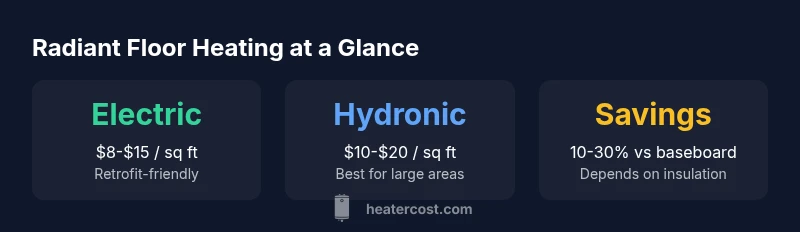
Costs vary by system type, home size, and project scope. Electric radiant floors install quickly and with less disruption, making them popular for retrofits in bathrooms and kitchens. Hydronic systems require more extensive materials, piping, and integration with a boiler or heat pump, resulting in higher upfront costs but potentially lower operating costs over time in larger homes. In general terms (per Heater Cost Analysis, 2026), electric systems sit around $8-$20 per square foot installed, while hydronic systems range roughly $10-$25 per square foot for full installs. Don’t forget ancillary work like insulation upgrades, subfloor preparation, and durable floor finishes. A staged approach can help manage cash flow and minimize downtime.
Insulation, floor finish, and comfort considerations
Insulation is the cornerstone of operational efficiency for radiant floors. Without adequate insulation, heat escapes, undermining comfort and raising energy use. A well-sealed building envelope plus high-quality subfloor insulation dramatically improves performance. Floor finish matters too: tile and stone conduct heat well, while some hardwood floors require compatible underlays or thickness adjustments to prevent overheating. Plan for zoning controls and programmable thermostats to exploit thermal inertia and targeted warmth. The goal is consistent comfort with minimal heat loss, achieved through thoughtful design before installation.
Operating costs, energy use, and thermostat controls
Operating costs depend on electricity or fuel prices, but radiant floors can deliver comfort at lower temperatures when paired with good insulation and tight envelopes. Electric systems are powered by local electricity rates, while hydronic systems rely on boilers or heat pumps and may leverage existing heating infrastructure. Zoning lets you heat only occupied rooms, lowering energy use. Smart thermostats and weather-aware controls optimize heat output, reducing cycling losses. Overall, radiant floors offer a favorable comfort-to-cost ratio when combined with insulation, proper sizing, and control strategy; planning around these levers is essential for long-term savings.
Maintenance, durability, and potential issues
Electric radiant floors are typically low-maintenance, with a long service life when installed correctly. Hydronic systems require ongoing maintenance for boilers, pumps, valves, and tubing to prevent leaks or pressure drops. Regular checks of electrical connections, thermostat accuracy, and floor-surface integrity help ensure reliability. Some finishes impose restrictions on adhesives or final resurfacing, which can complicate renovations. With a good maintenance plan, periodic flushing, and professional inspections, radiant floor heating can deliver reliable warmth for decades.
Comparison of installation times for radiant floor heating systems
| System Type | Typical Installation Time | Best For |
|---|---|---|
| Hydronic (hot water) | 1-3 weeks | Whole-home warmth and large areas |
| Electric radiant floor | 2-5 days | Retrofits and smaller spaces |
Got Questions?
What is radiant floor heating?
Radiant floor heating warms a space from the floor using embedded electric mats or hydronic tubing. It provides even warmth, low noise, and can be highly efficient when you pair it with good insulation and proper zoning.
Radiant floor heating warms from the floor up, using electric mats or water tubes. It’s quiet, evenly heated, and works best with solid insulation and clear zoning.
Is radiant floor heating cost-effective?
Cost-effectiveness depends on system type, home size, insulation, and energy prices. Electric systems are cheaper to install in small spaces, while hydronic systems can be cheaper to operate in larger homes over time—especially with efficient boilers or heat pumps.
It can be cost-effective, especially in well-insulated homes, but upfront costs and energy prices matter. Hydronic may offer better long-term savings in bigger homes.
Can I retrofit radiant flooring in an existing home?
Yes, but feasibility depends on the current floor, subfloor, and construction. Electric radiant floors are easier to retrofit in many spaces, while hydronic systems may require more invasive work and floor reconstruction.
Retrofitting is possible, especially with electric mats. Hydronic retrofits can be more involved and may need floor access and structural adjustments.
What floors finishes are compatible?
Most finishes work with electric radiant floors, including tile and stone. Some wood floors require a specific mat thickness or underlayment. Always check with the installer for finish compatibility and warranty implications.
Tiles and stone usually pair well with radiant floors. Some wood floors need special underlays; verify with your installer.
How long does installation take?
Expect shorter timelines for electric systems (a few days) and longer schedules for hydronic installs (one to several weeks), depending on the project scope, subfloor prep, and finish work.
Electric installs are quicker, often a few days; hydronic runs longer, up to several weeks for larger homes.
How should I maintain radiant floor heating?
Follow the manufacturer’s guidance and schedule periodic checks of thermostats, wiring, and boiler or heat pump components. For hydronic systems, have an annual service on the boiler and ensure tubing integrity during inspections.
Keep up with thermostat checks and system service; hydronic systems benefit from annual boiler maintenance.
“A well-designed radiant floor system delivers consistent warmth with energy efficiency benefits when paired with proper insulation and smart controls.”
The Essentials
- Plan insulation before install
- Choose hydronic for larger spaces
- Electric is retrofit-friendly
- Maximize efficiency with zoning and smart thermostats
- Verify floor finish compatibility