Can You Put Heaters in Party Tents? Safe Heating Guide 2026
Learn how to safely heat a party tent with ventilation, tent-rated heaters, and compliant setup. This guide covers sizing, placement, power options, permits, and cost considerations for homeowners and event pros.


Yes, you can heat a party tent with proper equipment, ventilation, and safety protocols. Choose tent-rated heaters or indirect radiant units, keep a safe distance from flammables, and use CO detectors. If possible, opt for electric warmth powered by a generator or battery to reduce emissions. Always follow manufacturer instructions and local codes.
Can you put heaters in party tents?
Yes, you can heat a party tent, but only with the right equipment and safety mindset. The Heater Cost team emphasizes that tents are not closed rooms: you need adequate ventilation, proper clearances, and equipment designed for outdoor or semi-outdoor use. When done correctly, heating a tent can be safe and comfortable for guests, especially in cool or cold weather. Always check local codes and the tent manufacturer’s guidelines before bringing in any heater. Additionally, plan for continuous monitoring during occupancy and have a clear emergency plan in place for gas leaks or fires.
Types of heaters suitable for tents
There are several heater types commonly used for tents, each with pros and cons. Propane forced-air heaters deliver quick warmth and can operate without electricity, but they emit combustion byproducts and require good ventilation. Infrared radiant heaters provide cozy warmth at a distance and are often safer around people, though they still need proper clearance. Electric space heaters run on power and avoid combustion byproducts but require a reliable electrical supply and weatherproof outlets. In all cases, select models with built-in oxygen-depletion sensors, tip-over protection, and automatic shutoffs when ventilation is inadequate.
Safety considerations for tent heating
Ventilation is the most critical safety factor. Ensure sidewalls or vents are open to allow fresh air exchange, especially when using gas or propane heaters. Install CO detectors at guest level and near the heater, and keep a Class ABC fire extinguisher accessible. Maintain clear zones around heaters—keep furniture, décor, and canopy fabrics at a safe distance. Never leave a heater unattended or operate it in wet or windy conditions that could topple equipment or tip over fuel sources. If you doubt the setup, pause usage and reassess.
Sizing heaters and calculating BTUs
Sizing is about balancing tent size, ceiling height, wind, and outdoor temperature. Start with a heater rating that exceeds the calculated heat load, then test in stages to maintain comfort without overheating. Use manufacturer BTU calculators or consult a professional for complex tents or variable weather. Remember that tents have leaks and seams that affect heat retention, so choose a heater with a modest safety margin and consider layering with blankets or heaters in zones rather than crowding one source.
Placement, clearances, and setup guidelines
Place heaters on stable, non-flammable surfaces away from tent walls, poles, and decorations. Maintain several feet of clearance from fabric, ropes, and metal stakes. Use heat shields or metal racks to prevent heat transfer to flammable surfaces. If using gas heaters, ensure unobstructed airflow and never locate heaters where guests walk or congregate directly in front of them. For electric heaters, route cords over protected channels and use outdoor-rated, weatherproof connections.
Power options and electrical safety
Electric heating eliminates combustion byproducts but requires a reliable power source. Use outdoor-rated extension cords, preferably with GFCI protection and a dedicated circuit for the heater. Keep cords off walkways to prevent tripping and use weatherproof outlets or canopies to protect connections. If you rely on a generator, place it outside the tent, away from entrances, with exhaust directed away from guest areas. Never use indoor cords or improvised power sources inside a tent.
Fuel and emission concerns and ventilation strategies
Gas heaters produce CO and other combustion byproducts; proper ventilation and continuous monitoring are essential. Ensure fuel lines and tanks are in good condition, with leak checks before guests arrive. Use CO alarms near the heater and have a ventilation plan that creates a steady air exchange rather than a closed space. If wind shifts threaten exhaust pathways, pause heating until a safe venting arrangement is restored.
Installation steps and maintenance (high level)
Before guests arrive, inspect all heater components for wear, leaks, or damaged cords. Verify fuel connections and regulator pressure, then test ignition in an open area away from guests. Set up proper ventilation and stage a CO detector within reach of eye level in the occupied space. During use, monitor temperature, CO levels, and fuel levels; shut down immediately if abnormal smells or alarms occur. After the event, store equipment in a cool, dry place and perform a post-use inspection.
Costs, budgeting, and value
Heating a tent involves upfront and ongoing costs. Propane heaters may have higher upfront costs but lower electricity use, while electric heaters depend on available outdoor power and generator efficiency. Budget for fuel, maintenance, and potential rental gear if you don’t own equipment. In general terms, plan for a safety-first approach that minimizes risk while providing comfort for guests in cooler climates.
Alternatives and best practices
If safety or local codes restrict tent heating, consider alternatives such as warm clothing, insulated tents or canopy enclosures, floor mats, and supplemental radiant warmth from portable, well-vented units. Use multi-zone heating to spread warmth evenly and reduce peak temperatures. Always align your plan with safety guidelines, manufacturer recommendations, and local permit requirements.
Tools & Materials
- Tent-rated heater with safety shutoff(Prefer units with tip-over and oxygen-depletion sensors; propane or electric options.)
- CO detector(Place at guest level and near the heater; test batteries before event.)
- Ventilation method (vents, open sides, or fan)(Ensure continuous air exchange; do not seal the space.)
- Fire extinguisher (Class ABC)(Keep within easy reach of the heater zone.)
- Non-flammable heat shields or stands(Use on stable surfaces; protect tent fabric from heat exposure.)
- Outdoor-rated extension cords or generator(Use weatherproof outlets and protect cords from moisture.)
- Heat-resistant ground mat or tray(Place heater on a noncombustible surface when possible.)
- Basic fuel safety kit (for propane or gas)(Check connections for leaks with soapy water; never use fire near leaks.)
- Wind and weather shield plan(Have a backup plan for gusty or rainy conditions.)
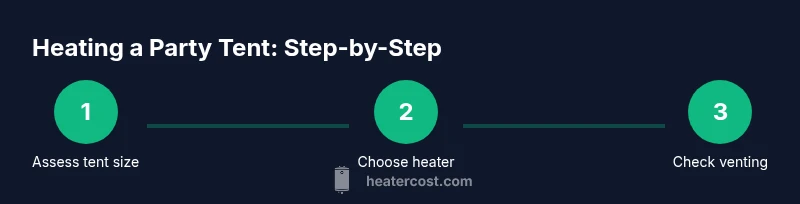
Steps
Estimated time: 1-3 hours
- 1
Assess event needs
Evaluate tent size, expected occupancy, climate, and duration. This guides heater type, BTU range, and ventilation requirements.
Tip: Document target comfort temperature and worst-case weather to avoid underheating or overloading the space. - 2
Check manufacturer guidelines
Review tent manufacturer recommendations for external heaters, ventilation, and attachment methods. Respect max heat exposure areas to protect fabric and seams.
Tip: If guidelines are unclear, contact the tent vendor or a qualified HVAC technician for confirmation. - 3
Choose the heater type
Select a model compatible with your energy source and ventilation plan. Prioritize heat output with safety features and clearances.
Tip: For unpredictable ventilation, prefer electric heaters to minimize combustion risks. - 4
Verify ventilation plan
Ensure there is continuous airflow: open sides, vents, or a powered exhaust to remove combustion byproducts.
Tip: Do a test run to confirm airflow without guests inside the tent. - 5
Plan placement and clearances
Position heaters away from fabrics, decorations, and entryways. Maintain a safe radius on all sides.
Tip: Use floor mats or heat shields to avoid heat transfer to flammable materials. - 6
Inspect fuel and power connections
Check hoses, regulators, and cords for wear. Ensure fuel lines are leak-free and electrical connections are weatherproof.
Tip: Perform a leak test with soapy water before ignition. - 7
Set up power or fuel supply
Connect to an appropriate power source or fuel supply. Use outdoor-rated cords and keep the generator outside the tent.
Tip: Never run cords through doorways or into the tent interior if it compromises safety. - 8
Install detectors and alarms
Place CO detectors and ensure alarms are audible inside the heated area. Test alarms before guests arrive.
Tip: Have a clear plan to evacuate if alarms sound or if heat becomes unsafe. - 9
Do a controlled test run
Ignite the heater in an open area first, then move to the tent with ventilation active. Observe heat distribution and safety features.
Tip: Watch for any unusual smells, smoke, or erratic flame behavior; pause if detected. - 10
Monitor during occupancy
Continuously monitor temperature, CO levels, and fuel levels. Adjust ventilation or heater output as needed.
Tip: Assign a dedicated staff member to monitor safety during the event. - 11
Emergency planning
Have a pre-defined procedure for gas leaks, fire, or power outages. Ensure guests know where exits and extinguishers are.
Tip: Practice a quick drill with staff before the event date. - 12
Post-event shutdown and storage
Power down heaters, disconnect fuel lines safely, and store equipment in a dry, ventilated space. Inspect gear for wear.
Tip: Record any issues to guide future tent heating setups.
Got Questions?
Can propane heaters be used in party tents safely?
Propane heaters can be used if there is adequate ventilation, CO monitoring, and adherence to manufacturer guidelines. Always ensure a safe clearance from any flammable materials and never leave the heater unattended.
Propane heaters can be used safely in tents with ventilation and monitoring, but never unattended and always follow guidelines.
What size heating unit do I need for a tent?
Select a heater with a rating suitable for the tent’s size and climate. Use manufacturer calculators or consult a professional to estimate the heat load and maintain a comfortable temperature without overloading the space.
Choose a heater by the tent size and climate, and verify with a calculator or professional.
Are electric heaters safer than gas in tents?
Electric heaters avoid combustion byproducts but require a reliable external power source and weatherproof connections. They can be safer for tents if you have a stable electrical setup and proper cord management.
Electric heaters avoid burning fuel but need solid power supply and safe wiring.
Do tents require permits for heating equipment?
Permit requirements vary by location and equipment. Check with local authorities and the tent venue; if in doubt, consult a professional to ensure compliance with codes and safety standards.
Check local rules and venue guidelines; permits may be needed depending on equipment and location.
What CO detector features are essential?
Choose detectors with audible alarms, battery backup, and peak level memory. Place at occupant level and near the heater to ensure timely warnings.
Get CO detectors with alarms and battery backups placed near the heater.
What about wind or rain impacting heaters?
Wind and rain can affect venting and fuel stability. Use wind shields, secure canopies, and avoid exposed fuel lines; have a contingency plan for extreme weather.
Weather can affect heating safety; shield vents and plan for weather changes.
Watch Video
The Essentials
- Plan ventilation before heating a tent.
- Choose equipment with safety features and proper clearance.
- Test equipment and alarms before guests arrive.
- Use appropriate power options and keep fuels safely stored.
- Follow manufacturer guidelines and local permits.