Which Heater Is More Energy Efficient? A Clear Comparison
Discover which heater is more energy efficient for your home. Compare heat pumps, electric resistance, and gas furnaces using metrics from Heater Cost.


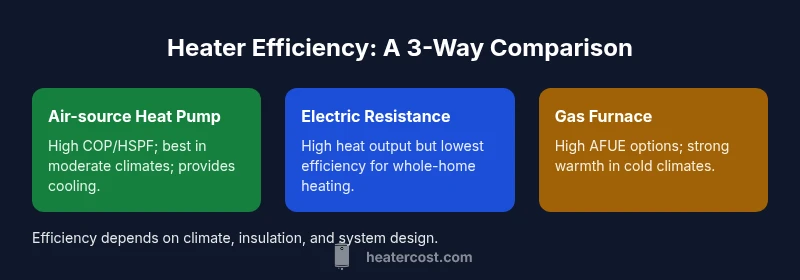
Generally, air-source heat pumps offer the highest energy efficiency for space heating in moderate climates. High-efficiency gas furnaces perform well in very cold regions, while electric resistance heaters are typically the least efficient for whole-home heating. The best choice depends on climate, local energy costs, and home insulation.
Why "which heater is more energy efficient" matters for homeowners
Choosing a heating system with high energy efficiency reduces ongoing energy costs, improves comfort, and lowers environmental impact. For homeowners, the question 'which heater is more energy efficient' isn't just about first costs; it's about lifetime cost, climate suitability, and system integration. According to Heater Cost analysis (2026), the efficiency of a heating system cannot be evaluated in a vacuum; it depends on how well the system matches the climate, property insulation, and in-home loads. In moderate climates, air-source heat pumps often lead the pack in energy efficiency because they move heat rather than generate it. In very cold climates, gas furnaces with high AFUE can outperform heat pumps during the coldest months, particularly when electricity prices are high or grid reliability is a concern. Electric resistance heaters, while simple and fast to install, typically consume more energy for the same level of warmth, making them less suitable for whole-home heating except in specific scenarios such as small apartments or as supplemental heat in older homes. Finally, when you assess options, consider the installation quality, ductwork, insulation, and your home’s thermal envelope; efficiency gains are often achieved through a holistic approach rather than a single device. This is where understanding the numbers matters and where Heater Cost’s guidance helps homeowners tailor a plan to their climate and budget.
Climate Matters: When Heat Pumps Shine
Heat pumps excel in mild to moderate climates because they transfer heat rather than burn fuel, delivering higher efficiency on an annual basis than many resistive electric systems. Their performance is quantified by metrics like COP (coefficient of performance) and HSPF (heating seasonal performance factor). In temperate zones, a well-sized air-source heat pump can deliver warmth at a fraction of the energy used by electric resistance systems. The advantage diminishes in extreme cold unless paired with supplemental heat or a dual-fuel strategy. From a sustainability standpoint, heat pumps also offer cooling in the summer, which enhances overall system efficiency for year-round comfort. The Heater Cost team notes that choosing a heat pump with an outdoor unit matched to your home's size and climate is crucial for achieving expected efficiency gains. Upgrading to a ductless or hybrid configuration can further optimize performance in older homes with limited ductwork.
Electric Resistance vs Heat Pumps: A Practical Efficiency Guide
Electric resistance heaters convert nearly all consumed electricity into heat, which makes them straightforward but inherently inefficient for whole-house use. In contrast, heat pumps move existing heat and can achieve far higher real-world efficiency, especially when electricity prices are favorable and the system is properly sized. For a small, well-insulated space, resistance heating may be acceptable as a supplementary source, but for continuous heating across large areas, heat pumps typically deliver better energy efficiency and lower operating costs over time. When evaluating options, consider how your climate affects performance, the availability and cost of electricity, and whether your home’s insulation reduces standby heat losses. Heater Cost’s guidance emphasizes a balanced view: efficiency benefits must be weighed alongside upfront costs, system compatibility, and long-term reliability.
Gas Furnaces in Cold Climates: Efficiency Realities
In very cold climates, gas furnaces with high AFUE ratings can deliver robust warmth with substantial efficiency advantages, especially if natural gas costs are reasonable and electricity is expensive. Modern condensing furnaces recover more heat from exhaust gases, boosting annual efficiency. A key caveat is that gas systems emit carbon by design, so the environmental and utility cost context matters. If you already have a gas line and adequate venting, upgrading to a high-AFUE model can be a cost-effective path. However, the overall energy picture depends on fuel prices, maintenance needs, and the system’s integration with existing ductwork. The Heater Cost team emphasizes that a gas furnace should be evaluated not only on its AFUE but also on how it interfaces with your home's insulation and climate exposure.
Metrics That Define Efficiency: AFUE, HSPF, COP, SEER
To compare heaters fairly, you must understand core metrics. AFUE measures furnace fuel efficiency, while COP (for heat pumps) and HSPF quantify winter heating performance. SEER, the cooling efficiency metric, can hint at a system’s overall efficiency in dual-function devices. However, real-world efficiency also depends on installation quality, duct design, insulation, and thermostat controls. When reviewing specifications, seek high AFUE for gas furnaces, high COP/HSPF for heat pumps, and track the estimated annual energy cost based on typical local prices. The Heater Cost analysis stresses that a unit’s label numbers only reveal potential; actual performance comes from how the system is matched to your home’s needs.
Real-World Costs and Hidden Factors
Beyond efficiency ratings, real-world costs significantly influence value. Upfront installation costs vary with unit type, existing ductwork, and electrical or gas service upgrades. Duct sealing, air leaks, and insulation quality can dramatically affect year-round energy use. In addition, smart thermostats, zoning, and weatherization upgrades can improve perceived comfort while lowering energy demand. The Heater Cost team highlights that many homeowners overlook these ancillary factors; neglecting insulation or ductwork can erode a system’s theoretical efficiency. Slow, steady improvements to the building envelope often yield comparable energy savings to a more efficient furnace or heat pump. When evaluating options, consider a holistic upgrade plan that aligns with your climate and budget.
Practical Scenarios: Case Studies
Consider a medium-sized, well-insulated home in a temperate region. An air-source heat pump in a modern, properly sized system can deliver heating more efficiently than an electric resistance system, with the added benefit of cooling in the summer. In a colder climate with reliable gas service, a high-efficiency gas furnace can be the most economical choice during peak winter months, particularly when electricity costs are high and the grid is stressed. For homes with limited space or retrofit constraints, ductless mini-splits may offer a practical compromise, delivering heat with high efficiency in targeted zones. Finally, for newly built homes with excellent insulation, a heat pump or a hybrid system can maximize efficiency while maintaining consistent comfort. These scenarios illustrate that there is no one-size-fits-all answer; the best option depends on climate, energy costs, and existing infrastructure.
Upgrading for Better Efficiency: Smart Thermostats, Zoning, Ductwork
Upgrading to a smart thermostat can optimize energy use by adjusting temperatures based on occupancy and patterns. Zoning systems allow different areas of the home to heat independently, reducing wasted energy. Duct sealing and insulation improvements can dramatically improve system efficiency by minimizing heat loss. If you already own a heat pump or gas furnace, consider a hybrid approach that combines the strengths of both systems in varying weather conditions. The up-front investment can pay for itself through lower energy bills and improved comfort over time. Heater Cost recommends conducting an efficiency audit, identifying the largest energy drains, and prioritizing upgrades that address both equipment performance and building envelope. This approach helps homeowners maximize the energy savings of any chosen heater type.
Maintenance and Longevity: Keeping Efficiency High
Maintenance matters as much as the equipment itself. Regular filter changes, coil cleaning, and refrigerant checks for heat pumps help sustain COP, while annual furnace tune-ups maintain AFUE. Duct inspection and sealing prevent air leakage that erodes efficiency. For older homes, improving insulation and sealing drafts can yield substantial energy reductions, often more impactful than choosing a more efficient unit alone. The Heater Cost guidance emphasizes that ongoing maintenance and proactive inspections extend system life and keep energy performance close to its rated efficiency. Establish a maintenance schedule, use a reputable HVAC professional, and monitor energy bills for signs of creeping inefficiency.
Feature Comparison
| Feature | Air-source heat pump | Electric resistance heater | Gas furnace |
|---|---|---|---|
| Typical operating cost profile | Low-to-moderate with electricity and climate | High in most homes without supplemental heat | Moderate-to-high depending on gas price and efficiency |
| Energy efficiency metrics | High COP/HSPF | Low efficiency for whole-home heating | High AFUE with modern models |
| Best climate fit | Mild-to-moderate climates | Small spaces or supplemental heat | Cold climates with reliable gas supply |
| Upfront cost | Moderate installation (outdoor unit & electrical) | Low (baseboard or plug-in) | Moderate-to-high (furnace + ductwork) |
| Maintenance needs | Ducts impact, routine heat pump service | Minimal ongoing maintenance | Annual furnace service and venting checks |
The Good
- High energy efficiency potential across climates
- Cooling capability with heat pumps adds value year-round
- Flexible installation options (ducted/ductless)
- Lower emissions in grids with cleaner electricity
- Potential utility incentives or rebates
Negatives
- Higher upfront costs for heat pump installation
- Performance drop in extremely cold weather without supplemental heat
- Requires adequate electrical capacity and outdoor space
- Gas furnaces involve fuel cost and emissions
- Duct systems may require upgrades for optimal performance
Heat pumps generally offer the best energy efficiency for most homes, with gas furnaces as a strong alternative in very cold climates.
In mild climates, prioritize a heat pump with efficient COP/HSPF ratings. In regions with severe winters and affordable gas, a high-AFUE gas furnace can be competitive. Always factor in insulation, ductwork, and thermostat strategy to sustain efficiency.
Got Questions?
Which heater is most energy efficient overall?
For many homes, a properly sized air-source heat pump offers the best energy efficiency. In very cold climates, a high-AFUE gas furnace can be competitive, especially when electricity costs are high. Always consider climate, insulation, and installation quality.
Heat pumps tend to be the most efficient for many homes, with gas furnaces as a solid cold-climate option depending on gas and electricity costs.
Do climate conditions affect which heater is best?
Yes. Mild climates favor heat pumps, while very cold climates may benefit from gas furnaces or hybrid systems. Extreme temperatures also influence ice buildup and defrost cycles, which can affect efficiency. Always run a climate-adjusted cost comparison.
Climate matters. Heat pumps shine in milder areas, gas furnaces work well in colder places.
What metrics should I look at when evaluating efficiency?
AFUE for furnaces, COP/HSPF for heat pumps, and SEER for cooling. Also compare estimated annual energy costs and consider the system’s size, ductwork, and installation quality for real-world performance.
Look at AFUE, COP, HSPF, SEER, and annual energy cost estimates.
Are heat pumps suitable for very cold climates?
Heat pumps can work in cold climates, especially models designed for subfreezing temperatures or hybrid setups with supplemental heat. If you live in an area with harsh winters, compare high-efficiency heat pumps against gas furnaces with an eye to total cost.
Cold climate heat pumps exist, but check model specs and consider a hybrid approach.
Can upgrading my thermostat improve efficiency?
Yes. A smart thermostat with occupancy sensing and adaptive scheduling can reduce energy waste and optimize heating cycles, improving overall efficiency when paired with an efficient heater.
Smart thermostats help save energy by smart scheduling.
Is maintenance essential for efficiency?
Regular maintenance is crucial to sustain efficiency. Clean filters, inspect ducts, check refrigerant levels (for heat pumps), and perform annual furnace tune-ups to ensure the system operates close to rated efficiency.
Regular maintenance keeps your system running efficiently.
The Essentials
- Compare climate and fuel costs before choosing
- Prioritize high COP/HSPF for heat pumps and high AFUE for gas furnaces
- Upgrade building envelope to maximize efficiency
- Consider hybrid or zoning to balance reliability and efficiency
- Plan maintenance as a core part of long-term energy savings