Underfloor Heating Cost: A Comprehensive 2026 Guide
Explore underfloor heating cost across electric and hydronic systems, installation factors, floor types, energy use, and maintenance. Heater Cost Analysis, 2026, offers practical ranges for homeowners.


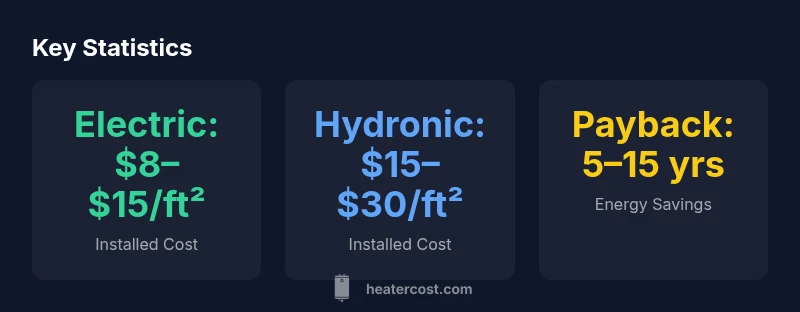
Underfloor heating cost varies by system type and project scope. Electric mats typically cost about $8–$15 per square foot installed, while hydronic (water-based) systems run roughly $15–$30 per square foot, depending on piping, boiler, and floor build. Total price also depends on room size, insulation, floor type, and labor; retrofits in existing buildings tend to be higher than new installations.
Comparative Overview: Electric vs Hydronic
Electric underfloor heating offers quick, localized warmth and a simpler install path, making it a popular retrofit choice for bathrooms and smaller rooms. Hydronic (water-based) systems distribute heat more evenly across larger areas and can be more economical to run in big spaces, but they require complex plumbing, a boiler or heat source, and more extensive floor prep. In 2026, homeowners should balance upfront installation costs with long-term operating expenses when choosing between these two approaches. Cost considerations vary by room, insulation, and floor finish, and a detailed planning phase helps avoid surprises later on.
- Electric mats: fast setup, modular expansion, and straightforward electrical connections.
- Hydronic: scalable for larger zones, excellent heat distribution, but higher initial complexity.
Factors That Drive Underfloor Heating Costs
Cost is driven by system type (electric vs hydronic), room size, insulation quality, floor construction, and labor. Electric mats generally require less subfloor disruption, making them cheaper to install in retrofits. Hydronic loops demand more materials (pipes, manifolds, boiler or heat pump integration) and more labor for proper zoning and pressure testing. Floor finishes like tile or stone can improve heat transfer but add weight and require careful subfloor prep. Insulation beneath the system minimizes heat loss and can dramatically affect operating costs. Finally, controls—thermostats, zoning, and smart integrations—can add to upfront costs but yield long-term savings.
Floor Finish, Insulation, and Subfloor Preparation
The choice of flooring and the quality of insulation influence both installation difficulty and heat output. Tile and stone floors conduct heat well but require precise thickness and curing time, increasing labor needs. Wood and laminate can be compatible, but require careful moisture management and underlayment choices. Proper insulation beneath the heating layer reduces heat loss downward, which improves both comfort and efficiency. In retrofit scenarios, removing and re-fastening existing floors adds to labor time and cost, while in new builds, you can optimize subfloor prep from the start.
New Build vs Retrofit: Cost Implications
New construction provides a clean slate: you can embed heating mats or pipes into the slab or subfloor with fewer surprises. Retrofit projects must contend with existing finishes, potential demolition, and possible demolition waste. In historic or multi-unit buildings, accessibility and coordination with other trades can add to labor costs. For larger spaces, hydronic systems may amortize more effectively over time, while smaller rooms often favor electric solutions for lower upfront cost and quicker delivery.
Operating Costs, Efficiency, and Maintenance
Operating costs depend on energy prices, thermostat management, and heat losses through poorly insulated areas. Electric systems tend to have lower maintenance, while hydronic systems require boiler servicing, pressure checks, and periodic inspection of manifolds and circulator pumps. The long-term energy cost advantage depends on your fuel source, local electricity rates, and how well you insulate and seal the space. A well-planned zoning strategy can prevent hot spots and reduce energy waste, improving comfort and reducing bills.
Cost comparison by system type
| System Type | Installed Cost Range (per sq ft) | Pros | Cons |
|---|---|---|---|
| Electric | $8–$15 | Fast installation; easy retrofit; good for small spaces | Lower heat capacity; performance sensitive to flooring losses |
| Hydronic | $15–$30 | Excellent for large areas; long-term operating costs can be favorable | Complex installation; higher upfront costs; boiler/maintenance needed |
| Hybrid | $12–$28 | Balanced heat delivery; flexible zoning | Requires more components and planning |
| Retrofit considerations | N/A | Lower disruption with newer floors | May require subfloor prep and increased downtime |
Got Questions?
What factors most influence underfloor heating costs?
Cost drivers include system type (electric or hydronic), room size, insulation quality, floor finish, and retrofit complexity. Electrical components and controls add to upfront costs, while plumbing, manifolds, and boiler integration add to hydronic systems. A thorough quote should cover both material and labor, plus any subfloor prep needs.
The main cost drivers are system type, room size, insulation, and retrofit complexity.
Is electric underfloor heating cheaper to install than hydronic?
In most cases, electric underfloor heating is cheaper to install upfront and works well for small rooms or retrofit projects. Hydronic systems cost more initially due to piping and equipment but can be more economical for larger areas or whole-house installations. Operating costs depend on energy prices and local efficiency.
Electric is usually cheaper to install upfront; hydronic can be cheaper to run in large spaces.
How long does installation take?
Electric systems can often be installed in a day or two for a small bathroom, while hydronic systems may require several days to a week depending on room size, floor prep, and boiler integration. Scheduling with other trades matters in multi-room projects.
Electric installs fast; hydronic takes longer due to plumbing.
Can underfloor heating be retrofitted into existing floors?
Yes, but retrofits are more complex. You may need to remove or lift existing flooring, ensure subfloor clearance, and manage floor height changes. A professional assessment helps determine if a retrofit is cost-effective and how to maintain comfort with minimal disruption.
Yes, but it can be tricky and disruptive.
What maintenance does underfloor heating require?
Electric systems require minimal ongoing maintenance beyond occasional thermostat checks. Hydronic systems often require boiler servicing, pressure checks, and periodic inspection of pumps and manifolds. Regular energy and system performance reviews help maximize efficiency.
Hydronic needs boiler checks; electric needs little ongoing maintenance.
“Underfloor heating cost is highly sensitive to system choice, floor prep, and long-term energy use. A precise estimate comes from a professional site assessment.”
The Essentials
- Compare system types by installed cost per square foot.
- Factor room size and retrofit complexity into your budget.
- Insulation and floor finish significantly affect heat efficiency.
- Electric systems install quickly and are cheaper upfront; hydronic suits large areas.
- Get a site assessment from Heater Cost for tailored ranges and timelines.