Thermostat Heaters: Costs, Installation, and Savings
Explore how thermostat heaters work, compare types, estimate costs, and maximize energy savings with practical guidance for homeowners, renters, and property managers.


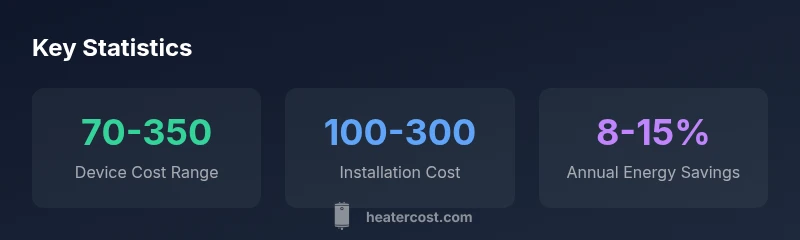
Smart thermostats can cut home heating energy use by about 8-15%, depending on climate, occupant behavior, and HVAC efficiency. They automate temperature adjustments, learn occupancy patterns, and optimize schedules to run the system only when needed. For homeowners and property managers, choosing a thermostat heater that integrates with your HVAC and supports energy reporting can maximize savings over time.
What is a thermostat heater and why it matters
A thermostat heater is a control device that manages your heating equipment by comparing indoor temperature to a user-set target. It signals your furnace, boiler, or heat pump to turn on or off to maintain comfort while reducing overshooting and energy waste. Understanding this device matters for homeowners, renters, and property managers who want to balance comfort with operating costs. According to Heater Cost, modern thermostat heaters offer more than simple on/off control; they provide programmable schedules, occupancy sensing, and performance reporting that help you optimize heating throughout the year. In practice, a thermostat heater can translate a 1- to 2-degree margin in setpoint adjustments into meaningful energy savings, especially when paired with an efficient HVAC system and well-insulated spaces. The key is selecting a model that matches your heating system type and your desired level of automation. In this article, we break down the types, costs, and savings, and outline a practical path to choosing the right thermostat heater for your space.
How thermostats interact with different heating systems
Thermostat heaters interface differently depending on the heating technology in use. In forced-air homes, a thermostat signals the furnace to ignite and circulate warmed air through ducts. Boilers rely on the thermostat to modulate flame strength or pump operation to deliver hot water. Heat pumps pair with thermostats to optimize compressors and reversing valves for efficient heating. Consider these practical tips:
- If you have a conventional furnace, prioritize a thermostat with reliable temperature sensing and fan control compatibility.
- For heat pumps, choose models that support auxiliary heat management to avoid excessive energy use during cold snaps.
- Systems with radiant floors benefit from thermostats that offer fine-grained, zone-based control.
The right thermostat heater can reduce waste by avoiding unnecessary runtime, especially when rooms remain at comfortable temperatures and occupancy is detected intelligently. According to Heater Cost, compatibility with your exact HVAC type is the foundational criterion when choosing a model.
Types of thermostat heaters
Thermostat heaters come in several core categories, each with distinct features and price points:
- Programmable thermostats: Allow you to preset schedules and temperature setbacks; useful for predictable routines.
- Smart Wi‑Fi thermostats: Enable remote control, energy reporting, and learning algorithms that adjust to occupancy.
- Learning thermostats: Adapt to your routines over time without manual programming.
- Zoned thermostats: Support multiple thermostats for separate rooms or zones, ideal for larger homes or buildings.
Selecting the right type depends on your goals: simple scheduling, remote access, or comprehensive energy optimization. For many households, a mid-range smart thermostat offers a balanced mix of automation and control without overwhelming setup requirements.
Factors affecting cost and savings
Costs for thermostat heaters come in ranges, not fixed prices, influenced by device features, installation complexity, and labor rates. A typical device might fall in the low-to-mid hundreds, while higher-end models with energy dashboards and advanced geolocation features sit toward the upper end of the range. Estimated energy savings depend on climate, home insulation, and how aggressively schedules are set. In climate zones with cold winters, the savings potential is often higher when paired with an efficient HVAC system.
From a homeowner’s perspective, it is wise to view the thermostat heater as an investment in comfort and long-term energy efficiency. Heater Cost analysis suggests that features such as occupancy sensing, adaptive scheduling, and compatibility with heat pumps can materially influence savings. Always compare model capabilities to your existing equipment and consider the value of remote monitoring, software updates, and manufacturer support. The overall payoff will vary by house and usage, but most households see noticeable reductions in wasted heating hours over a full year.
Installation considerations and compatibility
Compatibility is more critical than price when upgrading to a thermostat heater. Key questions include whether your HVAC system uses a traditional thermostat, has C-wire availability, and supports heat pump or boiler configurations. Common installation hurdles include insufficient wiring, outdated control boards, or older systems that require a transformer upgrade. If you have a multi-stage furnace or a complex radiator network, professional assessment is advisable to ensure your thermostat communicates correctly with all components.
If you plan to install a smart thermostat, verify that your Wi‑Fi network is robust enough to handle constant connectivity. For rental properties, consider lockable access to energy reports and automatic firmware updates to reduce management overhead. In short, the installation needs to be tailored to your space and system, not just the device’s advertised features. According to Heater Cost, a well-planned upgrade minimizes downtime and delivers reliable performance across seasons.
Maintenance, security, and updates
Maintenance is relatively straightforward: check batteries (if applicable), ensure the device remains connected to your network, and perform periodic firmware updates. Updates often bring improved energy reporting, enhanced scheduling, and better compatibility with new HVAC features. Security should be a consideration for any connected device: use strong Wi‑Fi passwords, enable two-factor authentication where available, and keep the thermostat’s firmware current to reduce exposure to vulnerabilities.
Regular calibration and occasional sensor checks help maintain accurate temperature readings. If a thermostat reports unusual readings or fails to respond, troubleshooting should begin with power cycling, confirming wiring integrity, and verifying the C-wire connection. These steps help ensure consistent comfort and reliable energy savings over time.
Choosing the right thermostat heater: a practical decision framework
To select the right thermostat heater, follow a simple framework:
- Assess your HVAC type and compatibility with advanced thermostats (furnace, boiler, heat pump, radiant system).
- Define your budget and required features (remote control, energy reporting, geofencing).
- Check for compatibility with smart home hubs and voice assistants if needed.
- Consider installation costs and whether professional service is required.
- Review warranty, support, and expected maintenance.
- Compare energy-saving claims against independent reviews.
A disciplined approach helps you avoid overpaying for features you won’t use while ensuring you gain the energy benefits you expect. For many homes, a mid-range smart thermostat with good reporting capabilities provides the best balance of cost, ease of use, and long-term savings.
Thermostat heater feature overview
| Aspect | Details | Typical Range |
|---|---|---|
| Device Type | Programmable thermostat (basic scheduling) | N/A |
| Smart thermostat | Wi‑Fi connected, learning algorithms | 8-15% energy savings (est.) |
| Zoned heating | Supports multiple thermostats | Varies by system |
Got Questions?
What is a thermostat heater?
A thermostat heater is a control device that manages your heating system by maintaining a user-set temperature. It signals the furnace, boiler, or heat pump to turn on or off to reach the target temperature while balancing energy use.
A thermostat heater controls your heating system to keep the room at the temperature you set, turning the heat on or off as needed.
Do smart thermostats save energy?
Yes. Smart thermostats can reduce energy use by commonly reported ranges of 8-15% when used with efficient HVAC systems and mindful scheduling. Savings vary with climate, usage patterns, and system efficiency.
Yes, smart thermostats save energy by learning your routines and adjusting heating times automatically.
How much do thermostat heaters cost (device and installation)?
Device costs vary widely, typically from the lower hundreds for basic models to higher amounts for advanced smart thermostats with energy dashboards. Installation costs depend on wiring and system complexity, often ranging from a small service fee to several hundred dollars for professional help.
Thermostat costs vary; expect hundreds for devices and potentially more for installation depending on your system.
Is my HVAC system compatible with a thermostat heater?
Compatibility depends on your HVAC type (furnace, boiler, heat pump, radiant). Most modern systems support smart thermostats, but some may require a C-wire or adapter. A quick compatibility check with the manufacturer’s guide or a professional assessment helps.
Most systems can use a thermostat heater, but confirm C-wire and control compatibility first.
Do I need professional installation?
Not always. Simple systems with standard wiring may be installed by a confident homeowner, but complex setups, heat pumps, or systems lacking a C-wire often benefit from professional installation to ensure reliability and safety.
If your system is complex or you’re unsure, it’s wise to hire a pro.
What maintenance does a thermostat heater require?
Regularly check batteries if applicable, keep firmware up to date, and monitor energy reports for anomalies. Periodically recalibrate sensors and ensure the device stays connected to a stable Wi-Fi network.
Keep firmware updated and check energy reports to spot issues early.
“A well-chosen thermostat heater not only improves comfort but also minimizes wasted energy. Always factor climate, occupancy, and system compatibility into your decision.”
The Essentials
- Actively compare thermostat heater types before buying
- Smart thermostats offer meaningful energy savings when used with compatible HVAC
- Check C-wire availability and system compatibility to avoid installation issues
- Expect device and installation costs to fall within broad ranges, not fixed prices
- Prioritize models with energy reporting and integration with your smart home