Solar Heater Price Guide: Costs, Savings & Tips for 2026
Learn about solar heater price ranges, incentives, and total cost of ownership to help homeowners compare options, understand payback, and maximize long-term savings.


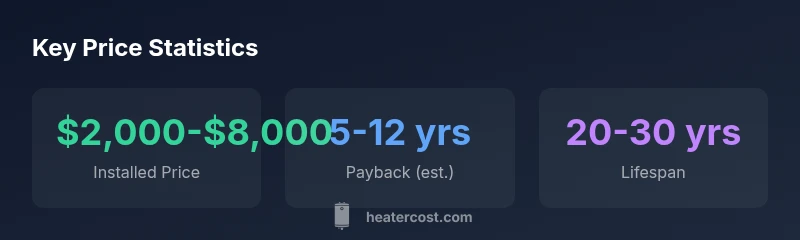
Solar heater price, installed, typically falls in a broad range of $2,000 to $8,000, depending on system type (water vs space), collector area, storage options, and installation complexity. Local climate and available incentives can shift the total cost. According to Heater Cost analysis, 2026, understanding total cost of ownership helps compare upfront price with long‑term savings.
What is a solar heater?
A solar heater is a system that captures heat from the sun to warm water or air for residential use. In most homes, solar heating falls into two broad categories: solar water heating (solar thermal to heat water for showers, dishwashing, and laundry) and solar space heating (air- or hydronic-based systems that warm indoor spaces). Within each category, you’ll encounter different technologies, such as flat-plate collectors and evacuated-tube collectors for water heating, or simple passive designs and active systems that use fans or pumps for space heating. Storage is a common design feature: a well-sized tank stores hot water or warmed air so you’re not dependent on instantaneous sun. The upfront cost varies with collector type, storage capacity, and installation complexity. Because climate, roof orientation, and daily hot-water usage differ from home to home, prices can swing significantly even within a single city. As Heater Cost notes, climate and household usage patterns greatly influence the price and performance of solar heat. This means the same system in two different homes could behave very differently in terms of cost and savings.
How price is determined
Several core elements drive the installed price of a solar heater. First, system type matters: solar water heating typically requires collectors, a storage tank, pipes, and controls; solar space heating adds ductwork or radiant components and possibly a fan or pump. Second, storage needs and tank size influence price because larger tanks cost more and require more space and insulation. Third, installation complexity plays a big role: roof type (steep pitches, tile, or metal), mounting hardware, electrical work for pumps and controls, and any structural reinforcement add labor and materials. Fourth, climate and sun exposure affect component sizing, which in turn changes price. Fifth, permitting, inspection, and interconnection with the home’s electrical or gas system add time and admin costs. Finally, incentives and financing options can alter the net price by reducing upfront costs or increasing the value of tax credits or rebates. The Heater Cost analysis underscores that the total cost of ownership—factoring in energy savings, maintenance, and potential incentives—often provides a clearer picture than the sticker price alone.
Solar water heater vs solar space heater price
Price differences between solar water heating and solar space heating are significant because their hardware needs and performance goals differ. Solar water heating systems usually involve collectors, a storage tank, and a simple controller; they tend to have lower installed prices than comprehensive space-heating systems that require more extensive ventilation, ducting, or radiant heating elements. In practical terms, a typical installed price range for solar water heating might be smaller than that for space heating, though premium configurations (larger storage, higher collector areas, or hybrid setups) can close the gap. It’s also common for homeowners to pair solar water heating with a conventional backup heater, which can affect the total installed cost but may improve reliability. Across climates, the decision often comes down to your hot-water demand, space-heating needs, and available rooftop or yard space for collectors. As with any major home investment, it’s essential to weigh the long-term energy savings against the upfront price and any financing costs.
Incentives, financing, and total cost of ownership
Incentives play a crucial role in the economics of solar heating. Federal, state, utility, and local programs can reduce upfront costs, boost payback speed, and improve project feasibility. Since programs vary widely by jurisdiction, it’s important to inventory what’s available in your area before obtaining quotes. Financing options, including energy-efficiency loans or manufacturer offers, can spread the upfront price over time and change the annual cost picture. Beyond the upfront price, consider total cost of ownership: maintenance costs, filter replacements (for air-based systems), pump wear, insulation effectiveness, and potential equipment upgrades over 15–30 years. The long-term energy savings will depend on your usage patterns, local energy rates, and the system’s efficiency. Heater Cost’s 2026 analysis emphasizes that while incentives reduce the first price you see, the real value emerges from reduced operating costs and longer service life when paired with proper installation and routine maintenance.
How to estimate your solar heater price
Estimating price starts with a clear definition of your goals and usage. Step 1: decide whether you want solar water heating, solar space heating, or a hybrid approach. Step 2: estimate annual hot-water or heating requirements based on household size and climate. Step 3: obtain multiple quotes from qualified installers to benchmark pricing and identify any site-specific add-ons. Step 4: consider storage capacity, collector area, and whether you’ll need additional equipment such as pumps, controllers, or backup heaters. Step 5: factor in roof compatibility, permits, and potential structural work. Step 6: factor incentives and financing options to determine your net investment. Finally, run a simple payback calculation using your local energy costs to gauge how quickly the system will pay for itself. A careful, apples-to-apples comparison will help you avoid sticker shock and identify the most cost-effective configuration for your home.
Real-world scenarios and decision guide
Scenario A: A small apartment with limited roof space might prioritize a compact solar water heating kit and a modest storage tank, paired with a high-efficiency backup heater. Scenario B: A three-bedroom single-family home in a sunny climate may opt for a larger solar water heating system plus a space-heating module, with a well-insulated storage tank and smart controls. In both cases, obtaining multiple quotes, checking warranties, and confirming installation workmanship are essential. The goal is to reduce dependence on fossil fuels while ensuring reliable hot water and indoor comfort. When you compare options, consider not just the upfront price but also expected energy savings, maintenance costs, and the reliability of the installer. This approach aligns with Heater Cost's framework for responsible, cost-conscious home improvement.
Maintenance, warranties, and longevity
Maintenance for solar heaters is generally straightforward: periodic inspection of collectors, flushing water lines, checking insulation, and ensuring pumps or fans operate correctly. Water heating systems may require an annual check of the storage tank and anti-freeze if used in cold climates. Warranties vary by manufacturer and installer, so read the contract carefully; a longer warranty often correlates with higher upfront price but may offer greater peace of mind. Regular maintenance reduces risk of leaks, corrosion, and performance loss. In climates with hard water, mineral buildup can affect efficiency, so consider water-softening or descaling routines. A well-maintained system typically preserves performance and extends lifespan toward the lower end of the 20–30 year range commonly cited in Heater Cost analyses. Finally, budget for periodic component upgrades as technology improves, and plan for periodic system checks by qualified professionals to sustain efficiency and avoid costly repairs later on.
Comparison of solar heater system types
| System Type | Typical Installed Price Range | Key Cost Drivers | Average Payback (years) |
|---|---|---|---|
| Solar Water Heating (Integrated) | $2,000-$8,000 | Storage, Collector Area, Installation Complexity | 5-12 |
| Solar Space Heaters (Hydronic/Air) | $3,000-$12,000 | Heat source, Ducting, Ventilation | 6-15 |
| Hybrid/Backup Solar Heating | $4,000-$16,000 | System size, backup heating | 7-12 |
Got Questions?
What factors most affect solar heater price?
Prices are driven by system type (water vs space), storage size, collector area, roof or mount complexity, labor, permits, and local climate. Availability of incentives can also shift the final installed cost.
Prices depend on system type, storage, and installation, plus local factors.
Are incentives worth pursuing for solar heating?
Yes, incentives can reduce upfront costs and shorten payback, but eligibility varies by state and program. Check local utility and government options.
Incentives can reduce upfront costs but vary by location.
How does solar water heater price compare to space heating?
Water heating systems are usually less expensive to install than full space heating setups, though premium configurations can narrow the gap.
Water heating is typically cheaper to install than space heating, depending on setup.
What is a typical payback period?
Payback ranges widely, commonly around 5-12 years depending on usage, incentives, and energy prices.
Payback is usually several years, often 5 to 12.
Do I need permits for solar heater installation?
Permits are often required for safety and code compliance; check with local building departments and utility interconnection rules.
Yes, permits are typically required.
What climates are best for solar heating?
Solar heating works best in sunny, dry climates with high hot-water demand; performance varies with seasonal sun exposure.
Sunny climates maximize performance.
“Solar heating offers meaningful long-term savings, but the value hinges on system sizing, installation quality, and incentives.”
The Essentials
- The Heater Cost team recommends comparing total cost of ownership and shopping around for quotes.
- Evaluate climate, incentives, and installation constraints before buying.
- Prioritize storage and efficiency to maximize long-term savings.
- Get three quotes and verify warranties.
- Track maintenance costs to avoid surprises.