Room Heater with Timer: A Practical Guide to Save Energy
Discover how a room heater with timer saves energy, improves comfort, and lowers bills. Learn timer types, sizing, safety, and setup for homes and rentals.


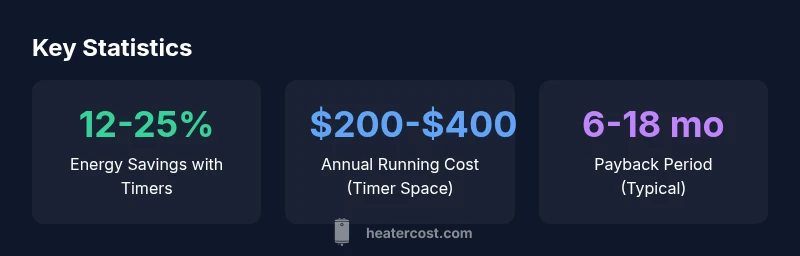
According to Heater Cost, using a room heater with timer can reduce energy waste by ensuring heat runs only when people are present. In typical homes, a timer-driven heater saves energy by turning off automatically, reducing overheating in unoccupied rooms. When choosing, look for adjustable dial timers, digital schedules, or smart timer apps with repeatable daily settings. In rental properties and households seeking predictable costs, a timer-equipped heater provides comfort without guesswork.
How Timers Improve Comfort and Efficiency
Timers are a simple, reliable way to ensure heat is delivered only when you need it. A timer-driven room heater can help maintain comfortable temperatures in occupied spaces while avoiding unnecessary warming of empty rooms. This matters most in homes with irregular occupancy, shared spaces, or apartments with thin walls where heat escapes quickly. In practice, a timer lets you set a morning warm-up before you wake, a daytime idle period when nobody is home, and a gentle return to comfort in the evening. The result is consistent comfort with less energy waste, which translates to lower utility bills over time. According to Heater Cost, the savings vary with your climate, insulation, and how aggressively you schedule heat. The key is to align timer schedules with actual usage patterns, then fine-tune based on observed thermostat behavior and room comfort. If you pair a timer with a heater of appropriate size, you’ll avoid the common pitfall of leaving a room heated longer than necessary. In rental units, timers can also help tenants stay within agreed heating allowances, reducing disputes and optimizing energy consumption across the building. Practical tips include starting with a conservative ramp-up in the morning, using a slower ramp-down at night, and avoiding over-reliance on the timer alone—keep doors closed, use draft stoppers, and maintain proper ventilation when needed.
Timer Types and How They Work
There are three common timer options for room heaters: dial timers, digital timers, and smart timers. Dial timers are inexpensive, familiar, and require manual operation; they’re reliable for fixed daily schedules but offer less flexibility. Digital timers provide precise on/off times, repeatable daily or weekly patterns, and easier adjustments; they’re a good middle ground for people who want accuracy without complexity. Smart timers or connected plugs add app control, voice-assistant compatibility, and learning features that adapt to your routines, but require a wifi connection and potentially a subscription if the manufacturer offers premium services. Built-in heater timers are another option, neatly integrated into the unit and often designed for space-saving setups. When choosing, consider how you want to schedule heat, how often you’ll adjust settings, and whether you value remote adjustments when you’re away from home. Regardless of timer type, make sure the timer’s electrical load matches the heater’s power draw, and ensure any remote control features are password-protected to prevent accidental overrides.
Sizing, Placement, and Heat Zoning
To maximize efficiency, start with appropriate sizing. For small rooms under 150 square feet, most electric space heaters in the 1000–1500 watt range are sufficient; for mid-sized rooms (150–350 sq ft), 1500–2500 watts is typical. Ensure the heater can operate at a lower setting if you want to maintain a stable temperature with the timer. Place heaters on a flat, level surface away from drapes, furniture, or any flammable materials. Never use an extension cord; instead, plug directly into a wall outlet. Heat zoning, achieved by using timers in multiple rooms, can reduce waste by prioritizing occupied spaces; however, avoid running two large heaters in adjacent spaces continuously, which can raise a household current draw and create safety issues. Maintain clearance distances (at least 3 feet from objects, more for high-heat models) and consider rooms with good insulation to hold warmth after the timer turns off.
Safety Considerations and Maintenance
Safety comes first. Always follow manufacturer instructions for placement, use, and maintenance. Timers can help reduce exposure to overheating, but they do not replace safe operation. Keep heaters at least 3 feet from walls and fabrics; use a stable surface; do not cover with clothing or blankets; inspect cords and plugs for wear; never use damaged equipment. If you use a gas or kerosene heater, install a carbon monoxide detector in the room and ensure proper ventilation. Regular maintenance includes cleaning dust from vents, checking for heat buildup, and testing the timer function monthly to ensure it activates and deactivates at the planned times. Remember to replace batteries in any remote timers and update Wi‑Fi firmware on smart models to preserve security and reliability.
How to Choose by Budget and Features
Budget for timer-equipped room heaters varies by type and features. Entry-level plug-in units with basic timers start around $20–$60; mid-range models with digital timers or basic smart features range $60–$150; premium heaters with advanced smart controls, safe-start features, and energy-saving modes can reach $150–$350. Compare timer configurations, auto-shutoff safety, thermal cutoff, and energy efficiency ratings. Consider local electricity costs; if rates are high, a longer warm-up period with careful scheduling can reduce peak demand. Read reviews that address timer reliability under real-world use and look for warranties of at least 1–2 years. If you rent, a plug-in unit can be swapped without permits or installation work.
Practical Setup and Maintenance Checklist
- Measure room size and select a heater wattage appropriate for the space. 2. Choose a timer type that matches your routine (dial, digital, or smart). 3. Place the heater on a stable surface with a clear 3-foot radius of free space. 4. Set an initial daily schedule aligned with occupancy. 5. Run a test cycle to ensure the timer activates and deactivates correctly. 6. Monitor energy use for the first two weeks and adjust. 7. Conduct a monthly timer check and routine safety inspection, including cord condition and vent cleanliness.
Timer-equipped room heater comparison
| Model | Timer Type | Typical Use Case | Pros |
|---|---|---|---|
| Portable space heater | Manual dial timer | Quick heat for small spaces | Low cost, simple |
| Floor-standing heater | Digital timer | Living room or office | Precise scheduling, less overshoot |
| Ceramic heater | Smart timer | Bedroom or study | Quiet, energy-efficient |
| Oil-filled radiator | Built-in timer | Night-time heating | Even heat, long warm-up |
Got Questions?
Do room heaters with timers save energy?
Yes, timers help by heating only when needed; however, savings depend on insulation and usage patterns. Start with a conservative schedule and adjust based on comfort and bills.
Yes—timers save energy by heating only when you’re using the room. Start with a simple daily schedule and tweak as you monitor comfort and costs.
What timer features should I look for?
Look for repeatable daily or weekly schedules, auto shutoff, and remote control options. Digital timers offer precise control, while smart timers add automation and learning capabilities.
Look for repeatable schedules, auto shutoff, and remote control. Digital timers are precise; smart timers add automation.
Is it safe to leave a room heater on timer overnight?
Only if the heater includes reliable auto shutoff and the space is clear of flammables. For gas heaters, ensure ventilation and a CO detector are present.
Only with built-in safety shutdown and proper clearance. For gas heaters, keep ventilation and a CO detector in place.
How do I set a timer on a room heater?
Consult the user manual. Typical steps: set the clock, choose on/off times, enable the timer, and save the schedule. Test the cycle to confirm it operates as expected.
Open the timer, set the on/off times, and save the schedule. Test to confirm it works.
How many watts should my timer-equipped heater be?
Wattage depends on room size. A common range is 1000–1500 watts for small rooms and 1500–2500 watts for larger spaces. Always follow manufacturer guidelines.
Wattage depends on room size; for small rooms, 1000–1500W is typical; for larger rooms, 1500–2500W.
“A well-planned timer strategy can reduce energy use by a meaningful margin without sacrificing comfort.”
The Essentials
- Use timers to heat only occupied spaces.
- Choose digital or smart timers for flexibility.
- Pair timers with proper sizing to maximize savings.
- Follow safety guidelines and test timers regularly.