Kero Heater Costs: A Practical Guide for Homeowners
Discover the true cost of owning a kerosene heater, including purchase price, fuel expenses, maintenance, and safety tips to help homeowners budget smarter in 2026.


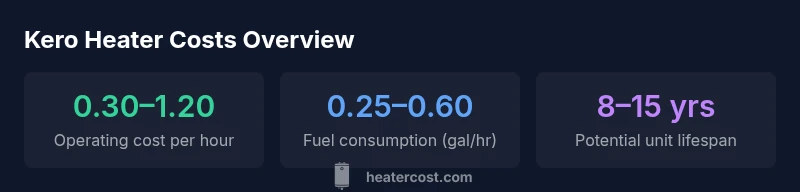
A kerosene heater typically costs homeowners between roughly $0.30 and $1.20 per hour to operate, depending on fuel price, heater efficiency, and how you ventilate the space. Upfront costs include purchase price and safe installation, while ongoing costs cover kerosene fuel, wick replacements, and safety devices. This guide, drawing on Heater Cost Analysis, 2026, outlines the main cost drivers and practical strategies to minimize expenses while maintaining safety.
Why kero heater costs matter for homeowners
For homeowners evaluating a kero heater, the upfront purchase price is only one part of the total ownership cost. The long-term expense is driven by fuel costs, maintenance, and the safety devices required to run the unit responsibly. According to Heater Cost, the choice between a compact model and a larger, higher-efficiency unit can swing annual fuel spend by a wide margin. In practice, a typical scenario includes an initial purchase, the cost of kerosene, periodic wick replacement, and regular ventilation-related safety checks. Because kerosene prices fluctuate with crude markets and seasonal demand, budgeting for price volatility is essential. A well-chosen device can reduce both fuel burn and heat waste, while a poorly matched model can waste fuel and raise CO risk. The Heater Cost team found that aligning heater capacity to home square footage and insulation quality is one of the most cost-effective decisions a homeowner can make. This article uses practical ranges and scenarios to illustrate how to measure value, avoid common pitfalls, and protect household safety.
Understanding fuel costs and efficiency
Fuel costs are the largest variable in kero heater operating expenses. In many regions, kerosene prices typically range between roughly $3 and $6 per gallon, with spikes in winter or supply disruptions. Efficiency matters: newer kerosene heaters with sealed combustion and improved wick systems can achieve notably lower fuel use than legacy units. A mid-sized room might see heat output that requires around 0.4–0.7 gallons of kerosene per hour on cold days, while milder conditions can drop consumption to 0.2–0.4 gallons per hour. Using these ranges and regional price differences, operating costs can be roughly in the ballpark of $0.30–$1.20 per hour. The Heater Cost analysis emphasizes matching heater capacity to space and supplementing with other heat sources to reduce spend. Maintenance and wick replacement intervals (often annually or as needed) influence efficiency, so periodic checks deliver better value over the life of the unit.
Maintenance costs and safety considerations
Maintenance costs for a kero heater go beyond replacing wicks. Regular cleaning, careful fuel handling, and timely replacement parts contribute to efficiency and safety. Expect costs for replacement wicks, occasional parts, and potential professional inspections. Wick life depends on burn pattern and fuel quality; typical replacement intervals range from once a year to every two years. Regular cleaning reduces soot buildup and improves efficiency, which in turn reduces fuel consumption. Safety devices such as carbon monoxide detectors, smoke alarms, and proper ventilation are essential; their costs should be included in total ownership. Neglecting safety gear can lead to costly incidents that dwarf fuel savings, so budget for reliable detectors and ventilation.
Ventilation, installation, and safety basics
Indoor use demands attention to ventilation and clearances. Place the kero heater away from walls and furnishings, ensure adequate air exchange, and keep carbon monoxide detectors in occupied spaces. Use only recommended fuels and avoid contaminated kerosene or substitutes. Ventilation impacts indoor air quality; in homes with poor insulation or sealed windows, consider supplemental mechanical ventilation. Installation cost should include a dedicated, well-ventilated space with a CO detector, and a properly sized electrical/outlet connection for ignition systems. The Heater Cost analysis suggests sealing drafts and improving insulation to reduce heat loss and lower fuel consumption over time.
Model selection: evaluating kerosene heater options
When choosing a kero heater, evaluate BTU output, fuel type compatibility, wick design, safety shut-off features, and ease of maintenance. Reliability, availability of replacement parts, and local service support are important. The right model should fit your space and climate; a compact unit can adequately heat small rooms, while larger areas may require higher BTU capacity. Consider modular options or upgrades for a phased approach. The Heater Cost analysis indicates that a well-matched heater reduces unnecessary fuel burn and improves overall comfort, turning a basic purchase into a cost-effective long-term solution.
Kero heater vs alternatives: cost and practicality
Electric space heaters offer clean operation but can be expensive to run at high heat, while propane heaters provide portability with different ventilation needs. Kero heaters remain valuable when electricity is unreliable or unavailable. The total cost of ownership should include fuel, maintenance, safety gear, and potential replacement parts. In energy-conscious homes, kerosene heaters can serve as a supplement rather than the primary heat source, reducing peak demand and electricity bills. The Heater Cost analysis shows that quantifying heat needs and mixing solutions strategically yields the best overall value.
Smart strategies to reduce operating costs
Adopt practical habits to trim expenses: use timers or thermostats to limit unnecessary runtime, seal drafts to reduce heat loss, maintain wick and burner components for efficiency, and store kerosene in approved containers away from heat sources. Buy high-quality kerosene and avoid contaminated fuel that can reduce efficiency and damage the wick. Consider combining a kerosene heater with other heat sources to minimize burn time and keep temperatures steady. Small tweaks can compound into meaningful annual savings, especially in cold months.
Lifespan, warranty, and resale value
A well-maintained kero heater typically lasts longer when kept clean and serviced regularly, often in the range of 8–15 years depending on build quality and usage. Warranties vary by model and retailer, so review terms carefully and keep receipts for future service. Replacement parts, including wicks and burners, should be readily available in your area. As with any home heating device, resale value depends on condition, maintenance history, and safety compliance, so documenting service records can help preserve value over time.
Real-world scenario: a suburban home case study
Consider a 1,500‑sq‑ft suburban home that uses a mid-range kerosene heater as a backup heat source during severe cold snaps. The upfront cost includes purchase and installation of safety devices; ongoing costs cover fuel and wick replacements. If winter temperatures require moderate usage, annual operating costs may fall within a broad range depending on fuel prices and insulation quality. A case study approach shows how space planning, ventilation, and fuel quality combine to influence total cost of ownership, and why a mixed heating strategy often delivers the best balance between comfort and expense.
Kero heater option comparison by cost tier
| Aspect | Low-cost model | Mid-range model | Premium model |
|---|---|---|---|
| Initial purchase price | low | mid | high |
| BTU capacity | Low | Medium | High |
| Fuel efficiency (GPH) | 0.25–0.50 | 0.30–0.60 | 0.15–0.35 |
| Ventilation requirement | Basic | Moderate | Strict |
Got Questions?
What is a kero heater?
A kerosene heater is a portable heater that burns kerosene to produce heat. It’s often used as a backup or supplemental heat source and requires proper ventilation and regular maintenance.
A kerosene heater burns kerosene to generate heat. It’s best used as a backup or supplementary heat and needs good ventilation and upkeep.
Is it safe to use indoors?
Indoor use is possible with strict ventilation, CO detectors, and adherence to manufacturer guidelines. Never block exhaust or run a heater in unventilated spaces.
Yes, but only with proper ventilation, CO detectors, and following the manufacturer’s directions.
What maintenance is needed?
Regular wick inspection and replacement, cleaning of the burn chamber, and using clean kerosene help maintain efficiency and safety.
Regular wick checks, cleaning, and using clean fuel keep the heater safe and efficient.
How much does it cost to operate a kero heater?
Costs vary with fuel prices and usage. Typical ranges per hour depend on outside temps and heater efficiency, but budgeting for volatility is wise.
Costs depend on fuel prices and how often you use it; expect variability with seasons.
Are there safer alternatives?
Electric space heaters or propane heaters can be alternatives, each with its own safety and running-cost considerations.
Yes—electric or propane options exist, each with different safety and cost profiles.
What safety risks should I know about?
Fire risk and carbon monoxide exposure are primary concerns; install detectors, ventilate properly, and store fuel safely.
Main risks are fire and CO; use detectors and proper ventilation.
“Kero heaters can be cost-effective with proper sizing, safety precautions, and regular maintenance. When used as part of a broader heating plan, they help manage energy costs without sacrificing comfort.”
The Essentials
- Match heater size to space and insulation.
- Fuel cost is the primary operating expense.
- Ventilation and safety devices are essential investments.
- Regular maintenance improves efficiency and reduces waste.
- Use kerosene as a supplement, not the sole heat source.