Indoor Gas Heaters for Home: Costs, Safety, and Solutions
A data-driven guide to indoor gas heaters for home use, covering costs, safety, venting options, efficiency, maintenance, and safe alternatives.


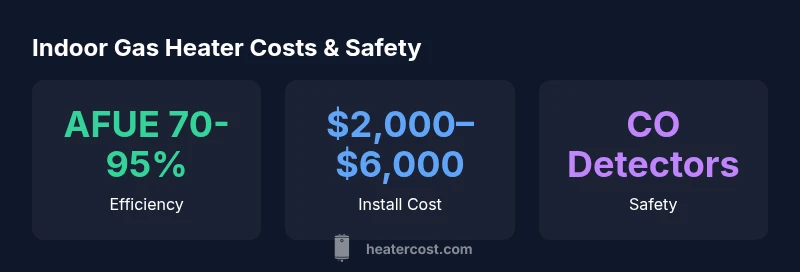
Indoor gas heaters for home require proper venting and a working carbon monoxide detector; safety and code compliance drive installation complexity and ongoing maintenance. AFUE typically ranges from 70% to 95% depending on model, venting type, and installation. Operating costs vary by climate and usage, while professional installation can add significant cost and complexity.
What is an indoor gas heater for home?
An indoor gas heater for home refers to a combustion-based heating appliance designed to warm living spaces inside the home. These devices can be vented or vent-free (ventless). Vent-free models do not exhaust directly through an external vent, but they still require proper room ventilation and adherence to local codes. In contrast, vented units connect to a dedicated flue or vent to the outside. When evaluating an indoor gas heater for home, homeowners should consider space size, existing venting, and safety features such as automatic shutoffs and integrated carbon monoxide detectors. The Heater Cost team emphasizes that choosing the right unit starts with understanding how your space will be used, the level of heat you need, and the constraints of your home interior. In terms of terminology, you may hear the phrase indoor gas heater for home used interchangeably with space heaters or gas-fired room heaters, but the underlying technology and venting requirements vary by model and installation scenario.
Safety and regulatory considerations
Safety is non-negotiable when dealing with combustion appliances. Indoor gas heaters emit combustion byproducts, including carbon monoxide (CO), which is odorless and potentially deadly in enclosed spaces. Always install a CO detector in the same room as the heater and maintain it with fresh batteries. Local and national codes typically require proper clearances from walls, furniture, curtains, and combustibles, as well as regular inspection of venting paths if you choose a vented system. The Heater Cost analysis notes that safety certifications, professional installation, and annual inspections are essential to minimize risk. If you live in a rental or multifamily building, ensure your heating solution complies with the building’s safety policies and your lease terms.
Venting: vent-free vs vented units — pros and cons
Vent-free (ventless) heaters are designed to operate without an exterior vent, which can reduce installation complexity and cost but increases the importance of room size, ventilation, and CO monitoring. Vent-free units are generally suited for well-ventilated spaces and smaller rooms where climate and occupancy are controlled. Vented gas heaters require a dedicated exhaust path to the outdoors and tend to offer higher efficiency and lower indoor pollutant buildup when properly installed. However, vented installations can be more complex, requiring proper vent routing and sometimes duct work. The decision between vented and vent-free should be driven by room size, occupancy patterns, and local building codes.
Sizing, placement, and clearances
Correct sizing ensures comfort without overspending on fuel. A heater that is too large for a room will cycle on and off, reducing efficiency, while an undersized heater won't maintain comfort. Place heaters away from high-traffic walkways and flammables, with at least the recommended clearance on all sides as per the manufacturer’s instructions. Ceiling heights, insulation quality, and window placement all affect heat distribution. For indoor gas heater for home installations, professional assessment helps determine the optimal BTU rating and placement to balance comfort and energy use.
Efficiency and operating costs
Efficiency is typically expressed as AFUE (Annual Fuel Utilization Efficiency) for gas heaters. In general, higher AFUE means less fuel is wasted and lower operating costs, though upfront costs may be higher. The exact AFUE varies by model and venting configuration. When evaluating costs, also account for fuel price volatility in your region, heat loss through walls and windows, and the number of hours the heater runs during a typical heating season. The Heater Cost team suggests running a simple energy model that compares a few models over a typical winter to estimate total costs.
Installation prerequisites and permits
Installing an indoor gas heater for home often requires a licensed professional due to gas line connections, venting, and electrical work. Permitting requirements vary by jurisdiction and may involve inspections after installation. Always check with your local building department to confirm permit needs before purchasing a unit. In many cases, incorrect installation can void warranties or impact insurance coverage. The Heater Cost analysis recommends planning for permit timelines alongside equipment delivery.
Maintenance, safety checks, and CO monitoring
Regular maintenance is key to safety and efficiency. Schedule an annual professional inspection to verify venting integrity, gas connections, flame quality, and CO detector operation. Clean any dust buildup on burners and ensure that the area around the heater remains clear of combustibles. Replace CO detectors per the manufacturer’s guidance, typically every 5–7 years, and test detectors monthly. A proactive maintenance routine reduces the risk of dangerous malfunctions and extends the life of your indoor gas heater for home.
Alternatives to consider when evaluating indoor heat
If safety, installation complexity, or total lifecycle cost seem prohibitive, consider alternatives such as electric heat pumps or radiant electric heaters. These options eliminate combustion byproducts in living spaces, reduce ventilation concerns, and often pair with existing electrical systems. While upfront costs may differ, long-term operating costs and maintenance can be favorable in some climates. The Heater Cost team notes that a hybrid approach—combining a gas heater for peak demand with an electric system for shoulder seasons—can balance comfort, safety, and cost.
How to evaluate models and what to ask installers
When comparing indoor gas heaters for home, ask about AFUE, venting requirements, and installation timelines. Request a written estimate that itemizes equipment cost, venting, permits, and labor. Inquire about warranty coverage, required clearances, and service intervals. Ask installers to provide an energy usage projection based on your room size and climate data, and request references from similar homes. A careful comparison helps ensure you select a unit that meets comfort needs while aligning with safety standards.
Vent-free vs vented gas heaters: basic differences
| Aspect | Vent-free gas heater | Vented gas heater | Notes |
|---|---|---|---|
| Venting needs | Vent-free units generally do not require an exterior vent; however, local codes vary | Vented units require a dedicated vent to the outdoors | Venting requirements vary by model and code |
| AFUE (efficiency) | 70-85% | 80-95% | Higher efficiency often linked to proper venting and installation |
| Installation complexity | Lower; often simpler to install with basic electrical work | Higher; requires proper venting and sometimes duct work | Costs and code compliance depend on home design |
Got Questions?
Do indoor gas heaters require venting?
Yes, most indoor gas heaters require venting to remove combustion byproducts. Some vent-free models exist but demand strict safety measures and compliance with code limits for room size and ventilation.
Yes. Venting is typically required, though some vent-free models exist. Always follow local codes and install detectors.
Are vent-free gas heaters safe for bedrooms or small spaces?
Vent-free heaters can pose CO and oxygen-depletion risks in enclosed spaces. Use only in appropriately sized rooms, ensure ventilation, and install CO detectors.
Vent-free heaters can be risky in small, unventilated spaces. Use CO detectors and follow manufacturer guidance.
What maintenance is needed for indoor gas heaters?
Schedule annual professional inspections, check vents and detectors, and clean burners as recommended by the manufacturer. Replace CO detectors as directed.
Have a pro check it yearly, clean it per instructions, and keep detectors updated.
How do I estimate operating costs?
Costs depend on fuel prices, climate, and usage. Calculate expected hours of operation and apply local gas rates to estimate yearly fuel costs.
Estimate by how long you’ll run it and your local gas rates.
Can I install an indoor gas heater myself?
Most jurisdictions require licensed installation due to gas and venting safety. DIY installation can void warranties and affect insurance.
Don’t DIY—use a licensed professional for safety and warranty reasons.
What are safer alternatives to indoor gas heaters?
Electric heat pumps or radiant electric heaters avoid combustion byproducts and venting concerns, offering a clean alternative in many homes.
Consider heat pumps or electric heaters if safety or venting are concerns.
“Indoor gas heaters can be a safe and efficient option when correctly installed and maintained; the key is proper venting, CO monitoring, and adherence to local codes.”
The Essentials
- Install with a licensed pro to meet code and safety standards
- Know venting needs before selecting vent-free or vented models
- Prioritize CO detectors and regular maintenance
- Compare AFUE to estimate long-term operating costs
- Check permits and local codes before installation