How to Use a Heater in Your House: A Practical Guide
Learn to safely and efficiently operate a home heater, optimize comfort, and reduce energy costs with a step-by-step guide from Heater Cost. Includes safety checks, setup tips, and maintenance reminders.


This guide shows you how to use a heater in your house safely and efficiently. You’ll learn how to choose settings, manage modes, schedule operation, ensure proper airflow, and perform basic maintenance. Follow the step-by-step instructions to stay comfortable while keeping energy costs reasonable and protecting your home.
Why Using a Heater in Your Home Requires a Plan
According to Heater Cost, safe operation starts with a solid plan. Before you flip the switch, consider which rooms need heat, how long you’ll run the device, and how it fits with your thermostat schedule. The Heater Cost team found that most heating inefficiencies stem from poor placement, gaps in ventilation, or running a heater without a defined goal. A thoughtful plan not only boosts comfort but also protects flooring, furniture, and nearby fabrics. In residential settings, the most successful homeowners treat space heating as an integrated part of a broader energy strategy—one that includes routines, seasonal adjustments, and routine checks. This article lays out a practical approach you can apply today, with clear steps, safety warnings, and money-saving strategies that work for electric, gas, and fuel-based heaters alike. Expect to learn how to set up, operate, monitor, and maintain your heater for reliable warmth without overspending.
Safety Essentials Before You Start
Safety should come first. Start by reading your heater’s manual and confirming you understand the mode options and any startup procedures. Ensure there is a clear space around the unit—at least three feet from walls, furniture, drapes, and anything flammable. Use a stable, non-slip surface and avoid placing heaters on furniture or enclosed counters. If you’re using a gas or kerosene heater, install or verify a working carbon monoxide detector in the same room and keep a smoke detector on every level of the home. Regularly inspect power cords for wear and never operate the unit with damaged plugs. By laying the groundwork for safety, you protect your family and extend the life of the heater.
Placement and Clearances for Efficiency
Placement matters more than most homeowners realize. Position portable heaters on hard, level floors and keep them away from high-traffic areas to avoid accidental bumps. Maintain a minimum clearance of 3 feet on all sides and ensure there are no curtains, papers, or clothing that could catch fire. If you have an open floor plan, consider zoning or using multiple small heaters rather than one oversized unit for targeted warmth. For space-saving layouts, place heaters near the core living area rather than in drafty corners. Proper placement not only heats more evenly but also reduces energy waste by reducing hot spots and cold pockets.
Operating Modes, Thermostats, and Temperature Settings
Most modern heaters offer several modes: heat, eco/energy-saving, and fan-only for air circulation. Use heat for cold days, eco when mild, and fan-only to improve air movement without additional heat. The thermostat or control panel should be set to a comfortable baseline—start around 68°F (20°C) and adjust in small increments to avoid temperature swings. If you have a programmable or smart thermostat, schedule different temperatures for morning, day, and night. Avoid setting temperatures too high; sustainable comfort comes from consistent levels rather than hot spikes.
Energy Efficiency: Scheduling, Zoning, and Smart Controls
To maximize efficiency, use scheduling features to align heat output with your daily routine. Zoning—heating different areas at different times—can dramatically cut energy use in larger homes. Smart thermostats learn your patterns and optimize cycling, but they require initial setup and occasional tweaks for accuracy. Keep filter areas clean and ensure the heater’s intake vents are unobstructed to maintain airflow. In well-insulated homes, you’ll get more warmth from less energy, while uninsulated spaces may require longer runtimes but still benefit from proper scheduling.
Everyday Scenarios: Room-by-Room Guidance
Living rooms with high ceilings or open layouts may need a larger or more frequent heat source in peak hours. Bedrooms often benefit from lower temperatures to support sleep, with a gentle, steady heat source during the night. Kitchens can become drafty; consider placing a heater where it won’t interfere with cooking or cooking appliances. In drafty basements or garages, use a heater designed for those spaces and never block exits with equipment. Tailor the heater use to each room’s needs, and always include safety checks when the heater is in use in any room.
Maintenance and Seasonal Care
Regular maintenance keeps performance high and safety risk low. Clean the exterior and check for dust buildup in vents at least every few weeks during heavy use. Inspect cords, plugs, and mounting hardware for wear; replace damaged parts promptly. For fuel-based heaters, have your system inspected by a qualified technician annually. In hot seasons, store the unit safely in a dry, ventilated area and cover it to prevent dust infiltration. Keeping up with routine care reduces breakdowns and extends the heater’s life.
Common Mistakes to Avoid
Avoid running a heater while you’re away from home, pets unattended in rooms with heaters, or using extension cords that can overheat. Don’t block vents or rely on a single tiny heater to heat a large area. Never leave a heater on an unstable surface or near water sources. Choosing the wrong heater for a space or ignoring maintenance can cause fires or carbon monoxide issues. By avoiding these common missteps, you’ll experience steadier comfort and better energy efficiency.
Tools & Materials
- Heater manual(Read model-specific instructions before use)
- Stable, non-flammable mounting surface or stand(Place on a flat surface; avoid furniture)
- Smoke and carbon monoxide detectors(Essential for gas/fuel heaters; recommended for all homes)
- Thermostat or smart control (optional but recommended)(Helps with scheduling and efficiency)
- Power outlet with adequate amperage(Avoid extension cords for permanent setups)
- Clean, dry space around heater(Keep at least 3 feet of clearance)
Steps
Estimated time: 25-40 minutes
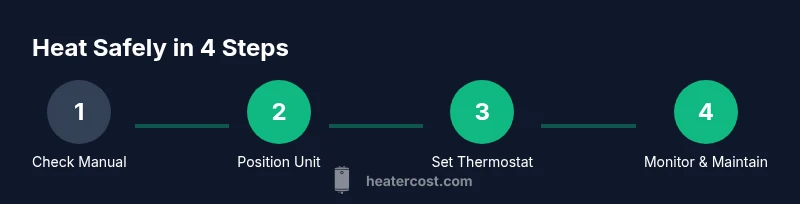
- 1
Inspect space and read the manual
Before turning the heater on, review the user manual for safety guidelines and operation notes. Check that the space around the unit is clear and free from clutter. This initial check reduces fire risk and ensures you understand the control layout.
Tip: Tip: Mark the recommended clearances on the floor with tape to keep others aware. - 2
Position heater on a stable, nonflammable surface
Place the heater on a flat surface away from walls, drapes, and furniture. Ensure there is no risk of it tipping over, and confirm that the outlet is easily accessible. The goal is to minimize heat loss from drafts while avoiding obstructions.
Tip: Pro tip: Use a heat-resistant mat underneath if you must place on carpet. - 3
Check electrical requirements and connections
Verify the heater’s voltage and outlet type match your home's circuit. Do not use extension cords as a substitute for a dedicated outlet. If you hear sizzling or see heat at the plug, unplug immediately and inspect the cord.
Tip: Warning: Overloading outlets can cause fires; use a dedicated circuit if needed. - 4
Turn on the heater and select an appropriate mode
Power up the unit and choose the heat mode for the current conditions. If available, enable eco or energy-saving mode to reduce consumption. Confirm that the fan (if any) runs smoothly without rattling or unusual noise.
Tip: Pro tip: Start with the lowest heat setting and adjust gradually. - 5
Set the thermostat and target temperature
Set a comfortable baseline and avoid large temperature swings. For most homes, a range around 68°F (20°C) is a good starting point. Use a timer if your unit supports it to prevent overheating when you’re away.
Tip: Note: Small, steady increases are better for comfort and efficiency than abrupt jumps. - 6
Enable scheduling or smart controls if available
If you have a programmable thermostat or smart heater, program wake, daytime, and night profiles. Align heat with your daily routine to maximize efficiency and comfort. Regularly review schedules during seasonal changes.
Tip: Pro tip: Test a new schedule for a week and adjust as needed. - 7
Monitor operation and adjust as needed
Keep an eye on room comfort and energy use. If rooms heat unevenly, consider adjusting placement or adding a supplemental heater for cooler zones. Check for drafts and seal leaks to improve effectiveness.
Tip: Warning: If you notice excessive humidity or condensation, reassess ventilation. - 8
Power down and perform post-use safety checks
When you’re done, turn off the heater and unplug if you won’t be using it for an extended period. Inspect for any signs of wear, and store away from children and pets. Cleaning the unit and vents helps maintain efficiency for the next use.
Tip: Pro tip: Schedule a monthly, quick check of the heater’s cords and vents.
Got Questions?
Is it safe to leave a space heater on overnight?
Most space heaters should not be left running unattended overnight. If you need overnight warmth, use a heater with built-in shutoff timers and place it in a room with proper ventilation and a working smoke detector. Always follow the manufacturer’s guidelines.
Leaving a space heater on overnight is not generally recommended unless you have a timer or automatic shutoff and the room has proper ventilation and detectors.
Can I use a heater in any room of my house?
Electric space heaters are versatile but not ideal for every room. Avoid damp areas like bathrooms and ensure the room is adequately ventilated if using gas or kerosene units. Always keep the heater away from flammable materials and out of high-traffic zones.
Heaters work in most rooms, but avoid bathrooms and very damp spaces, and keep flammables away.
What maintenance does a heater require?
Perform regular visual inspections, clean vents, and replace or clean filters as needed. Have fuel-based systems professionally serviced annually. Keeping cords intact and ensuring detectors are functional helps prevent hazards.
Regular inspections, cleaning vents, and annual professional service for fuel-based units keep heaters safe and efficient.
What should I do if I smell gas or hear unusual noises?
If you smell gas, leave the area and call your gas supplier or emergency services. For unusual noises, turn off the heater and have it inspected by a qualified technician. Do not attempt DIY fixes that involve fuel lines or electrical components.
If you smell gas, leave quickly and call for help. For noises, shut down and get a professional to check it.
Should I rely on a thermostat or a manual knob?
A thermostat or smart control improves consistency and energy efficiency by maintaining a stable temperature. Manual knobs are simple but can lead to temperature fluctuations. When possible, use a programmable thermostat for optimal results.
Thermostats give you stable temperature and savings; knobs are simpler but less consistent.
How can I improve energy efficiency when using a heater?
Pair your heater with proper insulation, seal leaks, and use zoning to heat only occupied spaces. Program heat schedules and use eco modes when appropriate. Regular maintenance also keeps efficiency high.
Improve efficiency with insulation, sealing leaks, zoning, and smart scheduling.
Watch Video
The Essentials
- Plan and safety first before turning on a heater.
- Place heaters with ample clearance on stable surfaces.
- Use thermostat and scheduling for energy efficiency.
- Perform regular maintenance to extend life.
- Avoid common mistakes that raise fire risk.