How to heat a small room without a heater
Learn practical, safe methods to warm a small room without a heater. insulation, sunlight, textiles, and smart strategies to stay comfortable and save energy.


To heat a small room without a traditional heater, seal drafts, layer with insulation, and use passive heat from sunlight and furnishings. Focus on creating a stable microclimate: close gaps, add warm textiles, place rugs on cold floors, and maximize sun exposure during the day. Use safe heat packs or hot water bottles for brief relief if needed.
Understanding the Challenge of a Small Space
Small rooms present a unique balance between heat loss and heat retention. Their compact footprint means warmth can feel immediate, but drafts and improper insulation can erode comfort quickly. According to Heater Cost, the main challenge is heat loss through drafts and poor insulation, which can make a small room feel chilly even when outdoor temperatures are mild. The objective is to create a stable microclimate by focusing on retention rather than generation. By reducing air leakage, optimizing sun exposure, and layering warmth-retaining materials, you can stay comfortable without relying on a traditional heater. This approach works especially well during transitional seasons when temperatures swing between day and night. Throughout this guide, we’ll cover practical, low-cost steps that homeowners, renters, and property managers can implement right away while avoiding risky or high-energy solutions.
Layering for Warmth: Insulation and Sealing
Drafts are the enemy of warmth in a small room. The first line of defense is sealing gaps around doors and windows. Use weatherstripping tape on movable frames and install a door draft stopper to block cold air from entering under the door. If windows rattle or leak, add window seals or weather-stripping, and consider a temporary window insulation film for seasonal shifts. For renters or temporary setups, thick, heavy curtains can dramatically reduce heat loss at night, while still allowing daytime light when opened. The aim is to minimize uncontrolled air exchange without sacrificing breathability for healthy indoor air. A rug or carpet over cold floors also reduces conduction losses and helps your body stay warm more comfortably.
Maximize Passive Heat from Sunlight
Solar gain is a free, abundant source of warmth. During sunny hours, open curtains to let in daylight and warm surfaces; close them at night to reduce heat loss. If you have a window that faces the sun path, angle furnishings to capture more heat near where you spend time. Reflective surfaces behind seating or on the window sill can bounce warmth deeper into the room. A simple reflective barrier (like aluminum foil on a cardboard sheet) placed behind a chair or plant can help direct some solar warmth toward your body. Keep humidity in check, as moisture can make a small space feel cooler than it is. This section demonstrates how to leverage natural heat rather than turning to a heater.
Heat Retention with Textiles and Furnishings
Textiles play a critical role in how warm a space feels. Layer thick curtains, pair with a plush rug, and add throws or blankets to seating areas. Wearing warm clothing indoors reduces the need to raise ambient temperature. Place cushions or throw blankets where you rest; their insulating layers create micro-climates that stay warmer longer. Each textile layer reduces heat loss through conduction and convection and enhances perceived comfort, which is especially important in small rooms with limited square footage.
Thermal Mass and Water Bottles
Thermal mass stores heat and helps stabilize temperature swings throughout the day. Start by filling a few BPA-free bottles with warm water (not boiling), wrap them in a towel, and place them near your bed or seating area. They slowly emit heat as the room cools, providing short-term comfort for several hours. Use caution to avoid burns and never rely on hot water bottles as a primary heat source. This is a safe, inexpensive way to extend warmth without operating a heater, especially at night.
Circulating Air Without a Heater
Strategic air movement can prevent stagnant cold pockets. A small desk or floor fan, set on a gentle circulation, helps mix warm air near the ceiling with cooler air near the floor. If you can, run the fan in a mode that nudges warm air downward rather than pulling it away from you. Avoid creating large drafts that can quickly cool surfaces. The goal is even temperature distribution and improved comfort without increasing energy use.
Safe Short-Term Heat Sources Within Reason
When practical and safe, brief use of non-flame options like hot water bottles or microwavable heat packs can provide relief. Always wrap heat sources in a towel or cover to prevent burns and place them away from bedding and fabrics that could catch fire. Do not use candles or open flames in confined spaces. These measures are intended to supplement warmth, not replace permanent heating, and must be used with caution.
Creating a Cozy Micro-Climate: Quick Fixes
Small-room warmth benefits from a holistic approach: align furniture to minimize drafts, keep windows sealed at night, and dress warmly for indoor comfort. Elevate the occupant's warmth by choosing siting positions that catch solar gains and avoid cold walls. In practice, combine a few core strategies—draft sealing, window insulation, dense textiles, and sun exposure—to achieve noticeable comfort gains without a heater.
Authoritative Sources
- Energy.gov – Insulation and sealing tips for homes: https://www.energy.gov/energysaver/insulation-and-sealing
- EPA – Indoor Air Quality: Ventilation and indoor air quality guidance: https://www.epa.gov/indoor-air-quality/ventilation-and-indoor-air-quality
- University extension resources on weatherization and energy efficiency: https://extension.umn.edu/weatherization-home
The Heater Cost Perspective
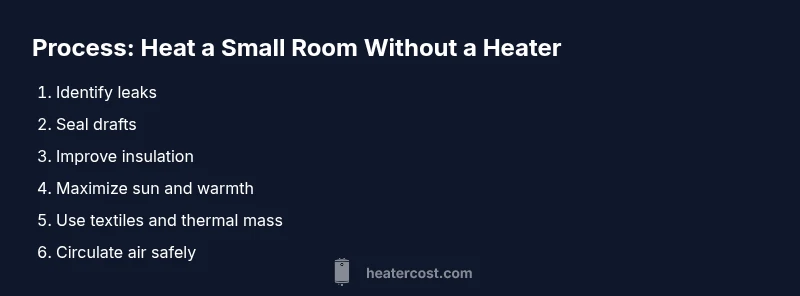
From a practical standpoint, the Heater Cost team emphasizes performing a phased approach: seal first, insulate second, then leverage passive heat sources. This method minimizes energy use while maximizing thermal comfort. The Heater Cost analysis shows that reducing heat loss and improving passive warmth yields meaningful comfort improvements and cost savings over time. For homeowners, renters, and property managers, prioritizing efficiency and comfort aligns with best practices in energy management.
Tools & Materials
- Draft stopper / door bottom seal(Place on exterior doors to block cold air.)
- Weatherstripping tape(Self-adhesive foam or silicone; measure frames before cutting.)
- Thermal curtains or heavy drapes(Close at night to reduce heat loss.)
- Rugs or carpet(Cover cold floors; helps reduce conduction.)
- Window insulation film(Clear plastic film; shrink with a hairdryer.)
- Reflective radiant barrier foil(Place behind seating or mirrors to reflect heat.)
- Thermometer or room thermometer(Track temperature and keep a comfortable range.)
- Hot water bottle or microwavable heat packs(Wrap in a towel to prevent burns; use sparingly.)
- Extra blankets or warm clothing(Layer for comfort without increasing room temperature.)
Steps
Estimated time: 60-90 minutes
- 1
Identify drafts and heat-loss pathways
Inspect doors, windows, and electrical outlets for cold spots. Note the most significant leaks to prioritize sealing. This initial assessment helps you target where the heat escapes first.
Tip: Use a piece of tissue or a tissue paper near suspected gaps to visualize drafts. - 2
Seal gaps around doors and windows
Apply weatherstripping to door frames and install a door draft stopper. Add weatherstripping to windows if gaps persist. A well-sealed shell keeps warmth from leaking out.
Tip: Seal the largest gaps first and test by feeling for air movement after sealing. - 3
Improve insulation on openings
Add window insulation film during cold periods and consider removable panels for persistent drafts. Use thick curtains to reduce heat loss at night.
Tip: Choose curtains with a tight weave and dark color to improve thermal performance. - 4
Create a warmer daytime microclimate with sunlight
Open blinds to maximize solar gain on sunny days. Move seating to capture warm surfaces and reflect heat deeper into the room.
Tip: Aim for sun exposure on the area where you spend the most time. - 5
Add textiles and flooring upgrades
Lay down a thick rug, layer blankets over seating, and use heavier fabrics for curtains. The extra layers reduce heat loss through conduction and convection.
Tip: Even small textile changes can have a noticeable impact on comfort. - 6
Use thermal mass and water bottles
Fill a few bottles with warm water, wrap in a towel, and place near you during rest. They slowly release heat, extending warmth without energy use.
Tip: Do not overfill bottles and always test temperature before use. - 7
Circulate air without a heater
Use a small fan at low speed to gently move warm air downward and toward you. Avoid creating strong drafts that make the space feel colder.
Tip: Position the fan to optimize air mixing rather than direct blowing on you.
Got Questions?
Is it safe to heat a small room without a heater?
Yes, with careful insulation and non-combustible methods. Avoid open flames and use safe heat packs or hot water bottles for short-term relief.
Yes. It’s safe if you rely on insulation, sun, and safe heat packs instead of flames or unvented devices.
How long does it take to feel warmer after sealing drafts?
Results vary by room, but you may notice a difference within an hour of sealing drafts and maximizing sun exposure.
You might notice warmth within an hour, depending on the room and sun exposure.
Can using hot water bottles really heat a room?
They provide localized warmth for a few hours and are best used near where you rest. They are not a replacement for longer-term heating.
Yes, hot water bottles can heat a specific spot for a few hours, but they aren’t a full substitute for heating.
Are there risks using insulation film or foil behind furniture?
When used as directed, these materials are safe. Avoid covering outlets or blocking ventilation and ensure you do not trap humidity.
It’s generally safe if used properly and you avoid blocking vents.
When should I consider using a heater?
If someone in the room has health concerns or if the space remains uncomfortable despite non-heating methods, consider a heater while prioritizing safety and energy efficiency.
If warmth is essential for health or comfort after trying non-heating methods, consider a heater and follow safety guidelines.
Can a fan help in winter?
Yes, to circulate air and even out temperature, but use it sparingly to avoid creating cold drafts.
A fan can help distribute warm air, but don’t overdo it and avoid drafts.
Watch Video
The Essentials
- Seal drafts first to reduce heat loss
- Use sunlight and reflective surfaces to boost passive warmth
- Layer textiles and flooring to improve comfort
- Monitor temperature with a simple thermometer
- Reserve heaters for critical scenarios; prioritize energy-efficient methods