How Much Does It Cost to Run a Space Heater?
Discover the true cost to run a space heater with a simple calculator, real-world examples, and practical tips to lower electricity bills while staying warm.


How much does it cost to run a space heater? A practical overview
According to Heater Cost, understanding space heater running costs starts with three levers: wattage, daily operating hours, and the price of electricity where you live. Even small changes in any of these can ripple into noticeable annual expenses. In practice, many households underestimate how much a heater adds to energy bills, especially when used for long stretches in poorly insulated spaces. This article explains cost estimation in clear terms so homeowners, renters, and property managers can plan efficiently, compare options, and avoid surprises at the end of the month. By framing the cost around simple inputs, readers gain confidence to make informed choices about comfort and budget while staying mindful of energy use.
The calculation explained: watts, hours, and rate
The core formula is straightforward: annualCost = (watts / 1000) * hoursPerDay * 365 * costPerKWh. Each input corresponds to a real-world decision: watts is the heater’s power rating, hoursPerDay is how many hours you run it, and costPerKWh is your electricity price. This approach keeps estimates practical and comparable across different setups. For example, using a 1500 W heater for 4 hours per day at $0.15 per kWh yields: 1.5 kW * 4 * 365 * 0.15 = $328.50 per year. Remember, actual costs hinge on insulation, room size, and how consistently you use the heater. This section helps translate those factors into a tangible yearly figure.
Real-world usage scenarios: small rooms vs large spaces
Small rooms with good insulation and brief daily use tend to incur lower costs. If you run a 1000 W heater for 2–3 hours daily at typical electricity rates, costs stay modest, especially if you seal drafts. Larger spaces, higher wattage, or longer runtimes push annual costs higher quickly. The key is to align heater choice with room size and intended use. Zone heating—warming only occupied areas—often provides significant cost savings compared with heating the entire house with one large unit. Heater efficiency, thermostat settings, and the duration of use all influence the bottom line, and users should consider these together rather than in isolation.
Using the calculator: a step-by-step guide
To get started, enter three values: heater wattage (in watts), your estimated hours of use per day, and your electricity price per kilowatt-hour. The calculator will compute annual costs as: watts/1000 * hoursPerDay * 365 * costPerKWh. Use conservative defaults if you’re unsure, then test “what-if” scenarios—for example, swapping a 1500 W unit for a 1000 W unit or reducing daily use by an hour. This hands-on approach helps homeowners evaluate trade-offs between comfort and cost, and fits neatly into a monthly energy budget.
Cost-saving strategies and smart usage
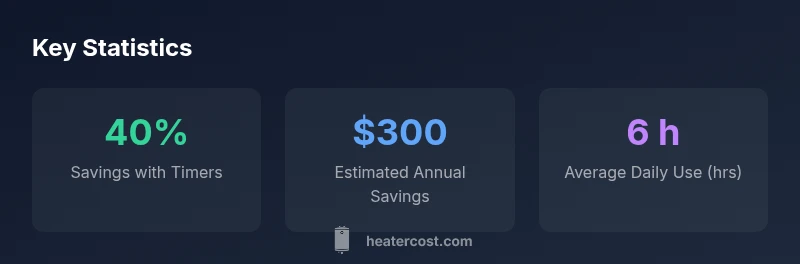
Reducing running costs starts with smarter usage and smarter equipment. Pick the smallest wattage that reliably heats your space, and pair it with a programmable thermostat or timer to avoid heat when you’re not present. Improve insulation and seal leaks to reduce heat loss, so you don’t have to run the heater as long. Consider zone heating, placing the heater away from drafts and flammable items, and using a fan to distribute warm air more evenly. When possible, use a space heater as a supplement to your primary heating system rather than a replacement, and compare it against central heating options for the same space and time period.
Safety considerations and best practices
Space heaters must be operated with care. Keep at least 3 feet of clearance around the unit, place on a hard, nonflammable surface, and never leave it unattended while sleeping or leaving the home. Use models with automatic shutoff features, and ensure cords aren’t damaged or frayed. Regular inspections, clean filters, and avoiding extension cords for continuous use reduce fire risk. While electric space heaters do not pose carbon monoxide risk, they can still cause fires if misused. Follow manufacturer instructions and local safety codes to maintain a warm, safe living environment.
Interpreting results and budgeting for warmth
The cost estimates from the calculator are a planning tool, not a fixed bill. Use them to forecast quarterly or monthly energy expenses, compare heater options, and identify opportunities to reduce usage without sacrificing comfort. If you notice a large discrepancy between expected and actual bills, review insulation, thermostat settings, and daily usage patterns. Keep a running log of space heater use during shoulder seasons to fine-tune your budget, and reassess annually as electricity rates or room conditions change.