Heat Pro: A Practical Guide to High-Efficiency Heating Costs
Discover how heat pro upgrades affect upfront costs, energy savings, and installation considerations. This guide helps homeowners, renters, and managers evaluate high-efficiency heating options and plan smarter investments.


What Heat Pro Really Means
The term heat pro is used by homeowners, renters, and property managers to describe a professional-grade heating solution that prioritizes energy efficiency, comfort, and reliability. In practice, a heat pro upgrade might involve a high-efficiency furnace, a modern air-source or ground-source heat pump, or a high-performance boiler with modern controls. The goal is to strike a balance between upfront cost, long-term operating expenses, and indoor comfort. For readers of Heater Cost, heat pro also implies a careful sizing analysis, proper ventilation, and a system that integrates well with existing ducts or hydronic networks. In 2026, the Heater Cost analysis notes that outcomes depend heavily on installation quality and climate suitability, not just the equipment alone.
- Efficiency matters: Higher efficiencies reduce operating costs over time, especially in cold seasons.
- Sizing is critical: A system that is too big or too small wastes energy and money.
- Professional installation wins: A pro installer helps ensure duct sealing, refrigerant charge accuracy, and correct thermostat integration.
How Heat Pro Upgrades Work in Real Homes
A heat pro upgrade typically follows a three-step process: engineering assessment, equipment selection, and professional installation. The engineering phase uses load calculations, insulation evaluation, and energy-use history to determine the right equipment. The selection phase matches efficiency ratings (AFUE for furnaces, SEER/HSPF for heat pumps) with climate-specific needs. The installation phase requires precise refrigerant handling (for heat pumps), duct sealing, and a commissioning test that verifies performance across operating modes. Homeowners should expect a written proposal detailing equipment, efficiency targets, warranty terms, and a clear installation timeline. In many cases, pairing a heat pro system with smart thermostats or zoned controls boosts overall savings.
Cost Considerations and Value Proposition
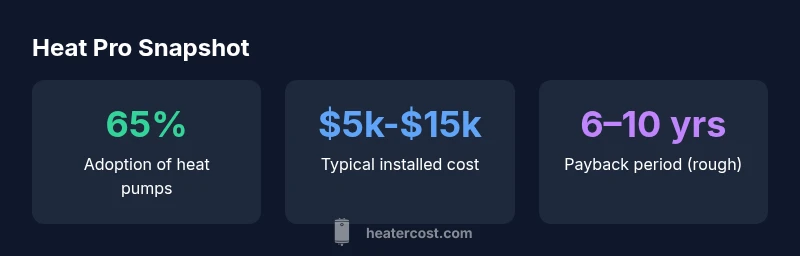
Upfront costs for heat pro upgrades can vary widely based on the system type, the complexity of integration with existing infrastructure, and local labor rates. When evaluating value, it helps to consider: long-term energy savings, potential rebates or incentives, and the system’s expected lifespan. Payback depends on climate, electricity prices, and usage patterns; in temperate regions, the return might occur earlier due to lower heating requirements, whereas in harsher climates the savings ramp up more quickly with efficient equipment. Maintenance contracts and extended warranties add to the total cost but can help prevent expensive repairs down the line. Heater Cost’s framework for 2026 emphasizes viewing these expenses as a long-term investment in home comfort and resilience.
Climate, Home Type, and System Selection
Not every climate benefits equally from every heat pro solution. In milder areas, heat pumps can deliver comfortable heating with low energy use, especially when paired with defrost strategies for cold snaps. In colder regions, a dual-system approach—such as a heat pump paired with a high-efficiency furnace—can provide reliability and efficiency across seasons. Home size and insulation levels influence the decision; small, well-insulated homes may thrive with compact heat pumps, while larger homes might justify a two-stage furnace or a multi-zone distribution strategy. For renters or owners of older homes, retrofit challenges (ductwork changes, electrical upgrades) must be anticipated and budgeted.
Maintenance and Longevity: Keeping Heat Pro at Peak Performance
Routine maintenance is essential to keep heat pro systems performing as designed. Annual inspections should cover refrigerant levels (for heat pumps), blower and motor lubrication, duct leakage assessment, and thermostat calibration. Regular air-filter changes, dust prevention, and humidity control can extend system life and maintain efficiency. A well-maintained heat pro installation may show consistent performance across seasons and avoid the sudden declines in comfort that come with aging components. Consider enrolling in a maintenance plan that includes seasonal checkups and priority scheduling after severe weather events.
Installation Steps and What to Expect
A typical heat pro installation unfolds in phases:
- Pre-install assessment and energy audit
- Equipment selection and permit coordination
- Ductwork or piping modifications, if needed
- Equipment installation and refrigerant charging (for heat pumps)
- System commissioning and user-training
Most homeowners will require a multi-day process, with a post-install check to verify performance. Choosing a certified contractor who provides transparent load calculations, warranty details, and post-install support is crucial. In 2026, the Heater Cost analysis reinforces the importance of reputable installers and clear communication about expected energy savings and comfort improvements.