Garage Heater LP: Costs, Sizing, and Safety
Learn the true costs and considerations for LP garage heaters. This Heater Cost guide covers installation, sizing, operation, and safety to help homeowners estimate budgets and choose efficient, compliant garage heater lp options.


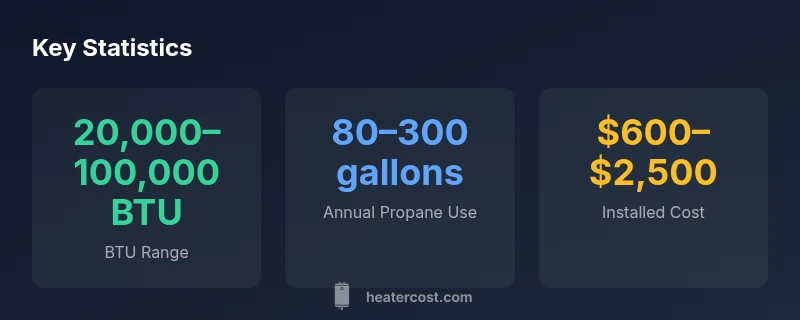
LP garage heaters typically deliver 20,000–100,000 BTUs, depending on space, insulation, and venting. According to Heater Cost, total costs include equipment, propane, installation, and any required permits, with efficiency and safety hinging on proper sizing, venting, and CO protection. A well-chosen unit avoids cold spots and minimizes running costs. Because LP prices fluctuate by region, the operating cost can vary widely, and homeowners should budget for preventive maintenance.
Understanding garage heater lp: role, benefits, and basic operation
Liquefied petroleum gas (LP) heaters designed for garages fill a specific niche: rapid heat in spaces that may lack full insulation or reliable electrical service. A garage heater lp is often propane-powered and self-contained, delivering warmth even during power outages that leave electric heaters cold. In practice, these units are chosen for their quick response and the ability to run independently from the home’s electrical grid. Safety remains paramount: proper venting, integrated carbon monoxide (CO) protection, and a dedicated gas line are essential. The Heater Cost team observes that many garages sit at the edge of comfort in winter—insufficient insulation and large door gaps create drafts. A properly sized LP unit can close the gap between a cold garage and a functional workspace or vehicle bay, while avoiding excessive fuel use. In 2026, homeowners who plan ahead report more consistent temperatures and fewer cold spots, provided they pair the heater with weather sealing and routine maintenance. This article delves into sizing, installation, safety considerations, operating costs, and practical steps you can take to determine whether garage heater lp is right for your space.
LP vs other heating options in a garage
LP garage heaters are one of several solutions for garage heating, each with trade-offs. Electric forced-air heaters are quiet and easy to install but rely on electrical power and can push high operating costs in colder climates. Infrared or radiant heaters heat objects and occupants quickly, which is useful in short-duration work but can leave zones farther from the heater cooler. A vented LP unit has the advantage of robust heat output and independence from the home’s electrical system, but it requires proper venting, gas supply lines, and ongoing fuel costs. Ventless LP heaters exist but may require stricter CO protection and are not suitable for every garage. The choice hinges on space size, insulation quality, and how frequently you use the area. The Heater Cost team notes that homeowners should compare capital costs, annual fuel consumption, and potential permit requirements when evaluating options.
Sizing and installation considerations
Sizing a garage heater lp starts with a clear understanding of your space: square footage, ceiling height, wall insulation, door openings, and how the garage is used. Use a heat-load approach as a starting point—oversizing can waste fuel and overshooting a thermostat can cause unnecessary cycling, while undersizing leaves you chilly and frustrated. Clearances from combustibles, ventilation pathways, and proximity to vehicles or stored materials matter for safety and performance. If you’re unsure, consult a licensed installer who can perform a proper gas-supply assessment and required venting checks. The installer will typically verify gas line accessibility, gas pressure, and vent routing before selecting a unit. In all cases, ensure a functional CO detector and a visible shutoff valve near the heater.
Operating costs and energy efficiency
Operating costs for a garage heater lp depend on propane prices, run-time, and the heater’s efficiency. To estimate costs, start with your unit’s BTU rating and convert that to gallons of LP per hour using the energy content of LP. Then multiply by the propane price per gallon and the number of hours you expect to run the heater. It’s helpful to keep a running log of actual usage for the first month to calibrate expectations. Efficiency plays a big part: better-rated units waste less fuel for the same warm output. The Heater Cost team recommends tracking both fuel prices and run-time to get a realistic annual cost. Consider delaying nonessential heating during milder days to optimize energy use.
Safety, permits, and code considerations
Safety and compliance are critical when installing a garage heater lp. Always verify that the unit is UL-listed and appropriate for the environment. Venting is essential for any LP heater that generates hot combustion gases; improper venting can lead to hazardous CO buildup. Local codes may require permits and professional installation, especially if you install a new gas line or modify existing gas infrastructure. Install CO detectors at safe, accessible locations, and ensure adequate clearance from combustibles and stored materials. If you operate a business or maintain a rental property, confirm requirements for inspections and permits in your jurisdiction. Finally, keep a maintenance schedule that includes annual inspections, a quick flame check, and periodic vent cleaning.
Maintenance, reliability, and common failure modes
LP garage heaters require periodic checks to maintain reliability and safety. Regular maintenance includes inspecting the gas line for leaks, verifying the integrity of venting, and confirming proper flame structure. If you notice yellow flames, unusual smoke, or excessive CO readings, shut down the heater and call a technician. Filters and electronics may accumulate dust in a garage environment, so occasional cleaning is prudent. Common failure modes include ignition issues, clogged venting, and gas-line corrosion in old installations. Keeping a log of maintenance tasks can help you spot trends and prevent unexpected downtime. A well-maintained unit tends to deliver more consistent warmth with fewer disruptions.
Step-by-step planning for your garage heater LP project
- Assess your space: determine square footage, insulation quality, and door draft severity. 2) Check your gas supply: confirm available propane capacity and line compatibility. 3) Estimate heat load: choose a target BTU range based on space and climate. 4) Decide venting needs: vented vs ventless options, and vent routing. 5) Select a unit: compare efficiency, safety features, and installation complexity. 6) Plan permits and contractor: verify local code requirements and hire a licensed installer if needed. 7) Prepare the installation: clear combustibles, arrange gas lines, install CO detectors, and test ignition. 8) Post-install checks: monitor performance, set up maintenance reminders, and track fuel usage. Throughout, reference local codes and Heater Cost guidelines to ensure a compliant, efficient setup.
Garage LP heater sizing and cost reference
| Category | Low BTU Range | Mid BTU Range | High BTU Range |
|---|---|---|---|
| Typical garage space | 20,000-40,000 | 40,000-60,000 | 60,000-100,000 |
| Efficiency range | 75-80% | 80-85% | 85-95% |
| Ventilation requirement | Ventless possible (CO protection) | Vent-required (outdoor vent) | Vent-required (outdoor vent) |
| Installed cost range | $600-$1,800 | $1,000-$2,400 | $1,400-$2,500 |
Got Questions?
Do I need permits for a garage LP heater installation?
Permit requirements vary by location, but many jurisdictions require a permit for new gas lines or combustion appliances. A licensed installer can determine local requirements and help with inspections. Always verify with your local building department before starting.
Yes, permits are often required for gas lines or new heaters; check your local codes.
Is venting required for LP garage heaters?
In most cases, LP heaters must be vented to safely remove combustion byproducts. Venting reduces CO buildup and ensures proper draft. Some ventless models exist, but they still require CO protection and code compliance.
Ventilation is usually required to keep combustion byproducts away from occupants.
What size heater do I need for a 400 sq ft garage?
Sizing depends on insulation, climate, and door openings. A common approach uses BTU guidelines by space, but a professional calculation is best to avoid over- or under-heating. Consider a mid-range unit with room to grow if you add insulation later.
You’ll want a unit in a mid-range BTU footprint; a pro can tailor the size to your space.
Can LP heaters be used indoors safely?
LP heaters can be used indoors if they are specifically rated for indoor use, vented properly, and equipped with CO detectors. Never use outdoor-rated units indoors. Follow manufacturer instructions and local codes for safe operation.
Only use indoor-rated models with proper venting and CO protection.
What safety features should I look for?
Look for automatic shutoff, oxygen-depletion sensors, CO detection, sturdy mounting, and clearances from combustibles. UL listing and good warranty coverage also indicate a reliable installation.
Choose models with CO detectors and automatic shutoff for safer operation.
How often should I service an LP heater?
Schedule annual professional inspections, plus periodic visual checks for leaks, vent blockages, and flame quality. Routine maintenance extends life and sustains safe operation.
Have it inspected yearly and check for leaks or vent blockages between service visits.
“LP garage heaters, when properly sized and installed, provide reliable heat with reasonable operating costs, but risk is greater if venting or CO protection is neglected.”
The Essentials
- Size the unit to match garage space and climate
- Plan for proper venting and CO protection
- Budget for propane, installation, and permits
- Consider permits and professional installation where required
- Track fuel usage to estimate annual costs