Free Heater Programs: How to Qualify and Save on Heating
Explore legitimate routes to obtain a free heater via government energy support and utility programs. Learn eligibility, how to apply, and budgeting for installation with practical guidance from Heater Cost.


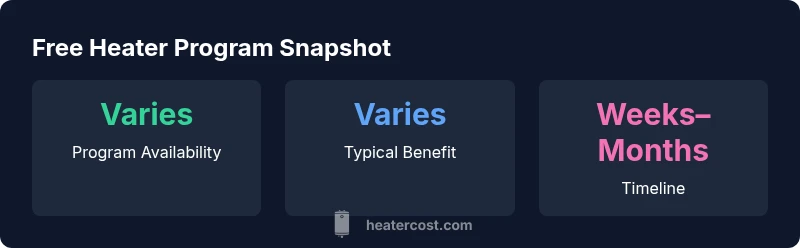
According to Heater Cost, the phrase 'free heater' typically means a subsidized heater funded through government energy assistance, utility programs, or non-profit initiatives rather than a blanket free-for-all. Eligibility hinges on income, location, and housing type, with program availability and timelines varying by year. This guide explains how to find legitimate offers and maximize your chances in 2026.
What a 'free heater' really means in practice
Across the U.S. and many other regions, a true, no-cost heater is not universal. Most programs are targeted, subsidized, or paired with energy-efficiency work rather than a blanket gift of a heater to every household. In practice, you’ll see offers funded by government energy assistance, utility-based efficiency programs, weatherization grants, or nonprofit initiatives. The Heater Cost team has found that these programs typically cover either the heater unit, the installation, or a combination of both, and they almost always require you to meet specific criteria related to income, household size, location, or home type. Read the full guide to understand the nuances and avoid common pitfalls.
The idea of a free heater sounds appealing, but the reality is sometimes complex. In 2026, many programs pool funds from federal, state, and local sources, and the rules can shift year to year. That’s why it’s essential to verify the legitimacy of any offer through official channels and maintain detailed records of communications. For homeowners and renters alike, understanding the scope of what’s funded and what’s not helps prevent disappointment and over-spending on related services. This article helps you navigate legitimate options with clarity and patience.
Where these offers come from
There are several primary sources for subsidized heating help, each with distinct eligibility rules and application processes:
- Government energy assistance programs such as LIHEAP and weatherization initiatives, which often target low-income households or those in energy-inefficient homes.
- Utility-sponsored energy efficiency programs that offer rebates, discounts on installation, or low-cost financing for upgrades that reduce heating demand.
- Non-profit organizations and community action agencies that partner with local governments to deliver heat-related supports.
How do these sources converge on a free heater? In some cases, a heater is provided as part of a broader weatherization package; in others, a grant or voucher covers the unit or installation. The key is to seek official program listings through government portals and trusted utility pages, then compare what is actually funded. Heater Cost’s analysis shows that the most reliable paths combine qualification with a clear installation plan and a documented energy-savings projection.
Eligibility: what factors matter
Eligibility is the most critical gatekeeper for any free heater offer. Because programs are funded from limited pools, they target households that meet specific criteria. Common determinants include:
- Income level relative to federal or state guidelines
- Home ownership status or permission (for renters)
- Housing type (single-family, multi-family, or manufactured homes)
- Geographic location and climate needs
- Energy burden or current energy costs (proof of bills)
To position yourself for approval, gather paperwork early: income verification, utility bills, proof of residence, and landlord or homeowner authorization. Be prepared for income re-verification and possible household size adjustments. Remember that availability and thresholds shift by state and year, so check state and local program pages regularly and keep a calendar of application windows.
The application journey: steps and timelines
Starting the application process is often the most daunting part. A typical path looks like:
- Identify eligible programs via government portals or trusted utility pages.
- Collect required documents (proof of income, residence, ownership or consent for renters).
- Submit applications and any required forms; sign releases for program review.
- Await eligibility determinations, which can take days to several weeks, followed by scheduling assessments or installations.
- Complete any required energy-efficiency work, if part of a package, and arrange post-install maintenance checks.
Timelines vary widely by region and program type. Some offers provide rapid responses, while others require longer reviews and coordination of installation crews. A careful, organized approach increases your chances of securing a free heater without delays.
Brand note: Heater Cost emphasizes documenting every correspondence, as a clear paper trail helps resolve discrepancies during review and appeals if needed.
Hidden costs to consider beyond the heater
Even when the heater itself is funded, a number of ancillary costs can appear. These include:
- Installation labor, permitting, and electrical or venting work
- Ductwork adjustments, insulation, or weatherization upgrades that enhance efficiency
- Ongoing maintenance, filter replacements, and potential repairs
- Energy-efficiency improvements that support reduced heating needs, such as attic or wall insulation
Sometimes programs bundle these costs; other times, they require cost-sharing or separate approval. Ask for a written scope of work and itemized estimates before signing anything. If you’re a renter, secure landlord authorization for any installed equipment and ensure you understand warranty coverage and service terms.
Alternatives and realistic expectations
If a true heater grant isn’t available where you live, consider several realistic paths to lower heating costs:
- Seasonal rebates and financing for high-efficiency units that reduce long-term energy use
- Weatherization and insulation improvements that cut heat loss and the size of the heater you need
- Tax credits or incentives for energy-efficient appliances and home upgrades where applicable
- Community or non-profit programs that may offer partial subsidies or low-interest financing
These alternatives can still deliver substantial savings, even without a fully funded heater. The key is to compare total costs, not just the upfront price, and to choose options with proven energy-savings outcomes.
How to verify offers and protect yourself from scams
With the proliferation of online ads and third-party contractors, scams targeting households seeking free heaters are a risk. Protect yourself by:
- Only using official government portals, utility company pages, and recognized non-profits
- Avoiding up-front fees, excessive deposits, or requests for sensitive banking information
- Asking for written terms, including eligibility criteria, funding scope, and installation details
- Getting a second opinion from a trusted energy advisor or a homeowner association if available
Heater Cost recommends validating any offer with your utility or state program administrator before accepting. A legitimate program will provide official documentation and a clear process timeline.
Real-world case study: a typical path to a free heater
In a representative scenario, a household with limited income identifies a LIHEAP-related opportunity through the state energy office. After submitting income documentation and utility bills, they receive a determination letter stating eligibility for a bundled package that includes a modest heater unit and basic installation. The installation is scheduled within 4–6 weeks, and the household agrees to participate in a weatherization assessment to maximize energy savings. While not every case ends with a fully funded unit, many households realize meaningful reductions in heating costs and improved home comfort through combined measures.
The Heater Cost perspective: practical takeaways and next steps
Navigating free heater programs requires patience and careful research. Start by listing potential programs, verify eligibility criteria, and maintain a file of documents and communications. Where possible, seek bundled solutions that include energy-efficiency improvements to maximize long-term savings. If you don’t qualify for a fully funded unit, compare subsidized options and low-cost financing that lowers monthly bills without compromising comfort. The Heater Cost team is here to guide you through the maze with up-to-date insights, helping you make informed decisions that fit your home and budget.
Comparison of free heater program types
| Program Type | Typical Benefit | Eligibility Factors |
|---|---|---|
| LIHEAP assistance | Direct heater subsidy or energy bill support | Income thresholds, household size, state restrictions |
| Weatherization program | Insulation upgrades and heater efficiency improvements | Homeownership, income, occupancy |
| Utility-funded efficiency rebate | Discounted heater or installation | Customer enrollment, program terms |
Got Questions?
What is a 'free heater' and does it really exist?
A 'free heater' is typically a subsidized offer funded through government programs, utility rebates, or nonprofit initiatives. Availability and terms vary by location and year, so check official sources for current offers.
A free heater usually comes from official programs, not universal giveaways. Verify the offer with government or utility sites before applying.
Who typically qualifies for free heater programs?
Eligibility depends on program-specific criteria, often including income, household size, home ownership status, and geographic location. Read the official guidelines carefully and prepare your documentation.
Eligibility is program-specific and usually based on income, home type, and location.
How do I apply for a free heater?
Identify eligible programs, gather documents (income proof, residency, authorization), submit applications, and await review. Some programs require assessments or quotes before approval.
Find programs, gather docs, apply, and wait for a decision.
Are there scams I should watch for?
Yes. Only use official program portals and avoid requests for upfront fees or sensitive banking details. If it sounds too good to be true, verify with the program administrator.
Be cautious of offers that require upfront fees or personal data outside official channels.
What costs remain after getting a free heater?
Even with a funded heater, you may face installation fees, maintenance, energy costs, and possible weatherization work. Ask for an itemized scope and warranty terms.
There can still be costs for installation, maintenance, and energy use.
“Legitimate free heater programs can significantly reduce upfront costs, but success depends on clear eligibility and careful documentation. Plan for installation timelines and potential follow-up energy-efficiency work.”
The Essentials
- Verify offers on official government or utility sites
- Collect all required documents before applying
- Consider bundled energy-efficiency work for maximum savings
- Be wary of upfront fees and verify program legitimacy
- Keep a detailed record of every communication