Electric Panel Heaters: A Practical Guide to Sizing, Costs, and Safety
Explore electric panel heaters: how they work, how to size them, and estimate running costs. Heater Cost analyzes efficiency, installation, safety tips, and best practices for using panel heaters in homes.


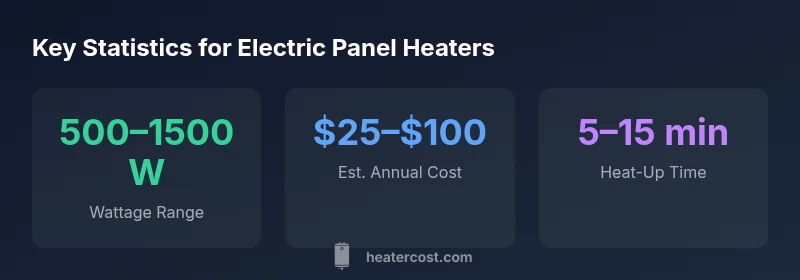
Most electric panel heaters come in 500–1500 watt models, providing quick, zone-specific heat for small to medium rooms when used with proper insulation. They’re designed to run off standard 120V circuits in many homes, install flush against walls, and require minimal space. For larger rooms or whole-house heating, you’ll likely need multiple units or a different system.
What Are Electric Panel Heaters?
Electric panel heaters are slim, wall-mounted devices that emit heat through a combination of radiant and convection methods. The radiant elements warm people and objects directly in the room, while the heated air circulates to raise the overall temperature. Most models are designed for easy mounting on interior walls and operate on standard household voltages (commonly 120V in North America). Because they heat specific zones rather than entire homes, they’re often used as supplementary or initial-stage heat in living rooms, bedrooms, or home offices. When installed and operated correctly, electric panel heaters can deliver comfortable warmth with minimal visual footprint. For homeowners evaluating heating options, panel heaters offer predictable placement, quick warmth, and straightforward on/off control, making them a practical part of a larger energy plan. In addition to comfort, consider insulation, window drafts, and ceiling height, as these factors heavily influence how much heat is needed to achieve your target temperature.
- How they work: A concealed heating element behind a metal or ceramic panel transfers heat to occupants by radiation and warms the surrounding air via convection.
- Common placements: Low on the wall, away from furniture, and with at least a few inches of clearance for air flow.
- Typical controls: Built-in thermostats, timers, and in some models, remote access via apps.
According to Heater Cost, electric panel heaters are most effective as zone heat within well-insulated spaces. They are not designed to replace central heating in drafty, large, or multi-story homes, but they excel when used to target frost-prone corners or overnight room warming.
How They Compare to Other Space Heaters
When choosing a heater for a space, price and performance are shaped by heat delivery, efficiency, and safety. Electric panel heaters offer a blend of quiet operation and compact design, placing them between traditional baseboard heaters and more powerful fan-forced or infrared models. Compared with electric baseboard units, panels heat more evenly and can reach comfortable temperatures faster in a targeted area. Against fan-forced heaters, panel models tend to be quieter and more energy-efficient in low-demand scenarios because they don’t rely on moving air as much. Infrared panels warm people and objects directly, creating a cozier feel in winter without fully heating the air; however, you may need multiple units to cover larger rooms. For renters or homeowners seeking modular control, panel heaters can be added incrementally to adjust heat in individual rooms without modifying the central system." ,
Key Features to Look For
- Wattage range: Typical panel heaters come in 500–1500 W variants. Choose a higher wattage only for larger, well-insulated spaces, and avoid oversizing for small rooms.
- Thermostat and timer: A precise thermostat helps prevent overheating and reduces energy use. Timers allow warm rooms to be ready before you arrive home.
- Mounting options: Wall brackets or screws, plus proper clearance around the unit to ensure safe heat dissipation.
- Safety features: Look for overheat protection, tip-over switches, and certified electrical components.
- Installation considerations: In some regions, larger 240V models or units wired into dedicated circuits may require professional installation. Always follow manufacturer instructions and local electrical codes.
- Noise and aesthetics: Most panel heaters operate quietly, which is a benefit for bedrooms and offices. Slim profiles help them blend with interior design.
When evaluating features, start with room size, insulation quality, and how often you intend to heat the space. A model with a built-in thermostat and a timer is often the best balance of control and efficiency.
Sizing and Placement for Efficiency
Sizing a panel heater hinges on room area, insulation quality, climate, and how long you expect to heat a space. A practical starting point is to match wattage to square footage, with colder climates requiring more heat per square foot. A conservative approach is to plan for roughly 8–12 watts per square foot in temperate climates, increasing toward 15 watts per square foot in drafty or very cold spaces. If you’re replacing an old heater or upgrading insulation, adjust wattage downward; a well-insulated room needs less heat to reach a comfortable temperature.
Placement matters as much as wattage. Install panels on interior walls that receive sun during the day or near seating areas. Avoid placing heaters behind furniture or drapes, and ensure there is a clear path for heat to circulate. For rooms with high ceilings, consider multiple panels at different heights to promote even warmth. If you use a timer, set it to pre-warm the room for arrival times so you don’t run heaters longer than needed.
A practical sizing checklist:
- Measure the room (length × width).
- Assess insulation quality and air leakage.
- Choose a wattage range that aligns with the climate.
- Plan for a single panel in smaller rooms or multiples for larger spaces.
- Use manual or online calculators offered by manufacturers or energy websites to refine your choice.
These guidelines help avoid oversizing, which wastes energy, and undersizing, which leaves a room chilly.
Energy Costs and Savings: Rules of Thumb
Electric panel heaters convert electricity into heat with high efficiency on a per-watt basis, but operating costs depend on usage and local electricity pricing. A simple way to estimate running costs is to multiply the panel’s wattage by the number of hours you plan to use it and by your electricity rate per kilowatt-hour (kWh). For example, a 1000 W panel running 6 hours a day at $0.15 per kWh costs about $0.90 per day, or roughly $27 per month if used every day. Real-world costs vary with rate plans, so compare utility prices and consider off-peak hours if your rate structure supports it.
To maximize savings, pair panel heaters with good insulation, draft-proofing, and programmable thermostats. Use them as part of a layered heating approach rather than as the sole heat source for uninsulated spaces. If you’re heating a room only during part of the day, a timer or smart thermostat can significantly reduce energy use while maintaining comfort.
Safety Considerations and Maintenance
Safety comes first with any space heater, including electric panel models. Place heaters on flat, stable surfaces or wall-mounts away from flammable materials such as curtains and furniture. Ensure proper clearance around panel heaters; most manufacturers recommend at least 12 inches of free space on all sides. Regular dusting and wipe-downs help maintain efficiency and prevent debris from overheating.
Inspect cords for wear or damage, and never use damaged plugs. Avoid running heaters with damaged power strips or extension cords, which can overheat. If a unit has a tip-over switch, keep it in the upright position when mounting. For households with children or pets, consider models with safety features such as cool-touch surfaces and integrated guards.
Sizing and costs overview for electric panel heaters
| Aspect | Typical Range | Notes |
|---|---|---|
| Wattage per unit | 500–1500 W | Choose based on room size and climate |
| Heat delivery | Radiant + convection | Direct warmth plus room circulation |
| Installation effort | Low to moderate | Wall-mounted; may need circuit check |
| Estimated annual cost per unit | $25–$100 | Depends on usage and electricity price |
Got Questions?
Are electric panel heaters energy efficient?
Electric panel heaters are efficient for zone heating since they convert electricity directly into heat and heat only the space you’re using. To maximize efficiency, pair them with good insulation and controls like thermostats or timers.
They’re efficient for zone heating when used with insulation and smart controls.
Do I need professional installation?
Most panel heaters plug into a standard wall outlet. Larger or 240V models may require a dedicated circuit and professional installation to meet electrical codes.
Most are plug-in, but some require a licensed electrician.
Bathrooms use allowed?
Only models rated for damp locations should be used in bathrooms. Check IP ratings and manufacturer guidance before installation in wet areas.
Only install bathroom-rated panels in damp spaces.
What safety features should I look for?
Look for overheat protection, tip-over switches, built-in thermostats, and certified electrical components. Ensure proper clearance and regular maintenance.
Prioritize safety features like automatic shutoff and stable mounting.
How should I size a panel heater for a room?
Size by room area and climate, using a conservative wattage estimate of roughly 8–12 W per square foot in temperate climates, higher in cold spaces. Use calculators or professional guidance when unsure.
Size by room area and climate with a cautious wattage estimate.
“Electric panel heaters offer targeted warmth with minimal space requirements, making them a practical option for zone heating in many homes.”
The Essentials
- Size heat to room area and climate
- Choose units with thermostats and timers
- Mount with safe clearances for best performance
- Combine insulation upgrades for efficiency
- Compare local electricity prices to estimate costs