Panel Heater: Costs, Specs, and Practical Guide
Learn how a panel heater works, compare upfront costs and running expenses, and discover safety features and placement strategies for small spaces. This data-driven guide helps homeowners, renters, and property managers choose the right panel heater.


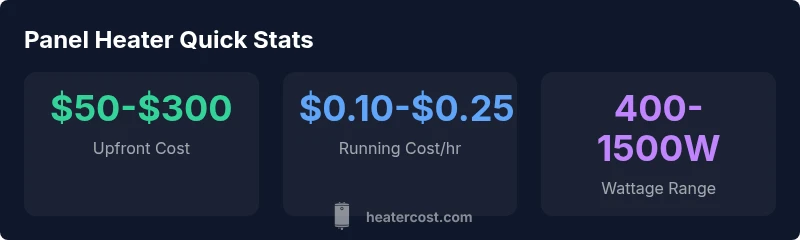
Panel heater is a slim electric space heater that radiates heat from a flat panel, delivering targeted warmth with minimal bulk. Typical upfront costs range from $50 to $300, while running costs depend on wattage and local electricity rates, usually around $0.10–$0.25 per hour for common models. Ideal for small rooms, they’re quiet, fast to heat, and easy to mount on a wall or stand.
What is a panel heater and how does it work
Panel heaters are electric heaters that use a flat, thin panel (often aluminum or ceramic) to radiate heat into a room. They warm people and objects directly, with minimal air movement. The panel stores heat and releases it gradually, which helps reduce temperature swings in well-insulated spaces. Many models include a thermostat and adjustable heat settings to maintain a steady temperature while avoiding overheating. The heating element behind the panel may be protected by grills or fins to maximize surface area for efficient heat transfer with low noise and few moving parts. For homeowners, a panel heater offers a practical balance between footprint and performance, especially in sunlit bedrooms, home offices, or compact living spaces where a bulky radiator would be impractical. When sizing, consider room size, insulation, window exposure, and how quickly warmth is desired. For renters, mounting on a wall or using a freestanding unit can be a tidy, unobtrusive solution.
When to consider a panel heater in your home
Panel heaters shine in scenarios where you want fast, targeted warmth without the bulk of central heating. They work well as a supplemental heat source in living rooms, bedrooms, or home offices where a full furnace is slow to respond or not cost-effective. If you have good insulation and relatively small spaces, a panel heater can raise comfort quickly with modest energy use. They’re popular in apartments where space for bulky heaters is scarce or in zones that only occasionally need heat, such as sunrooms or hobby areas. In drafty homes, a panel heater can provide an extra boost to reduce reliance on a central system. From a cost perspective, panel heaters often strike a favorable balance between upfront price and ongoing energy use versus larger heating systems. Always check safety clearances and electrical capacity when deciding whether to mount on a wall or place on a stand.
Key specs to compare panel heaters
When shopping, focus on wattage, heat output, and thermostat features. Panel heaters commonly range from roughly 400 to 1500 watts, translating to about 1,350 to 5,100 BTU per hour. The higher the wattage, the faster a space heats but the higher the running costs. Look for models with electronic thermostats, anti-tip stands, overheat protection, and child-safe controls if needed. Surface temperature should feel comfortable to the touch while radiating heat. Noise level is typically near-silent, a practical benefit in bedrooms or study areas. Mounting options vary: wall-mounted panels save floor space, while freestanding units offer flexibility for renters. Consider finish and color to blend with interior design, as subtle styling can improve acceptance in living spaces. The best choice depends on room size, insulation, and desired heat-up speed.
Energy costs and cost-saving strategies
Understanding energy use is key to getting value from a panel heater. A typical unit draws 400–1500 watts, with running costs influenced by local electricity rates and how long you operate the heater each day. For budgeting, a small room may cost only a few dollars per week if used intermittently, rather than a full-season heating bill. To optimize efficiency, pair a panel heater with weatherstripping, draft stoppers, and zone-based heating strategies. Programmable thermostats or timers help prevent heat from running in unoccupied spaces. In well-insulated spaces, panel heaters can maintain warmth at lower settings, reducing energy consumption. Always check the unit’s efficiency rating and ensure installation minimizes heat loss through windows or doors. The right size and usage pattern often yield the best balance of comfort and cost.
Installation considerations and safety
Installing a panel heater typically involves wall mounting or placing a freestanding unit in a safe, accessible location. If wall mounting, ensure the heater has a dedicated circuit or adequate outlet capacity for continuous operation. Maintain clearances around the panel to avoid heat buildup near furniture or fabrics. Use proper mounting brackets, keep it level, and consult an electrician if needed about circuit limits. Some models include built-in surge protection or automatic shutoff features after a tip or fall; others require external safety devices. Never cover a panel heater with blankets or clothing, and avoid running cords beneath rugs where they can overheat. For renters, choose freestanding models that can be moved. Always follow manufacturer instructions and seek professional help if uncertain about wiring or voltage requirements.
Design and placement tips for optimal warmth
Placement dramatically affects warmth. For radiant heat, position panels at or slightly above eye level along interior walls away from drafts. Avoid blocking heat with furniture and direct airflow from doors or windows. In corner rooms, angle panels to maximize coverage or use two smaller panels instead of one. If wall-mounted, secure panels with appropriate hardware to prevent shifting. In rooms with large windows, place panels to offset heat loss without direct sun exposure that could cause overheating on sunny days. Coordinate with room aesthetics—panel heaters are slim enough to blend with most decors, reducing visual clutter.
Maintenance and longevity expectations
Panel heaters have few moving parts, which generally means low maintenance. Regularly dust the front grill and surface to prevent debris from impeding performance. Check cords for wear and inspect wall mounts or stands for stability. Lifespan depends on build quality, usage frequency, and care, but many models perform well for several years with routine cleaning and safety checks. If heat output declines, inspect thermostat settings, ensure the unit isn’t blocked, and verify the outlet remains undamaged. In high-use settings, rotate panels to avoid hot spots and distribute wear. A yearly check can catch loose screws, frayed cords, or mounting issues before safety becomes a concern.
Panel heater vs other heating options
Compared with portable convection heaters or fan-forced units, panel heaters offer quiet operation and heat the room with minimal air movement. Infrared heaters provide immediate warmth to objects and people in sight but may heat unevenly in larger spaces. Traditional coil heaters can be cheaper upfront but risk higher surface temperatures and uneven distribution. Relative to central heating, panel heaters deliver targeted warmth with potentially lower running costs in small rooms—assuming proper sizing and insulation. For energy-conscious buyers, the choice often depends on space, aesthetics, and how quickly warmth is required. A panel heater shines as a zone or supplemental heat source rather than a full-home replacement.
Buying guide: what to look for in a panel heater
When selecting a panel heater, prioritize safety features such as overheat protection and tip-over shutoff, plus a reliable thermostat and a solid warranty. Look for durable finishes and a mounting option that fits your space. Certifications for safety and electrical compliance matter, and compare noise levels if the room is used for work or sleep. Read user reviews for real-world performance and durability. Finally, assess energy efficiency ratings and the availability of replacement parts. For renters, choose a model with a removable cord and a freestanding design that doesn’t require permanent mounting. A well-sized, properly installed panel heater can deliver comfortable warmth with modest energy use.
Panel heater key specs at a glance
| Metric | Typical Range | Notes |
|---|---|---|
| Wattage | 400-1500 W | Range used to determine heat output and heating speed |
| Heat output (BTU/h) | 1,350-5,100 BTU/h | Derived from wattage; higher means faster heating |
| Upfront cost | $50-$300 | Model features and brand influence price |
| Running cost per hour | $0.10-$0.25 | Depends on electricity rate and usage |
| Noise level | 30-50 dB | Typically silent or very quiet |
Got Questions?
What is a panel heater and how does it work?
Panel heaters are electric units that radiate heat from a flat panel, warming people and objects directly with minimal air movement. They are quiet, compact, and suitable for small spaces. Proper sizing ensures efficient operation and comfortable warmth.
Panel heaters are flat-panel electric heaters that warm you through radiant heat, quietly and efficiently for small spaces.
Are panel heaters energy efficient?
Yes—panel heaters can be very energy efficient when properly sized for the room and used with thermostats or timers. Their radiant heat minimizes air circulation, which can reduce energy waste in well-insulated spaces.
Panel heaters are energy-efficient when sized correctly and used with a thermostat.
What size panel heater do I need for a 100 sq ft room?
For about 100 square feet, a panel heater in the range of roughly 800–1200 watts is common, depending on insulation and window exposure. If in doubt, start with a smaller unit and add another panel if needed.
Around 800–1200 watts for a 100 sq ft room, depending on insulation.
Can I use a panel heater as a primary heat source?
Panel heaters are best as zone or supplemental heat, not a primary heating system in most climates. In very well-insulated spaces, they can contribute significantly, but a central or larger auxiliary system is usually needed for colder weather.
Usually best as supplemental heat, not your main heater.
What safety features should I look for?
Look for overheat protection, tip-over switches, certified electrical safety marks, and automatic shutoff. A solid warranty and enclosed heating elements add peace of mind for households with kids or pets.
Choose models with tip-over and overheat protection, certified safety marks, and a good warranty.
How do I install a panel heater safely?
Follow the manufacturer’s instructions. Wall mounting requires proper brackets and circuit capacity; freestanding units should be on a stable surface away from obstructions. If unsure about wiring or voltage, consult an electrician.
Follow the manual and consider professional help for wiring.
“Panel heaters offer targeted warmth with minimal bulk and energy waste when sized correctly. They excel in small spaces where quick heat is needed.”
The Essentials
- Size panel to room for optimal comfort
- Upfront costs typically range from $50-$300
- Pair with insulation and drafts for cost savings
- Prioritize safety features and mounting options