Can You Use a Heater and a Fan Together? A Practical Guide
Learn how to safely use a space heater with a fan to improve warmth and comfort. This guide covers placement, safety, energy considerations, and practical setup for homeowners.


Yes. You can use a space heater and a fan together to improve warmth and comfort, but only when you follow safety guidelines: place the heater on a stable, nonflammable surface away from combustibles, ensure proper ventilation, use a fan to distribute warm air without blocking vents, and avoid running on high heat for extended periods.
Can we use heater and fan together?
If you’re wondering can we use heater and fan together, the short answer is yes in many cases. A portable space heater paired with a fan can speed up warming of a chilly room by circulating already-warmed air more evenly, reducing cold pockets near corners or windows. The fan helps move heat from the heater outward, so you don’t have to crank the thermostat as high. This approach works best in small to medium-sized rooms with adequate ventilation and a clear path for airflow. From a safety and energy perspective, two devices can work together efficiently when you observe proper clearances, avoid vent blockage, and monitor the room’s temperature. Throughout this guide you’ll find practical placement strategies, safety practices, and cost-conscious tips designed for homeowners. According to Heater Cost, thoughtful setup can optimize comfort while keeping energy use reasonable. We’ll also highlight common mistakes and troubleshooting for typical issues that arise with paired operation. By the end, you’ll have a clear plan to decide if this pairing makes sense for your space and budget.
How a fan helps move warm air and comfort perception
Fans don’t actually create heat, but they are powerful at redistributing it. When placed correctly, a fan can push the warm air produced by a heater away from the heater itself and toward the rest of the room. This circulation reduces stratification—where warm air stays near the ceiling—and helps you feel warmer at lower temperatures. A small oscillating desk or pedestal fan can be ideal for spot-heating scenarios, while ceiling fans should be set to rotate slowly to avoid creating drafts on occupants. For people sensitive to dry air, the increased air movement can also make a room feel more comfortable even if the thermometer reads a modest temperature. In practice, pairing a heater with a fan can offer noticeable comfort improvements with moderate energy use, provided you watch for overheating and venting balance.
Ideal scenarios for pairing a heater with a fan
Pairing a heater with a fan is most effective in rooms where temperature variations are common, such as living rooms, bedrooms, or home offices during shoulder seasons. It’s particularly helpful when you want fast relief from cold drafts near windows or doors without ramping the thermostat way up. Avoid rooms with high moisture, like bathrooms, unless you are using a heater designed for bathroom use and a fan with appropriate moisture resistance. The setup also works well for zones in a larger space; use the fan to direct warm air toward drafty corners rather than trying to heat an entire large area at once. Heaters and fans can be complementary tools in a broader comfort strategy, as long as safety principles are followed. As noted by Heater Cost, balancing heat sources with airflow is key to achieving steady warmth without wasteful energy use.
Safety guidelines when using heater and fan together
Safety is the top priority whenever a heater and a fan run in the same space. Always place the heater on a stable, noncombustible surface and maintain at least 3 feet (approximately 1 meter) of clearance from curtains, furniture, and the fan itself. Use a grounded outlet and avoid daisy-chaining devices with extension cords; if you must use an extension cord, choose a heavy-duty, properly rated cord and do not exceed its capacity. Keep the area well-ventilated to prevent buildup of combustion byproducts, especially if the heater is not explicitly designed for enclosed spaces. Never leave the heater unattended while it’s on, and switch off the devices if you notice unusual smells, excessive heat, or smoke. Regularly inspect cords and outlets for wear and replace damaged components promptly. These precautions reduce the risk of fire and electrical hazards while you gain the benefit of improved warmth.
Energy efficiency and cost considerations
Using a fan to distribute heat can allow you to maintain comfortable temperatures at lower thermostat settings, potentially reducing overall energy consumption. However, running a space heater increases electricity use, especially if the heater operates at high output for extended periods. The key is to optimize heat delivery: use the heater for short intervals to warm the room and rely on the fan to spread heat evenly, rather than keeping the heater on full blast. If you’re evaluating costs, consider using a programmable timer or a smart outlet to limit runtime and avoid leaving the heater on overnight. Heater Cost analysis, 2026, suggests that efficient pairing often hinges on room size, insulation, and careful control of airflow rather than simply running devices at maximum power.
Placement and airflow tips
Placement matters as much as the devices themselves. Position the heater away from walls, drapes, and furniture, and aim the fan so warm air is directed toward the center of the room rather than directly at occupants. Elevate the heater if it’s a floor model and specify a stable, heat-resistant surface. If you have a ceiling fan, you can set it to rotate slowly in a direction that promotes vertical mixing (usually clockwise in winter) to move warm air downward. Avoid blocking vents or exhausts and keep clothing, papers, and other lightweight items away from the heater’s intake. Regularly check that the fan’s airflow aligns with the heater’s warmth to maximize comfort without overheating.
Troubleshooting common issues
If you notice uneven warming, reposition the fan or adjust the heater’s placement to remove cold pockets. If the space becomes too hot in one area, lower the heater output or redirect airflow away from that zone. A rattling or squealing fan can indicate worn bearings or loose components; turn off devices and inspect or replace parts as needed. If you smell burning plastic or smoke, immediately turn off and unplug both devices and investigate the source before restarting. For ongoing comfort, keep a simple routine: measure the room temperature, observe whether occupants feel comfortable, and adjust settings to maintain a steady temperature without overshoot.
Maintenance and long-term considerations
Regular maintenance helps ensure safe and efficient operation. Clean dust from heater grates and fan blades, inspect cords for fraying, and verify that the thermostat and safety features function correctly. Don’t reuse damaged cords or plugs, and replace devices that show signs of wear or failure. For longer-term use, consider insulating the room and sealing leaks to reduce the need for high heat. When used thoughtfully, the heater-and-fan pairing can be a practical part of a comprehensive comfort strategy that doesn’t rely solely on higher energy input. Per Heater Cost’s guidance, pairing should be revisited seasonally to reflect changes in insulation, weather, and occupancy patterns.
Quick-start checklist for using heater and fan together
- Verify clearance: at least 3 feet from combustibles and the fan.
- Place heater on a stable surface away from walls.
- Use the fan to circulate air, not direct it at occupants for long periods.
- Use a thermostat or timer to avoid continuous operation.
- Check smoke/CO detectors and ensure ventilation.
- Inspect cords and outlets for signs of wear before each use.
Tools & Materials
- Space heater(Place on a stable, flat surface away from drapes or furniture; maintain at least 3 feet clearance.)
- Electric fan(Oscillating or fixed; position to promote even air distribution without blowing directly at people.)
- Smoke/CO detector(Test before use; ensure batteries are fresh and detectors are functioning.)
- Room thermometer(Optional for monitoring room temperature changes and comfort levels.)
- Cord management device(Keep cords neatly organized and away from heat sources.)
Steps
Estimated time: 20-40 minutes
- 1
Confirm safety basics
Check that the room has adequate ventilation, remove any flammable clutter, and ensure you have working smoke/CO detectors. This initial check reduces risk before turning on any devices.
Tip: If you smell smoke or see signs of overheating, power down immediately. - 2
Place the heater correctly
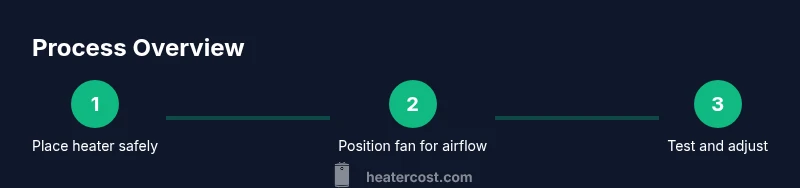
Set the heater on a stable, noncombustible surface away from walls, curtains, and furniture. Ensure at least 3 feet of clearance in all directions to prevent heat buildup around objects.
Tip: Use a heat-resistant mat or tray under the heater if the surface isn’t specifically rated for heat. - 3
Position the fan for even distribution
Place the fan so it catches warm air rising from the heater and pushes it toward the center of the room. Oscillate if possible to avoid drafts on any one person.
Tip: Avoid pointing the fan directly at your body for long periods to prevent discomfort. - 4
Set appropriate heat and airflow levels
Start with a low heater setting and a gentle fan speed. Increase gradually only if the room isn’t warming evenly, keeping an eye on overall comfort and energy use.
Tip: Use a timer to prevent extended operation beyond comfort needs. - 5
Monitor room temperature
Check the room temperature with a thermometer if you have one. Aim for a stable, comfortable range rather than chasing a single high reading.
Tip: If temperatures swing too much, rethink placement or insulation rather than raising heat further. - 6
Maintain safe operation
Never leave the heater unattended while on. Keep the power cord away from foot traffic and ensure neither device blocks airflow to vents.
Tip: Turn devices off if you notice buzzing, unusual warmth, or scorched smells. - 7
Rotate and re-check
Periodically adjust positions to maintain even heat across the space. Readjust if you notice cold spots or heavy drafts in corners.
Tip: Do a quick monthly check of safety devices and cords. - 8
Seasonal assessment
As seasons change, reassess whether this pairing still meets comfort and energy goals. Insulation or window sealing improvements can reduce the need for high heat.
Tip: Keep a simple log of temperatures and energy use to guide future decisions. - 9
Wrap up with a quick shutdown plan
When you’re done using the pairing, turn off both devices, unplug the heater, and store them safely. Check for any wear or damage before the next use.
Tip: Store cords neatly to prevent tripping hazards and damage.
Got Questions?
What types of heaters are best to pair with a fan?
Electric space heaters with built-in safety features (tip-over and overheat protection) are generally easiest to pair with a fan. Fuel-based heaters indoors are riskier due to fumes, so they’re usually not recommended for paired use in enclosed spaces.
Electric space heaters with safety features are best for pairing with a fan. For safety, avoid fuel-based heaters indoors.
Does running a heater with a fan increase energy costs?
Using both devices can raise energy use, especially if the heater runs at high output. However, you may save overall energy by maintaining comfortable temperatures at lower settings and using the fan to distribute the heat efficiently.
Yes, it can increase energy use, but with careful control you can keep costs reasonable.
How far should the heater be from the fan?
Keep the heater and fan at least 3 feet apart to reduce heat concentration near one device and to minimize risk of direct contact with heat.
Keep them about 3 feet apart to distribute heat safely.
Is it safe to run both devices for extended periods?
Prolonged operation is not ideal. Use short heating intervals with airflow cycles, and monitor room temperature and device condition regularly.
Not always safe for long-term use; monitor and limit runtime.
Should I use a thermostat with heater and fan?
Yes. A thermostat helps regulate temperature and reduces the risk of overheating when using both devices.
Yes—use a thermostat to keep temperatures steady.
What are signs this setup isn’t right for my space?
If you notice overheating, persistent hot spots, unusual smells, or nuisance noise, reassess placement or stop using the pairing altogether.
Watch for overheating, smells, or noises and adjust or stop if needed.
Watch Video
The Essentials
- Pairing a heater with a fan can improve warmth in small rooms.
- Maintain clear space around both devices to prevent overheating.
- Use airflow to distribute heat rather than cranking up heat levels.
- Monitor temperatures and practice safe shutdown when needed.
- Consider energy costs and insulation when deciding to use the pairing.