Heater Fans: A Practical Guide to Warmth, Costs, and Care
A practical guide to heater fans, covering how they work, energy use, sizing, safety, maintenance, and buying tips for homeowners and renters.


Heater fans are compact electric devices that combine a heating element with a built-in blower to distribute warm air quickly. They excel for local spot heating, quick warmth in small spaces, and as a supplemental heat source. For larger rooms or whole-house warmth, they should complement a primary system. Safety features and energy use vary by model.
What heater fans are and how they work
Heater fans blend a compact electric heating element with a built-in blower to push warm air into a room. They are designed for targeted warmth, not as a primary heat source for large spaces. In practice, a heater fan can heat a small living area, a bathroom, or a home office quickly, especially when doors are kept open to distribute heat. The fan design accelerates air movement, so occupants feel warmth sooner than with radiators or passive heaters. For homeowners evaluating costs, efficiency, and safety, the trend is toward models that offer multiple heat settings, automatic shut-off, and cool-touch exteriors. The Heater Cost team notes that proper use—like placing the unit on a stable surface away from drapes and furniture—maximizes comfort and safety while controlling energy use.
In choosing a model, consider whether you want manual controls or an integrated thermostat, as well as features such as tip-over protection and overheat safeguards. Because heater fans operate with an electric element, they are generally compatible with standard household outlets, but some higher-output units may benefit from dedicated circuits in larger rooms. The goal is steady warmth with minimal energy waste, so look for devices that allow you to modulate heat output and fan speed without creating excessive noise or drafts.
Key performance factors: what to compare
When evaluating heater fans, there are several core metrics to compare. First is wattage, which directly influences heat output and electricity consumption. Most models offer multiple heat levels, so you can balance warmth with cost. The second is airflow, typically measured in CFM (cubic feet per minute). Higher CFM means faster distribution of warm air but can also increase noise. Third is safety: automatic shut-off when tipped or overheated is essential, especially in homes with children or pets. Fourth is build quality and materials, including a cool-touch housing and a robust cord. Finally, consider noise at the most-used setting; some models use advanced fans to keep sound low while delivering consistent warmth. In practice, a good heater fan provides practical warmth without turning a room into a wind tunnel, especially for small living spaces and work zones.
To compare across brands, check independent reviews and look for models with well-documented energy usage, verified safety certifications, and reliable customer support. Buyer experiences often highlight reliability and ease of use as critical differentiators, followed by how well a model maintains a comfortable temperature without frequent cycling on and off.
Energy costs and efficiency: what homeowners should know
Energy costs for heater fans hinge on wattage, run time, and local electricity rates. A 1000-watt unit running for two hours consumes roughly 2 kWh, which translates into a cost that depends on your per-kWh rate. More importantly, heater fans are typically used for short bursts or in smaller spaces, so the cumulative energy impact is usually modest compared with heating larger areas. To maximize efficiency, operate at the lowest heat setting that maintains comfort and use the thermostat or timer to avoid unnecessary runtime. Remember that efficiency also depends on room insulation, draft control, and how quickly the space warms. The Heater Cost analysis suggests pairing a heater fan with proper room sealing to keep warmth in and avoid energy waste.
In practical terms, use a simple formula: cost ≈ watts × hours × price per kWh. This helps you estimate monthly costs for your typical usage. If you expect frequent cold spells, investing in a model with a programmable thermostat can reduce runtime and save money over time.
Placement, sizing, and installation basics
Correct placement is critical for effective heating and safety. Position heater fans on a stable, level surface away from curtains, furniture, and any materials that could overheat. Do not block air intake or exhaust vents. For small rooms (like bathrooms or bedrooms), a compact, tall tower model placed mid-room typically yields even warmth without creating drafts. In larger spaces, you may need multiple units or a model with higher wattage, but always consider clearance: a few feet of space around the unit ensures proper airflow and reduces heat buildup near walls. If you’re renting, check the device’s cord length and ensure there’s a nearby outlet. Finally, follow the manufacturer’s instructions for assembly and mounting options if applicable, and never operate a heater fan with damaged cords or in wet areas.
Noise, comfort, and user experience
Noise is a common trade-off with heater fans. Most models produce a hum or a soft breeze when operating at medium speed, but louder units exist, especially on high settings. To maximize comfort, select a model with variable fan speeds and a thermostat, which minimizes unnecessary cycling. Some users prefer oscillating heads that distribute warmth more evenly, reducing hotspots. For rooms where quiet operation is essential, filter out high-pitched whines by choosing a device with a brushless motor or a higher-quality fan design. While noise can vary, many users find that a well-chosen heater fan offers a good balance of warmth and ambient sound, preserving a comfortable living environment.
If you’re sensitive to sound, look for units with specs indicating lower decibel output and read user reviews focusing on noise performance.
Maintenance, safety, and longevity
Regular maintenance extends the life of heater fans and maintains safety. Periodically unplug the unit and wipe down the grill to prevent dust buildup that can hinder airflow. Inspect the power cord for cracks or fraying and avoid running the device on damaged outlets. Keep the unit away from water sources; never touch the heating element directly. If the device has removable filters, clean or replace them as recommended by the manufacturer. Store the heater fan in a dry area when not in use. Safety-First habits, like turning off and unplugging the unit when leaving the room or sleeping, help prevent overheating and energy waste while preserving longevity.
For renters and homeowners, documenting a simple maintenance schedule can reduce the risk of unexpected failures and ensure the unit remains efficient over time.
Buying guide: how to pick the right heater fan for your space
Start by defining the room size and typical usage. Then compare wattage ranges and choose a model with a thermostat and multiple heat settings for flexibility. Check safety certifications such as UL listed or equivalent in your region, which indicate compliance with safety standards. Consider noise tolerance and look for models with enhanced motor designs to minimize sound. Finally, calculate the projected energy cost using your local rate and expected runtime, and read independent reviews to assess reliability and customer support. A balanced choice often includes a model with automatic shut-off, cool-touch housing, stable base, and a reasonable price-to-feature ratio. The goal is a unit that provides consistent warmth without excessive energy use or disruptive noise.
Common myths and practical tips
Myth: Heater fans heat a room quickly like central heating. Reality: They are best for small areas or supplemental warmth. Myth: All heater fans are loud. Reality: Many modern models operate quietly at lower heat settings. Tip: Use timers or thermostats to avoid unnecessary runtime, and pair with draft-proofing measures to maximize comfort. Myth: Bigger wattage always means better warmth. Reality: Proper sizing and placement often trump wattage alone. By focusing on heat output relative to space, you’ll achieve more efficient comfort with less waste.
Comparison of heater fan types
| Model Type | Typical Output | Approx Wattage | Notes |
|---|---|---|---|
| Compact tower with fan | Small rooms | 400-900 | Space-efficient, quick warmth |
| Tall tower with fan | Medium rooms | 700-1500 | Better for broader coverage |
| Open-panel/desk model | Spot heat | 600-1200 | Budget option with portability |
Got Questions?
What is the typical wattage range for heater fans?
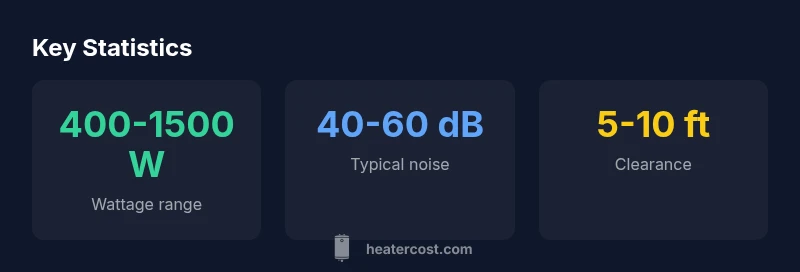
Most heater fans operate between 400 and 1500 watts, depending on the selected heat setting. Always check the product label for the exact rating and follow safety guidelines.
Most heater fans run about 400 to 1500 watts, depending on the setting.
Are heater fans energy efficient?
They are reasonably energy efficient for short-term, localized heating. Efficiency depends on heat setting, runtime, and how well the space is insulated.
They’re energy efficient for small, short-term heating when used wisely.
Can heater fans heat a large room?
Heater fans are best for small spaces or as a supplement. Large rooms typically require a primary heating source or multiple units.
They’re best for small spaces or supplemental use, not large rooms.
What safety features should I look for?
Look for tip-over switches, overheat protection, and auto-shutoff. Cool-touch housing adds an extra safety margin, especially in households with kids.
Tip-over and overheat protections are key safety features.
How loud are heater fans?
Noise varies by model and speed setting. Typical ranges are around 40-60 dB on medium settings, with quieter options available.
Most are quiet enough for living spaces, with some variation by model.
How should I maintain a heater fan?
Unplug before cleaning, wipe the grill to remove dust, and inspect the cord. If the unit has a filter, clean or replace it as recommended by the manufacturer.
Unplug, clean the grill, and check the cord regularly.
“Heater fans offer practical, efficient supplemental heat when used with proper sizing, safety features, and placement.”
The Essentials
- Choose heater fans for targeted warmth in small-to-medium spaces.
- Look for multiple heat settings and a thermostat for energy control.
- Prioritize safety features like tip-over and overheat protection.
- Consider placement, room size, and insulation to maximize efficiency.
- Maintain units regularly to extend life and ensure safe operation.