Big Heater Buddy: Costs, Usage, and Safety in 2026
Understand the full cost of using a big heater buddy, including upfront price, propane usage, and maintenance. Practical tips for homeowners, renters, and property managers.


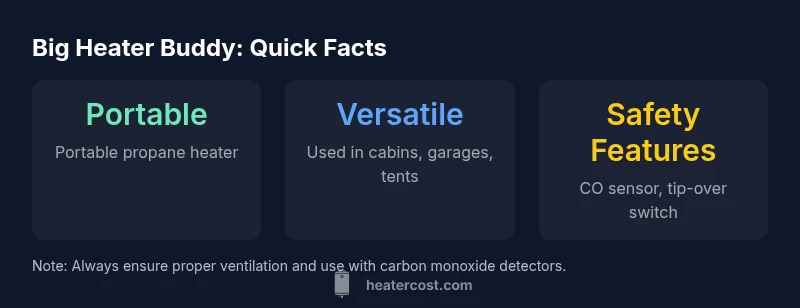
According to Heater Cost, the big heater buddy is a portable propane space heater designed for small-to-medium spaces like cabins, garages, and tents. It provides adjustable heat output and essential safety features such as a tip-over switch and oxygen depletion sensor. Running costs depend on propane prices and usage, making it a cost-conscious option for temporary heating needs. This definition helps homeowners understand its role in supplemental heat.
Big Heater Buddy Fundamentals
According to Heater Cost, the big heater buddy is a portable propane space heater designed for small-to-medium spaces such as cabins, workshops, and tents. It provides adjustable heat output and built-in safety features that make it appealing for homeowners seeking temporary warmth without a full central heating system. In practice, the big heater buddy fills a niche for supplemental heat, backup warmth, and on-demand comfort during cold snaps. When sizing the device, users should consider room size, insulation quality, and ventilation. The model you choose should include a clear heat range, simple controls, and a manufacturer warranty. For renters and property managers, it can offer a flexible solution for seasonal occupancy or maintenance tasks where a full system would be impractical. Remember that portable heaters are only as effective as the surrounding environment, so plan for safe use and proper air exchange to minimize risks.
How It Works: Fuel, Ventilation, and Performance
The big heater buddy runs on propane, typically using small cylinders that are easy to replace during a project or outdoor event. Fuel handling requires basic safety: store cylinders upright, away from heat sources, and never use damaged canisters. The heater’s burner converts propane to heat, which is then distributed by convection and radiant surfaces. Important performance considerations include the chosen heat setting, outdoor versus indoor use, and how well the space is insulated. Ventilation remains essential; restricted airflow can increase carbon monoxide risk and reduce efficiency. A well-ventilated space with CO detectors helps ensure that the big heater buddy operates safely. If you plan to use it inside a garage, tent, or workshop, always follow the manufacturer’s guidelines and local codes to maintain comfort without compromising safety.
Cost Considerations: Upfront, Running, and Maintenance
The upfront cost of a big heater buddy varies by model, features, and retailer. Beyond the sticker price, homeowners should budget for propane refills, accessories such as hoses or mounting hardware, and periodic maintenance parts like filters or gaskets. Running costs hinge on propane prices and how often you operate the heater at higher heat settings. In areas with volatile fuel markets, monthly costs can swing widely, which is why a simple annual cost estimate should account for usage patterns such as nightly camping or weekend workshops. Warranties and service life affect long-term value; choosing a model with a solid warranty and accessible replacement parts can reduce lifetime cost. As with any fuel-based heater, plan for safe storage and regular performance checks to minimize surprises.
Safety and Ventilation Essentials
Safety should be the top priority when using any portable propane heater. The big heater buddy should be used in well-ventilated spaces; avoid squeezing it into sealed rooms. Install a battery-powered or plug-in carbon monoxide detector near occupied areas and test it monthly. Keep flammable materials away from the heater and never run it unattended near curtains, paper, or solvent containers. Regularly inspect hoses, connections, and the regulator for wear. If you notice yellow or orange flame, a rolling flame, or unusual smells, turn off the unit and seek professional service. Ventilation strategies will depend on space size; for enclosed spaces, consider using mechanical ventilation or temporary exhaust fans to maintain air quality.
Comparing with Alternatives: When to Choose a Big Buddy
While electric space heaters are convenient in dry indoor environments, a big heater buddy offers portability and independence from electrical outlets, which may be helpful in garages, cabins, or during power outages. Compare with tanks vs tanks? The portable propane heater provides quick heat and minimal upfront hardware, but ongoing fuel costs and CO considerations are factors. In environments without reliable electricity or where central heating is impractical, a big heater buddy can be a practical interim solution. In other cases, gas or electric options with higher efficiency or automation may offer better long-term value. Weigh total ownership costs, energy efficiency, and space suitability to decide whether this heater fits your needs.
Real-World Scenarios and Sizing Tips
For small, poorly insulated spaces like a shed, use lower heat settings to maintain comfort without overheating. In well-insulated spaces such as a heated workshop, you can operate at moderate settings to achieve steady warmth without excessive fuel use. For temporary heating during outdoor activities, position the unit to distribute warmth efficiently while ensuring clear airflow and safety clearance from combustibles. Always err on the side of ventilation; even short-term use indoors warrants CO detectors and proper spacing from walls and furniture. By understanding space dynamics and usage patterns, you can optimize the big heater buddy for comfort and cost savings.
Installation, Permits, Warranties, and Best Practices
Because it is a portable heater, formal installation or permits are rarely required, but always verify local codes and rental property policies. Read manufacturers’ instructions about clearance distances, fuel storage, and periodic inspections. Keep propane cylinders upright, away from heat sources, and discontinue use if hoses or regulators show wear. Warranties vary by retailer and model; register products and retain receipts to access service networks if needed. When using the big heater buddy in shared spaces, document safety protocols and ensure tenant or occupant awareness about CO alarms and safe operation practices.
Troubleshooting and Longevity for the Big Heater Buddy
Common issues include flame instability, slow startup, or gas odor. Start with basic checks: confirm propane supply is sufficient, inspect connections for leaks, and ensure vents remain unobstructed. Clean dust from the burner and ensure the exterior is free of debris that could affect airflow. For longevity, store cylinders properly, perform regular inspections, and replace worn gaskets or hoses as recommended by the manufacturer. Regular maintenance and safe handling practices help extend the life of the big heater buddy while reducing the risk of malfunction.
Cost considerations for the big heater buddy
| Aspect | Details | Notes |
|---|---|---|
| Upfront Cost Range | Price varies by model and retailer | Refer to Heater Cost analysis for current range |
| Running Costs | Propane price and usage determine cost | Estimate per hour depends on setting and room size |
| Safety Equipment | CO detectors, ventilation, proper storage | Follow manufacturer guidance |
Got Questions?
What is a big heater buddy and what spaces is it best for?
The big heater buddy is a portable propane space heater designed for small to medium spaces. It suits cabins, workshops, tents, and other temporary heating needs. Use it as a supplemental heat source with proper ventilation and CO monitoring.
It's a portable propane heater ideal for small rooms, workshops, and tents when used with proper ventilation.
How do propane costs affect overall heating expenses with a big heater buddy?
Propane prices fluctuate by region and season, which directly affects running costs. Expect variability based on how often you operate the heater and the heat setting you choose.
Propane prices vary by region and season, so running costs can go up or down depending on usage and fuel price.
Is it safe to operate indoors?
Indoor use requires good ventilation and a working CO detector. Never leave the heater unattended in occupied spaces and keep combustibles away from the unit.
Yes, but only with proper ventilation and CO detectors, and never left unattended.
Do I need permits or professional installation?
Portability generally means no formal installation, but check local codes and rental policies. Follow manufacturer guidelines for clearance and storage, and consult a professional if you plan to modify fuel lines or venting.
Usually no permit, but always check local codes and follow the manual.
What maintenance is required for longevity?
Regularly inspect hoses and regulators, clean dust from burners, and test safety features. Keep propane canisters in good condition and store them safely when not in use.
Inspect hoses and regulators regularly, clean the burner area, and store fuel safely.
“When evaluating a portable heater like the big heater buddy, total ownership costs— including fuel and maintenance—matter more than the upfront price.”
The Essentials
- Assess space size before buying and pick a model with appropriate heat range
- Account for propane costs alongside upfront price
- Ventilate properly and install CO detectors
- Choose a model with robust safety features
- Review warranties and maintenance needs