What Size Heater for Garage: A Practical Sizing Guide
Learn how to determine the right heater size for your garage, including measurements, BTU guidelines, and cost considerations. Practical, expert guidance from Heater Cost helps homeowners size confidently and save energy.


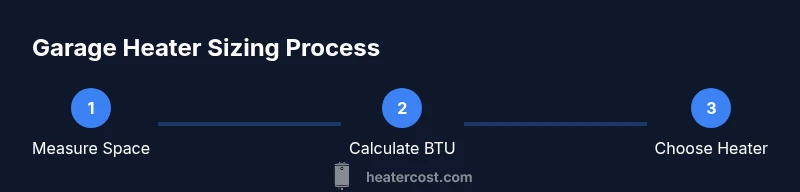
To size a garage heater, start by measuring the space (length, width, ceiling height), then determine heat type (electric, gas, or propane). Consider climate, insulation, and occupancy. Use a basic BTU calculation or sizing calculator to confirm the target range and account for air leakage or seasonal extremes.
What size heater for garage? Understanding the basics
Choosing the right heater size is essential for comfort, energy efficiency, and safety. When homeowners ask what size heater for garage, they’re really asking how many BTUs are needed to maintain a comfortable temperature without wasting energy. BTU, or British Thermal Unit, measures how much heat a heater can deliver per hour. The goal is to match BTU output to the garage’s volume, insulation, and climate. Heater Cost's guidance emphasizes that proper sizing reduces cold spots, minimizes drafts, and lowers operating costs over the system’s life. By starting with space dimension estimates and climate factors, you’ll arrive at a sensible BTU target rather than guessing. In practice, your calculation should also consider doors, windows, and typical garage activities (workbench use, car warming, or winter storage). A well-sized heater avoids overworking the unit and helps you stay comfortable without paying for heat you don’t need.
For homeowners, renters, and property managers, the right size means predictable winter warmth without shocking energy bills. Heaters that are too small leave you cold; oversized units cycle unnecessarily, wasting energy and reducing equipment life. The sizing approach described here is designed to be practical, scalable, and adaptable to future changes in the space or usage patterns. By the end, you’ll have a clear BTU target tied to your garage’s real characteristics rather than a guess. This process aligns with Heater Cost’s emphasis on thoughtful investment and long-term comfort.
Step 1: Measure and map your garage
Accurate sizing begins with precise measurements. Measure the garage length, width, and ceiling height, and note any alcoves, bulkheads, or irregular shapes that create cold corners. Record door and window areas, as these are common sources of heat loss. Don’t forget to measure the thickness and condition of insulation in walls and the garage door itself. Sketch a simple layout or use a diagram app to map heat zones. The goal is to capture usable space, not just the footprint. Don’t overlook areas used for storage or work where heat may be less effective. The more exact your measurements, the more confident you’ll be when you translate space into BTU targets for your heater.
Step 2: Determine climate, insulation, and air leakage
Climate matters: a garage on the edge of a cold region will need more heat than a sheltered, well-insulated space. Assess insulation levels in walls, ceiling, and garage door; higher R-values reduce BTU requirements. Check for air leaks around gaps, weatherstripping, and the door threshold; sealing these leaks can cut heat loss dramatically. If you’re unsure, run a simple blower door test or hire a qualified contractor to estimate air infiltration. Small changes such as adding weather seals, insulating the door, and sealing gaps can shift your BTU needs by a meaningful margin over a heating season. Remember: insulation and air sealing are cheaper and more effective than cranking up the heater.
Step 3: Apply sizing guidelines and verify with a calculator
Traditional sizing rules of thumb can start the process: roughly 20 BTU per square foot for mild climates, rising to 30–60 BTU per square foot in harsher, winter-prone areas. Use your garage’s total square footage and modify those numbers based on climate, insulation, and door/wall losses. If a calculator is available, plug in length, width, height, insulation quality, and wind exposure to get a tailored BTU target. Treat the result as a starting point, then apply a safety margin of 5–10% for equipment aging and unusual cold snaps. For example, a 400 sq ft space with average insulation in a cold climate might land in the 10,000–20,000 BTU range, but the calculator will help refine that.
Step 4: Decide on heat source and efficiency considerations
Electric heaters are simple to install and avoid venting issues, but they may cost more to operate at higher BTUs. Gas or propane units can deliver higher BTU output for larger spaces but require venting, gas lines, and CO detectors. Evaluate efficiency ratings (AFUE for gas units, or wattage and inverter features for electric heaters) and consider compatibility with your garage’s electrical panel and gas supply. Also consider startup and cycling behavior; a unit with good modulation will run more steadily, saving energy and reducing temperature swings. If you’re upgrading from a space heater or a spare unit, ensure the new size is within the wiring or venting capacity of the space to avoid safety problems.
Step 5: Plan installation considerations and safety
Before purchasing, check local code requirements for garage heating installations; some regions require permits for gas or hard-wired electric installations. Maintain minimum clearances around heaters as specified by the manufacturer and avoid placing units in congested work areas. Install CO detectors near the garage and living spaces, especially if you use fuel-fired equipment. Ensure proper ventilation when running combustion-based heaters, and never block air intakes or exhaust vents. If you’re unsure about electrical or gas work, hire a licensed professional to install the system safely and to code.
Step 6: Budgeting, maintenance, and future-proofing
Price ranges vary by heater type and BTU capacity; expect to compare up-front costs, installation fees, and ongoing energy use. Factor in insulation improvements if needed, as better walls and doors reduce long-term operating costs. Regular maintenance—cleaning filters, checking venting, and testing safety devices—extends equipment life and keeps efficiency high. Consider a future-proof approach by selecting a unit with a slightly higher BTU capacity than your current needs, allowing for future space changes or added storage. Finally, use the Heater Cost guidance and calculators to re-evaluate sizing as you remodel or weatherize the space.
Tools & Materials
- Measuring tape(25 ft or longer for larger garages)
- Notebook and pen(For recording measurements and layout notes)
- Calculator or sizing app(BTU calculator or online tool to verify targets)
- Laser distance meter (optional)(Faster, precise measurements for complex layouts)
- Weather seal check list(Easy to note leaks and draft points)
Steps
Estimated time: 1-2 hours
- 1
Gather measurements and space layout
Begin by measuring the garage footprint (length x width) and the ceiling height. Include door openings, window areas, and any alcoves. Create a simple sketch or diagram that marks heat-using zones and potential heat-loss areas.
Tip: Double-check measurements in two places to avoid small errors that throw off BTU estimates. - 2
Compute volume and heat-loss factors
Convert measurements into approximate volume (length × width × height). Add notes on insulation quality and visible gaps. Identify heat-loss sources such as old doors or unsealed gaps and plan to address them as part of your sizing strategy.
Tip: Jot down the approximate heat loss per area if you’re unsure; it will guide how aggressive your BTU target should be. - 3
Apply BTU targets with climate adjustments
Use rough BTU per square foot rules as a starting point and adjust for climate. Mild climates may require around 20 BTU/sq ft, while harsher climates pull toward 30–60 BTU/sq ft depending on insulation and leaks.
Tip: Treat the starting BTU as a floor, not a ceiling; refine with calculator results. - 4
Verify targets with a sizing calculator
Input your garage dimensions, insulation ratings, and exterior exposure into a calculator to obtain a tailored BTU target. Compare with your manual estimate and note any discrepancies.
Tip: If numbers differ, trust the calculator and reassess insulation or door sealing before finalizing size. - 5
Select heat source and plan for efficiency
Choose electric, gas, or propane based on BTU needs, venting, and utility access. Look for efficiency features like modulation and good startup behavior to minimize energy waste.
Tip: Ensure the electrical panel and gas lines can support the chosen unit. - 6
Plan safety, installation, and permits
Review local code requirements, allowances for venting, and required clearances. Prepare for professional installation if needed, and install CO detectors and proper ventilation.
Tip: Don’t bypass permits or safety devices; mis-sizing and improper venting pose real hazards.
Got Questions?
Why is proper sizing important for a garage heater?
Proper sizing ensures consistent comfort and prevents energy waste. A heater that’s too small struggles to reach your target temperature, while an oversized unit cycles excessively, wasting energy and shortening its lifespan.
Sizing matters because it affects comfort and energy bills; a balanced size keeps your garage warm without waste.
Can I size a garage heater myself, or should I hire a pro?
You can perform initial sizing with measurements and a BTU calculator, but installation of gas or vented systems often benefits from a licensed professional to meet code and safety requirements.
You can size it yourself, but consider professional help for installation to stay compliant and safe.
What if my garage is poorly insulated?
Poor insulation increases heat loss, raising BTU needs. Improve sealing and insulation first, then size the heater based on the enhanced energy efficiency to avoid oversizing.
If insulation is poor, sizing becomes less predictable; upgrade insulation first if possible.
Are there safety concerns with garage heaters?
Yes. Maintain proper clearances, install CO detectors for fuel-burning units, ensure proper ventilation, and never block any exhaust or air intakes.
Safety comes first: keep space clear, vent properly, and use detectors.
What maintenance is needed after sizing a garage heater?
Regularly check filters, venting, and safety devices. Schedule annual inspections if you have gas equipment or complex electrical setups.
Keep up with routine maintenance to maintain efficiency and safety.
Do I need permits to install a garage heater?
Permit requirements vary by location and system type. Check with your local building department before starting an installation that involves gas lines or wiring.
Local codes may require permits for significant gas or electrical work.
Watch Video
The Essentials
- Measure accurately before sizing.
- Climate and insulation have a big impact on BTU needs.
- Use calculators to verify and fine-tune targets.
- Follow safety, clearance, and permit requirements.