Tabletop Patio Heaters: Costs, Options & Practical Tips
Explore tabletop patio heaters: costs, fuel options, safety, installation basics, maintenance, and budgeting tips for homeowners, renters, and property managers.


Tabletop patio heaters are compact warming devices designed to sit on a table or small stand, bringing focused heat to intimate outdoor spaces. They can run on electric, propane, or natural gas, depending on the model, and provide focused warmth for small gatherings. This quick guide from Heater Cost explains what to look for, how to estimate costs, and how to use them safely in small outdoor spaces.
What is a tabletop patio heater?
Tabletop patio heaters are compact warming devices designed to sit on a table or small stand, bringing focused heat to intimate outdoor spaces. They come in electric, propane, and natural gas variants, with electric infrared models offering quick warm-up and clean operation, while propane options deliver higher heat output for windy environments. When comparing models, consider how much space you want to heat, whether you need mobility, and where you’ll place the unit to avoid heat damage to furniture. Heater Cost's analysis highlights that these devices are designed to extend outdoor living times without the bulk of larger patio heaters, making them popular for balconies, small patios, and dining nooks.
How to choose the right tabletop heater for your space
Start by measuring the seating area and the available wind exposure. Look for BTU ranges that match your space; higher BTU isn't always better if wind carries heat away. Consider fuel type: electric is often easier for apartments with 120V outlets, propane is common for mobility, and natural gas requires installation. Safety features to prioritize include tip-over shutoff, auto-reheat, and heat shields that protect table surfaces. Finally, check dimensions for table clearance and cord length or gas hose routing.
Fuel types explained: propane, natural gas, butane, and electric
Electric tabletop heaters use infrared elements and are quiet with no fuel to store, ideal for close quarters. Propane models are common for patios, offering strong heat but require a cylinder and proper ventilation. Natural gas units demand a fixed hookup and provide steady heat for long sessions. Butane options are small and portable but have limited run time and wind sensitivity. Across all fuels, consider availability, refill costs, and safety protocols.
Safety and usage guidelines
Place heaters on stable, heat-resistant surfaces and away from flammable materials. Never leave a running heater unattended, and keep children and pets at a safe distance. Follow manufacturer instructions for turning off and cooling down. Be mindful of wind: strong gusts can tip devices or redirect heat. Use a guard or windscreen if provided and store cylinders upright in a ventilated area.
Installation, placement, and wind considerations
For table-mounted models, verify the weight rating of the table and ensure no obstruction to the gas cylinder or electrical outlet. In windy spaces, position heaters with the wind at your back to minimize heat loss and avoid gusts that can topple the unit. Outdoor-rated electrical outlets and weatherproof cords reduce the risk of shock or shorts. When in doubt, consult a professional.
Maintenance, warranties, and common issues
Regular cleaning removes dust and grease that can overheat components. Check hoses for leaks, seals for cracks, and ensure the turn-off switch works. Store propane cylinders upright and away from heat sources, and follow manufacturer guidance on replacement parts. A good warranty can offset accidental damage or wear, especially for electric infrared units with sealed elements.
Cost considerations: upfront vs running costs
Upfront costs vary by model and fuel type, with electric units often at the lower end and propane models higher due to cylinder costs. Running costs depend on usage, fuel price, and climate: cooler evenings in high-use seasons increase per-hour costs. Compare total cost of ownership by multiplying hourly running costs by expected usage and add the purchase price to estimate annual costs.
Real-world budgeting tips for homeowners and property managers
When budgeting, consider installation constraints, such as needed outlets or gas lines, and plan for weather protection like a storage cover. For rental properties, choose models with easy maintenance and longer warranties to reduce upkeep calls. Finally, favor models with clear safety certifications and reputable replacement parts to minimize long-term expenses and downtime.
Comparison of tabletop heater types
| Model Type | Typical BTU | Fuel Type | Avg Price | Heat Radius | Notes |
|---|---|---|---|---|---|
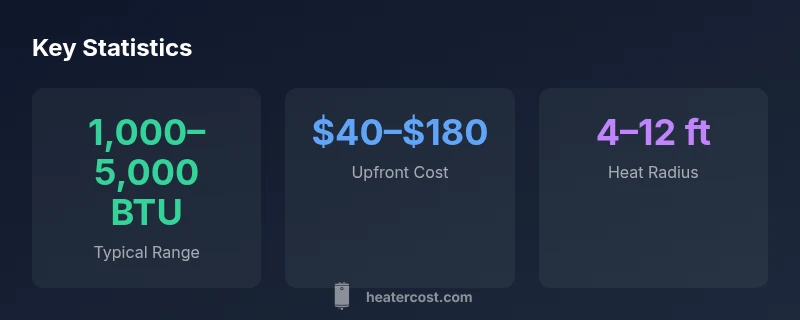
| Electric Infrared | 1,000–3,000 BTU | Electric | $40–$220 | 4–8 ft | Compact, low emissions |
| Propane Tabletop | 2,000–5,000 BTU | Propane | $60–$180 | 5–10 ft | Widely available fuel |
| Butane Tabletop | 1,000–2,500 BTU | Butane | $50–$120 | 3–6 ft | Ultra-portable, wind sensitive |
Got Questions?
What defines a tabletop patio heater?
A tabletop patio heater is a compact warming device designed to sit on a table or small stand. It uses electric, propane, or natural gas as a fuel source and targets a small outdoor area.
Tabletop heaters are compact, designed for small outdoor spaces, and come in electric, propane, or gas options.
Are tabletop heaters safe on wooden decks or tables?
Yes, when you follow installation guidelines and keep heat sources away from surfaces not designed for heat. Use heat shields if provided and avoid clutter around the unit.
Yes—just follow the manufacturer’s clearance and use heat shields when available.
Is electric or propane cheaper to operate over time?
Electric models often have lower per-hour running costs in mild weather, while propane can be cheaper upfront but requires refills. Long-term costs depend on usage patterns and local fuel prices.
Electric usually costs less per hour, propane can be cheaper upfront but needs refills.
Can tabletop heaters be used outdoors in rain?
Most tabletop heaters are not fully weatherproof. Use weather protection, bring units indoors during heavy rain, and only operate when conditions are safe.
They’re not typically weatherproof; bring them indoors during rain.
Do tabletop heaters require building permits?
Permits are usually not required for tabletop heaters, but local codes vary. Check with your city or HOA if you’re in a managed property.
Usually no permit, but check local rules.
What maintenance is recommended for propane tabletop heaters?
Regularly inspect hoses and seals for leaks, store cylinders upright, and follow safety guidelines for storage and disposal of propane.
Inspect hoses, store cylinders properly, and follow safety guidelines.
“The right tabletop heater should extend usable outdoor time without compromising safety or comfort.”
The Essentials
- Assess space and wind before choosing.
- Compare BTU range to your outdoor area.
- Factor fuel type and refill logistics.
- Prioritize built-in safety features and warranties.