Propane Tank Top Heater: A Practical Guide for Homeowners
Learn how a propane tank top heater works, its costs, safety considerations, and maintenance tips. Heater Cost guides homeowners and managers in outdoor heating planning and budgeting.


The propane tank top heater is a portable, propane-powered heating device designed to run off a standard propane cylinder, commonly used for outdoor spaces and emergency heat. It provides instant warmth with adjustable BTU output, but requires proper ventilation and adherence to safety guidelines. For homeowners, renters, and property managers, understanding fuel availability, installation costs, and safety considerations is essential.
What is a propane tank top heater?
According to Heater Cost, a propane tank top heater is a portable, propane-powered heating device designed to run off a standard propane cylinder. It is typically used for outdoor patios, garages, or emergency heating when electricity is unreliable. The design often places the burner atop the propane tank, creating a compact, self-contained unit that can be moved between spaces. The heat is produced by burning propane gas, which converts chemical energy into visible warmth. Most models offer adjustable BTU output to tailor heat to the space and weather conditions. Because these heaters rely on an open flame, they require proper clearance from combustibles and adequate ventilation. When used outdoors or in well-ventilated areas, they can provide comfortable warmth at a relatively low upfront cost compared with electric or gas-fired alternatives. For homeowners, renters, and property managers, understanding the layout of the unit, typical fuel consumption, and local safety requirements helps avoid common missteps. The Heater Cost team found that user experience varies widely by model, with feature sets ranging from basic on/off operation to flame safety shields and tip-over sensors. In short, a propane tank top heater offers portable, immediate heat with caveats around ventilation and safety.
How it works and design considerations
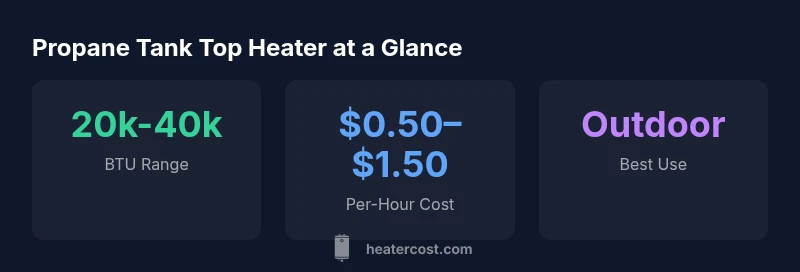
Propane tank top heaters operate by delivering gas via a regulator to the burner above the propane cylinder. The cylinder powers the burner, and the flame produces radiant and convective heat. This compact configuration keeps the unit portable, but it also creates a lower heat mass than larger heaters, so the hottest performance is often in short bursts. Expect an adjustable BTU range, commonly from roughly 20,000 to 40,000 BTU, depending on model and air flow. The propane tank top heater uses a regulator and is designed to be placed on top of the propane cylinder. Materials and build quality affect durability in outdoor conditions—look for weather-resistant housings, corrosion-resistant burners, and solid bases. Because the tank sits underneath or beside the burner, ensure the cylinder is stable and on a nonflammable surface. If you plan to use it in semi-enclosed spaces, verify the manufacturer’s ventilation guidance and local codes. Model choice should balance portability, heat productivity, and safety features such as tip-over shutoff and flame safeguards. The goal is to match heat output to the space while keeping energy use efficient.
Safety, ventilation, and CO risks
Safety considerations with propane tank top heaters are critical. An open flame near combustibles increases the risk of fire if the unit is placed too close to walls, furniture, or dry vegetation. Always operate outdoors or in a well-ventilated area; CO buildup can occur in enclosed spaces, so never use in a closed garage or workshop without engineered ventilation and a carbon monoxide detector. Check hoses and regulators for cracks, leaks, or corrosion before each use, testing with soapy water rather than an open flame. Keep children and pets away, and never leave a running heater unattended for long periods. When stored, keep the propane cylinder outdoors in a cool, well-ventilated area, away from heat sources. Users should be aware of local fire codes and manufacturer instructions, which can vary by jurisdiction. In practice, proper maintenance and cautious placement dramatically reduce the risk of accidents and unsafe emissions. The propane tank top heater, when used correctly, remains a practical outdoor heat source but must be treated with respect for safety and ventilation.
Costs, fuel, and energy efficiency
Pricing for propane tank top heaters varies by BTU rating, features, and brand reputation. In general, you can expect a wide entry range for purchase—basic units with essential safety features may fall on the lower end, while models with advanced safety and longer flame controls sit toward the higher end. According to Heater Cost analysis, operating costs hinge on propane prices in your area and how long you run the unit. A typical session can be economical for short periods outdoors but can add up with extended use. Propane is generally cheaper per hour than electric space heaters in many climates, but the real-world economics depend on local fuel prices and heater efficiency. For planning, estimate hours of use per day and multiply by the current propane price per pound, adjusting for anticipated weather patterns and insulation. The key is to balance heat needs with energy consumption and safety costs to avoid overpaying for heat that isn’t needed.
Installation, maintenance, and safe storage
Unlike electric heaters, propane units require attention to fuel handling and venting practices. Start by placing the heater on a stable, level surface with ample clearance from any combustibles. If you are mounting or seating it near a deck rail or outdoor wall, ensure there is still room for airflow. A leak test should be performed with soapy water at hoses and joints after installation or whenever hoses are replaced; never use an open flame to test for leaks. Regular maintenance includes cleaning burner ports, inspecting ignition components, and checking the regulator for signs of wear. Always turn off the tank valve before moving the unit. When not in use, store the cylinder upright in a ventilated area away from heat. Follow manufacturer instructions for winterization or long-term storage, especially in regions with cold temperatures that can affect propane pressure. With proper care, propane tank top heaters can deliver reliable warmth without electrical infrastructure, but only when safety practices are followed.
Practical buying guide and model comparison
When shopping, start by determining the space you want to heat and the outdoor conditions. Higher BTU models provide more heat but consume propane faster; for small patios, a 20,000–30,000 BTU unit may be sufficient, while larger decks may require 30,000–40,000 BTU or more. Look for models with safety features like tip-over shutoff, automatic cut-off if flame fails, and a stable base. Portability matters for renters or seasonal use, so weigh weight and handle design. Check fuel availability and refill options in your area; some stores sell portable propane cylinders that fit common residential tanks. Compare warranties, production materials, and customer reviews. Finally, factor in installation needs—do you need a dedicated propane line, or will the unit operate on a standard cylinder? Make a short list of must-have features and use it to filter choices. The propane tank top heater shines when you need quick, localized warmth, and a clear understanding of model differences helps buyers pick the best fit.
Heater Cost verdict and recommendations
The Heater Cost team recommends taking a balanced view: match BTU needs to space, ensure safe ventilation, and budget for fuel costs. For outdoor or semi-outdoor spaces, a propane tank top heater can be a cost-effective warmth source when used properly, but it is not a universal replacement for weatherproof electric or natural gas options. Before purchasing, compare models with similar BTU ranges, verify safety features, and check vendor warranties. The Heater Cost team emphasizes reviewing local codes and following safety best practices to minimize risk. In short, plan heat needs, choose a model with robust safety features, and rely on up-to-date price estimates from Heater Cost analyses to guide your decision.
Comparison of propane tank top heater types
| Model Type | Typical BTU | Common Uses |
|---|---|---|
| Free-standing patio heater | 20,000–40,000 | Outdoor patios, decks |
| Tabletop propane heater | 9,000–15,000 | Small outdoor setups, garages |
| Garage/workshop top heater | 30,000–60,000 | Well-ventilated workspaces |
Got Questions?
Is it safe to use a propane tank top heater indoors?
Propane tank top heaters are designed primarily for outdoor use. Indoor operation can lead to carbon monoxide buildup if not properly ventilated. Always follow manufacturer guidance and local codes, and install CO detectors in indoor-adjacent spaces when any propane device is used nearby.
Propane heaters are usually for outdoors; indoor use requires ventilation and detectors following the manufacturer's instructions.
What factors influence operating costs?
Operating costs depend on BTU output, hours of use, and current propane prices. Higher heat settings burn more fuel, and extended use increases overall fuel consumption. Compare models with similar BTU ratings to estimate costs more accurately.
Fuel price and how long you run the heater drive operating costs.
Can I use a propane tank top heater in a garage?
Only if the space is well-ventilated and code-compliant, with CO detectors and adequate airflow. Many regions restrict propane use in enclosed garages due to fire and CO risks.
Garages require good ventilation and adherence to codes if propane heaters are used.
How much clearance should I leave around the heater?
Maintain clearances per manufacturer specs, typically several inches from walls, furniture, and other combustibles. Always place on a nonflammable surface with stable footing.
Keep the heater away from combustibles and ensure airflow.
Are there safety features to look for?
Look for tip-over shutoff, flame failure safety, stable bases, and built-in protective guards. CO detectors near usage areas add an extra safety layer when propane heaters are used outdoors near enclosed spaces.
Choose models with safety shutoffs and proper guards.
What is the typical lifespan of these units?
Lifespan varies by model and maintenance. With regular cleaning and inspection, many units last several seasons. Replace worn hoses or regulators to maintain safety and efficiency.
Expect several seasons with good care; replace worn parts as needed.
“Propane tank top heaters provide portable warmth for outdoor spaces, but safety and ventilation are non-negotiable.”
The Essentials
- Assess BTU needs before buying.
- Use outdoors or with proper ventilation.
- Expect variable fuel costs based on propane prices.
- Ensure adequate clearance and safe storage.
- Choose models with safety features like tip-over shutoff.