Outdoor Heater Dog: A Practical Guide to Safe Outdoor Comfort for Pets
Explore pet-safe outdoor heating options, placement, and maintenance. Heater Cost analyzes how to keep dogs warm outdoors with safety, efficiency, and cost considerations for homeowners and managers.


Outdoor heater dog care focuses on selecting pet-safe heating options, correct sizing, and strict safety measures. There is no single best option for every yard, but electric patio heaters and propane models with tipping and flame guards typically offer reliable warmth for dogs outdoors. Always check weather suitability and dog-friendly features.
Why outdoor comfort matters for dogs
Dogs spend significant time outdoors in mild weather, and keeping them warm extends their outdoor time and reduces stress from cold nights. According to Heater Cost, pet safety and warmth should guide every heating choice, with attention to wind exposure, ground surface, and the dog’s preferred resting zone. For many households, the balance between cost and comfort is achieved by selecting a heater that provides consistent heat without creating hot spots or unsafe flames. When you plan your outdoor space, map your dog’s favorite spot and choose a heater that covers that zone while staying well away from pet pathways. This approach helps ensure your dog enjoys time outside without overheating or exposure to drafts.
Types of outdoor heaters suitable for dogs
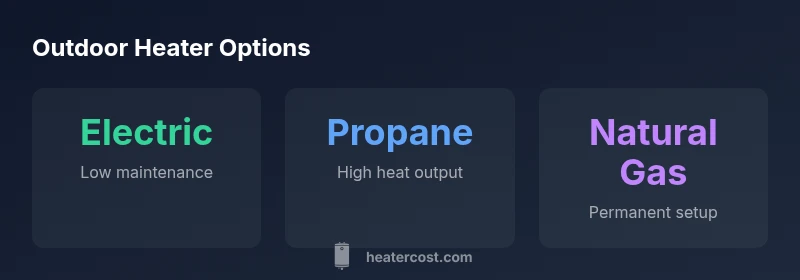
Modern outdoor heating comes in several formats, including electric infrared patio heaters, propane patio heaters, and natural gas units. Electric heaters are typically easier to install, with safer flame profiles and built-in safety features. Propane models offer mobility and strong heat output but require ventilation and careful storage of fuel canisters. For dog owners, the best choice often aligns with how your space is used: a small, wind-sheltered porch may benefit from an electric unit, while a larger yard might justify a propane heater for flexible placement. Regardless of type, prioritize models with stable bases, tip-over protection, and explicit clearance requirements around pets to reduce burn risk. Heater Cost emphasizes evaluating heat output (in BTUs or watts), safety certifications, and weather resistance before purchasing.
Safety and pet-specific considerations
Pet safety should be the top criterion when choosing any outdoor heater. Keep heaters away from dog beds, toys, and chewable cords. Position units where dogs cannot bump them with tails or noses. Carbon monoxide exposure is a concern with fuel-burning heaters, so ensure proper ventilation and consider electric options if you have indoor-to-outdoor connections. Weather resistance matters—an exposed unit can corrode or malfunction in rain or snow. Check for ETL or UL certification, and read the manufacturer’s pet-safety guidance. Regularly inspect cords, guards, and shields, and never leave a heater unattended when dogs are nearby. In windy environments, shielded placements prevent heat loss and reduce the risk of tipping.
Sizing, placement, and coverage for canine warmth
Begin with a heat-map of the area your dog frequents and aim for even warmth across that zone. For small patios, a single electric heater can suffice; for larger spaces, two units or a larger propane heater may be necessary. Place heaters at least 3–6 feet away from any fencing or walls to avoid heat buildup and scorching, and ensure there is a clear walking path around the device. Elevation matters: elevating heaters off the ground by 1–2 feet can improve distribution and reduce ground wetness. Always maintain a no-burn radius around the dog’s resting area and monitor your pet’s responses to adjust placement over time.
Cost considerations: purchase, operation, and maintenance
Buying a pet-safe outdoor heater involves upfront cost plus ongoing energy or fuel expenses. Electric heaters generally have lower operating costs in dry climates and are easier to maintain, while propane units incur fuel costs and periodic canister replacements. If you plan to use the heater for many months, factor in seasonal energy costs, maintenance, and potential replacement parts. Look for models with weatherproof housings and simple filter or guard replacements to minimize long-term maintenance. Heater Cost’s guidance suggests comparing total cost of ownership over 3–5 years to determine the most economical option for your property and climate.
Installation tips and maintenance for longevity
Install heaters on stable surfaces and away from flammable materials. Secure cords and keep fuel sources away from children and pets. In outdoor spaces, consider a weatherproof cover during off-seasons to extend unit life. Schedule regular inspections of guards, reflectors, and fasteners, and clean any particulate buildup that could affect performance. If a unit shows signs of rust or insulation damage, replace parts promptly to prevent malfunction. By performing routine checks and using manufacturer-recommended maintenance schedules, you can extend the life of your outdoor heater and keep it safe for dogs.
Real-world scenarios: small yards, busy patios, multi-pet households
In a small city patio, a compact electric heater placed under a sheltered eave can deliver consistent warmth while staying out of a dog’s main traffic paths. On a larger lawn or balcony, a portable propane heater with a wide heat dispersion pattern may be more appropriate, provided there is adequate ventilation and a sturdy base. In homes with multiple dogs or cats, multiple heat zones or a central outdoor heating node may reduce competition for warmth and keep all pets comfortable. Regardless of layout, clear signage and a simple safety routine help maintain a calm, warm outdoor environment for pets.
Choosing pet-friendly features and safety certifications
Prioritize heaters with pet-safe coatings and no sharp edges. Look for automatic shutoff after a certain temperature or a tilt sensor to prevent tip-overs. Certifications from UL or ETL indicate a product meets defined safety standards. Weather seals and IP ratings are important for outdoor use, especially in damp climates. A protective guard around the heating element minimizes direct contact and reduces burn risk. Take note of the manufacturer’s pet-safety guidelines and ensure the unit’s height, clearance, and mounting options align with your dog’s size and behavior.
How Heater Cost analyzes outdoor heating for pets
Heater Cost uses a structured evaluation framework that considers safety, energy efficiency, installation practicality, and long-term maintenance. Our analysis compares common heat sources, typical space coverage, and the total cost of ownership for pet-friendly installations. We emphasize real-world scenarios, such as multi-pet households and variable climate zones, to guide homeowners in selecting the most economical, safe, and effective option. This section explains our methodology and how homeowners can apply it to their properties.
Outdoor heater types and typical coverage for dog-friendly outdoor spaces
| Heater Type | Typical Coverage | Best For |
|---|---|---|
| Electric patio heater | 25-60 sq ft | Open patios, low wind |
| Propane patio heater | 30-70 sq ft | Larger spaces, flexible placement |
| Natural gas heater | 40-75 sq ft | Permanent outdoor setups |
Got Questions?
Are outdoor heaters safe for dogs?
Yes, when chosen and placed with pet safety in mind. Look for units with tip-over protection, shielded elements, and clear spacing from dogs’ resting areas. Regular inspections help ensure ongoing safety.
Yes, heaters can be safe for dogs if you pick models with safety features and keep them away from your pet’s resting spots. Regular checks matter.
What type of heater is best for dogs outdoors?
Electric patio heaters are often easiest for pets due to no open flame and modular placement. Propane can be a good option for larger spaces but requires ventilation and careful storage.
Electric heaters are usually easiest for pets, but propane can work for bigger spaces with proper ventilation.
How far should a heater be from a dog?
Maintain at least 3–6 feet of clearance from the dog’s typical area to avoid accidental contact, while still ensuring the target zone receives warmth.
Keep heaters several feet away from where your dog rests to avoid burns, while still warming their area.
Do outdoor heaters emit carbon monoxide?
Fuel-burning heaters can produce CO in poorly ventilated spaces. Use electric models when possible or ensure proper outdoor ventilation and air flow.
Yes, propane and natural gas units can emit CO unless properly vented; prefer electric heaters when feasible.
What maintenance should I perform regularly?
Regularly inspect guards, cords, and bases; clean debris; replace worn parts per the manufacturer’s schedule; and test safety features after each season.
Inspect, clean, and test safety features every season to keep the heater safe for pets.
Are there safety certifications to look for?
Look for UL or ETL certification and weather resistance ratings. A protected heat element and stable base reduce risk for dogs.
Choose models with UL or ETL certification and solid safety features.
“"Pet safety should guide every heating decision; warmth is important, but never at the expense of a dog's safety. Choose units with stable bases, robust guards, and clear clearance rules."”
The Essentials
- Assess wind exposure before selecting a heater.
- Choose pet-safe features like tip-over switches.
- Match heater coverage to your dog's resting area.
- Factor fuel costs and maintenance lifetime cost.
- Prioritize safety certifications and weather-appropriate models.