Natural Gas Porch Heater: Costs, Installation, and Safety
Explore natural gas porch heater costs, installation steps, safety, and maintenance for outdoor spaces. Learn sizing, efficiency, and what affects long-term costs.


To heat an outdoor space efficiently, a natural gas porch heater typically requires a purchase and installation in the range of $1,000 to $4,000, depending on BTU output, venting, and labor. Expect higher costs for complex gas line work or extensive weatherproofing. Ongoing fuel costs depend on usage and natural gas prices, and local permits may apply.
What is a natural gas porch heater?
A natural gas porch heater is a compact outdoor heating appliance that burns natural gas to produce heat for patios, decks, or porches. Unlike electric heaters, these units rely on gas lines and a vented exhaust to safely release combustion byproducts. The typical unit is either free-standing or wall-mounted and uses a reflector or radiant elements to project warmth to people beneath. For homeowners evaluating heating options, it's important to distinguish between vented versus ventless designs. In outdoor settings, a properly vented model reduces moisture buildup and minimizes indoor air quality concerns because combustion byproducts are discharged outside the structure. According to Heater Cost analysis, selecting the right BTU rating for the space reduces wasted energy and keeps fuel costs predictable. When shopping, you’ll see ratings from about 20,000 BTU up to 80,000 BTU, with higher outputs suited to larger decks. Remember that installation needs—gas line access, permits, and clearance requirements—vary by region and home layout. This is why many homeowners choose professional installation to ensure safety and code compliance. The overall efficiency depends on enclosure, wind exposure, and how long you operate the unit each season.
How to size a natural gas porch heater for your space
To size a natural gas porch heater, you need to estimate the outdoor area to be heated, usually in square feet, and consider climate, wind exposure, and desired comfort level. A common rule of thumb is roughly 40-60 BTU per square foot for temperate climates; in colder regions, you may need 80-100 BTU per square foot for consistent warmth. However, real-world performance depends on the site: covered porches retain heat better; open decks experience more heat loss. The Heater Cost analysis suggests starting with a modest 30,000-40,000 BTU unit for a 400-600 sq ft area in mild conditions, and stepping up if you need year-round comfort. It is also vital to account for ceiling height, furniture layout, and heat reflected by surfaces. Additionally, consider whether you want radiant-only heating or mixed radiant and convection to improve comfort near seating. Venting requirements influence size choices as well; improper venting can reduce efficiency and increase CO risk. If uncertain, consult a local HVAC pro to perform a heat load calculation tailored to your porch dimensions and climate.
Installation considerations: gas lines, venting, and permits
Installing a natural gas porch heater involves several crucial steps and safety checks. First, you must verify that your existing gas line can support the additional load, or whether a new line is required. A licensed plumber or gas technician should perform line sizing and leak testing. Venting is essential; outdoor gas heaters must exhaust combustion products outdoors, typically through a terminal with proper clearance from edges and combustible materials. Many jurisdictions require permits for gas appliance installation, and inspections confirm compliance with local codes. In some cases, gas meters and service lines may need temporary adjustments, which adds to labor time and cost. Weatherproofing considerations, such as mounting height, protective enclosures, and wind shields, affect performance and durability. From a budgeting perspective, plan for both the device cost and installation labor, plus potential permit fees and inspection costs. Heater Cost’s analysis emphasizes documenting all permitting steps early to avoid delays and ensure safe, durable operation.
Operating costs, fuel prices, and efficiency
Operating costs for a natural gas porch heater depend on how often you use it, its BTU rating, and current natural gas prices. On a per-hour basis, some models burn a fraction of a therm per hour at low settings, while high-output units consume more. Efficiency varies with venting, climate, and wind; enclosed porches improve heat retention. Using real-world usage patterns as a guide can help you estimate monthly fuel costs and determine whether a gas unit is cheaper to run than electric alternatives. The Heater Cost analysis notes that even within natural gas options, there is a spread in operating costs because of burner design (standing pilot vs. electronic ignition) and control options. For homeowners seeking to minimize ongoing costs, look for units with good ignition efficiency, tight venting, and the ability to set programmable timers or thermostats for off-peak usage. In regions with high natural gas prices, off-season shutdowns can pay off, and some units offer efficient standby modes to reduce idle consumption.
Safety, maintenance, and best practices
Safety and maintenance are essential for outdoor heating. Always follow the manufacturer’s clearances from walls, railings, and overhangs; never place a heater under a covered roof or near combustibles. Regular maintenance includes burner cleaning, vent inspection, and checking gas connections for leaks. Schedule an annual professional inspection to verify ignition systems and venting integrity. Keep the area around the heater free of debris, and install a weatherproof cover when not in use. In addition, install smoke and carbon monoxide alarms in nearby living spaces, and ensure children and pets stay away from the heated zone. If you smell gas or notice hissing sounds, evacuate and call the gas utility. Adhering to these practices reduces risk and prolongs the life of the heater.
Comparing natural gas porch heaters to alternatives
Outdoor heating options include propane patio heaters, electric infrared heaters, and natural gas units. Natural gas porch heaters offer strong uptime in many regions with cheap fuel, but require a gas line and venting. Propane heaters provide easier setup but higher fuel costs per hour and more refill downtime. Electric heaters are simpler to install but can be more expensive to run for large spaces, depending on electricity rates. When evaluating, compare BTU output, heat distribution (radiant vs convective), and the total installed cost. According to Heater Cost analysis, choosing between gas and electric depends on space size, climate, and local energy prices; a properly sized natural gas porch heater can deliver comfort with less ongoing maintenance than some electric options, provided the installation is code-compliant and vented correctly.
Outdoor heat equipment cost overview
| Item | Low end | High end | Notes |
|---|---|---|---|
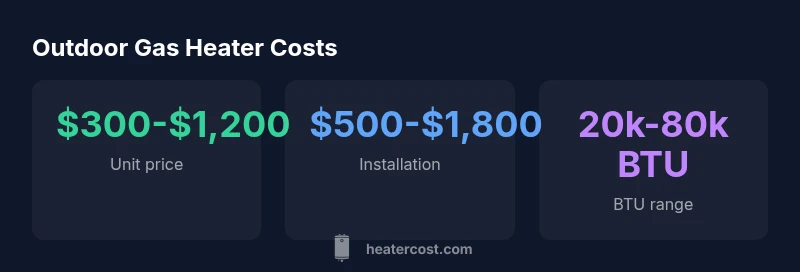
| Unit price (natural gas porch heater) | 300 | 1200 | Vendor varies |
| Installation cost | 500 | 1800 | Labor + permits |
| Annual operating cost (est.) | 120 | 600 | Varies by usage and gas price |
| Maintenance per year | 20 | 60 | Inspection+cleaning |
Got Questions?
What is a natural gas porch heater?
A gas-fired unit designed for outdoor use, vented to exhaust combustion safely. It provides reliable warmth for patios and decks and requires proper venting and clearance.
It's a gas-fired outdoor heater that vents outside and needs safe clearance and proper venting.
Are permits required to install a natural gas porch heater?
In most areas, gas installations require permits and inspection to ensure compliance with local codes. A licensed professional can help navigate permitting.
Yes, most places require permits and an inspection.
What factors affect installation costs?
Gas line work, venting requirements, site accessibility, and any electrical work for controls can drive costs. Labor rates vary by region.
Gas lines, venting, and site access drive installation costs.
How do operating costs compare to propane or electric heaters?
Natural gas is often cheaper per hour than electric heaters, but costs depend on local gas prices and usage patterns. Propane can be more expensive per hour and requires refills.
Gas is usually cheaper to run than electric, depending on prices.
Is a natural gas porch heater safe for wooden decks?
Yes, when installed with proper clearance, protective barriers, and weatherproofing. Follow manufacturer specs and local codes.
Yes, with proper clearance and weatherproofing.
What maintenance does a natural gas porch heater require?
Annual burner and vent inspections, gas connection checks for leaks, and periodic cleaning to maintain efficiency.
Annual service keeps it safe and efficient.
“Proper venting and clearances are essential for safe outdoor heating. A correctly sized natural gas porch heater delivers steady warmth with safe exhaust when installed to code.”
The Essentials
- Size upfront by space and climate before buying
- Budget for installation, permits, and fuel
- Choose appropriate BTU and venting for your porch
- Prioritize safety with proper clearances
- Schedule annual maintenance for reliability