Modine Garage Heater: A Practical Guide for Homeowners
A detailed guide to Modine garage heaters—cost ranges, sizing tips, installation considerations, and maintenance for homeowners, renters, and property managers.


Modine garage heaters are rugged, purpose-built warming solutions designed for garages and workshops, available in gas-fired and electric configurations. They offer scalable heat output across a range of BTUs and installation options, from ceiling-mounted radiant units to in-wall models. Key factors include space size, insulation, fuel type, and venting or electrical requirements. This makes Modine a reliable choice for extending usable space in cold climates while keeping costs reasonable when sized and installed correctly.
Why Modine Garage Heaters Matter for Homeowners
In garages and workshops, warmth is a productivity multiplier. A Modine garage heater is a purpose-built solution designed to withstand harsh garage environments, delivering steady heat where you work, store, or tinker. The Modine brand has earned a reputation for rugged construction, straightforward service, and heat output that scales from small hobby spaces to larger bays. According to Heater Cost analysis, 2026, homeowners who install a dedicated heater report more usable workspace and fewer disruptions caused by cold conditions. When evaluating options, consider space size, ceiling height, insulation, and how you plan to vent a gas-fired unit. Modine units come in ceiling-mounted radiant configurations and in-wall or sidewall models with various clearances and mounting options. In many garages, a properly sized Modine can provide comfortable warmth without creating hot spots or excessive noise, helping protect tools and improve comfort during long projects.
How Modine Models Differ: Gas vs Electric
Modine offers both gas-fired and electric garage heater options, each with distinct installation requirements and operating costs. Gas-fired units typically require venting, a dedicated gas line, and proper combustion air, which can influence total installed cost and permitting. Electric models are often simpler to install, drawing 120V or 240V depending on the size, and don’t require venting. Efficiency is strong in both families, but operating costs can diverge based on local fuel prices and climate. When choosing between gas and electric, evaluate space size, insulation, and how you plan to use the garage (heated workspace vs. occasional warmth). For many homeowners, Modine gas-fired models deliver cost-effective heat for larger spaces, while electric units suit smaller spaces or zones where gas isn’t available.
Sizing and Space: How to Choose BTU
A practical sizing rule for garages is to target roughly 20–40 BTU per square foot for mild to moderate climates, and 30–50 BTU per square foot in harsher winters. For a 400-sq-ft garage, this translates to about 8,000–16,000 BTU for a modest heat load, with insulation and ceiling height pushing the range higher or lower. If your garage has poor insulation or large doors, plan toward the upper end of the range. Conversely, well-insulated spaces can be closer to the lower end. Always factor in ceiling height, air leakage, window exposure, and how quickly you want the space to warm up. If in doubt, start with a mid-range BTU and monitor comfort, adjusting with a larger unit only if necessary.
Installation Considerations: Venting, Clearances, and Permits
Gas-fired Modine heaters require proper venting and a gas supply, which typically involves permits and professional installation. Electric models demand a suitable electrical circuit and compatible thermostats. Clearances to walls and combustibles must be observed for safety and code compliance. Venting layout influences efficiency and draft safety, so a licensed HVAC technician should design and install the system. For detached garages, consider external vent routing and outdoor vent termination points to minimize CO buildup. A well-planned installation reduces nuisance noises, ensures stable operation, and helps prevent costly rework down the line.
Efficiency, Running Costs, and Fuel Types
In general, gas-fired Modine heaters offer strong heat output at a lower per-BTU operating cost in many markets, especially where natural gas or propane is economical. Electric models are 100% efficient at the point of use, but electricity costs can be higher in cold climates, making operating costs less favorable in the long run. Efficiency metrics vary by model and usage pattern; look for units with sealed combustion or direct-vent options to minimize heat loss. When evaluating, compare AFUE-style ratings for gas units and wattage/thermostat controls for electric units. Remember that installation costs, venting, and ongoing maintenance also affect the total cost of ownership.
Maintenance and Longevity: Caring for a Modine Unit
Regular maintenance preserves performance and safety. Schedule an annual professional inspection for gas-fired models to check for vent blockages, gas leaks, and combustion efficiency. Electric units benefit from periodic wiring and thermostat checks, along with filter or fin cleaning where applicable. Simple routines—cleaning louvers, inspecting vent paths, and testing the thermostat—extend life and improve comfort. Replace worn components before they fail, and keep a log of service visits. Proactive upkeep can deliver reliable warmth for many winters.
Real-World Scenarios: Attached vs Detached Garages
Attached garages often have better building envelopes and easier access to utilities, enabling quicker warmups with smaller BTU ranges. Detached garages tend to experience greater heat loss due to exposure on all sides, requiring larger BTU units or supplemental insulation to achieve the same level of comfort. In either scenario, consider seasonal usage, door frequency, and typical weather. For frequent use or long sessions, investing in a slightly larger Modine unit with good insulation and a quality thermostat yields the best comfort-to-cost balance.
Buying Guide: What to Look For in a Modine Garage Heater
Key buying considerations include the BTU rating for your space, fuel type, and installation requirements. Look for sealed combustion, safety shutoff, and a programmable thermostat. Check warranty terms and service availability in your area. Consider noise levels, ease of mounting, and whether the unit integrates with existing home automation or smart thermostats. Finally, verify local codes and permit requirements before purchase to avoid surprises during installation.
Common Myths About Garage Heating
Myth: A single, oversized heater is best for any garage. Reality: Over-sizing wastes energy and creates discomfort. Myth: Electric heaters are always expensive to run. Reality: Costs depend on usage patterns and climate; some smaller spaces benefit from electric heat with proper zoning. Myth: Garage heaters are unsafe in attached garages. Reality: When properly installed with venting and CO safeguards, modern units can be safe and compliant.
Quick-reference comparison of typical Modine garage heater configurations
| Model Type | BTU Range | Fuel Type | Typical Installed Cost | Notes |
|---|---|---|---|---|
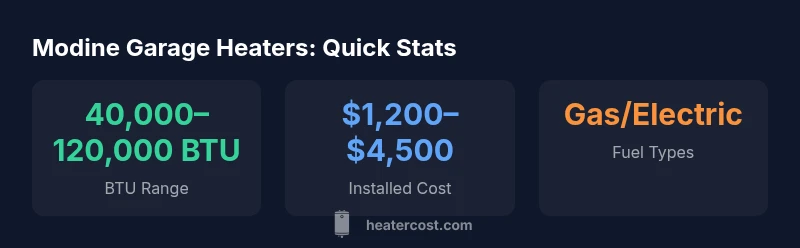
| Gas-fired Ceiling Unit | 40,000–120,000 BTU | Natural Gas/Propane | $1,200–$4,500 | Common in larger garages; venting required |
| Gas-fired Under-Sill/Radiant | 20,000–90,000 BTU | Natural Gas/Propane | $1,000–$3,800 | Versatile; venting may be required |
| Electric Unit | 5,000–40,000 BTU | Electric | $600–$2,500 | No venting; easier install but higher operating cost in cold climates |
Got Questions?
Are Modine garage heaters safe for attached garages?
Yes, when installed with proper ventilation, CO safeguards, and adherence to local codes. Gas models should be vented and sized for the space; electric models require correct circuit capacity and thermostat control.
Yes, Modine heaters can be safe in attached garages if installed correctly with venting and CO safety features.
What fuel options do Modine garage heaters support?
Modine offers gas-fired (natural gas or propane) and electric models. Your choice depends on fuel availability, installation cost, and expected operating expenses.
Modine heaters come in gas and electric versions. Pick based on fuel availability and running costs.
Do I need permits for installation?
Gas installations generally require permits and professional installation. Electric units may require electrical permits or inspections depending on local codes. Always consult a licensed technician.
Yes, gas units often need permitting; electric units may too, depending on your area.
How much heat will I actually feel in my garage?
Heat felt depends on BTU, insulation, window exposure, and door frequency. Start with a mid-range BTU for your space and adjust as needed.
It varies with BTU size and insulation; start mid-range and test.
Can a Modine heater heat a detached workshop effectively?
Yes, but you’ll likely need a larger BTU unit and good insulation to counter external exposure. Consider supplemental insulation and weather sealing.
Yes, but you may need more BTU and better insulation for a detached space.
What maintenance is required for longevity?
Annual professional inspection for gas units, along with routine cleaning of vents and filters. Keep a service log and replace worn parts promptly.
Regular checks, clean vents, and annual professional service keep it reliable.
“Modine garage heaters offer durable design and reliable warmth when correctly sized and installed. Space, fuel type, and ventilation are the three levers homeowners must understand to maximize comfort and control costs.”
The Essentials
- Choose BTU based on space and climate.
- Gas units require venting and permits; electric units do not.
- Account for insulation and door frequency when sizing.
- Regular maintenance extends unit life and reliability.
- Verify local codes before installation to avoid delays.