Lowes Propane Heater Costs: Prices & Buying Guide
Learn Lowe's propane heater prices, features, and installation tips. This buying guide helps homeowners compare options and estimate costs for outdoor heating.


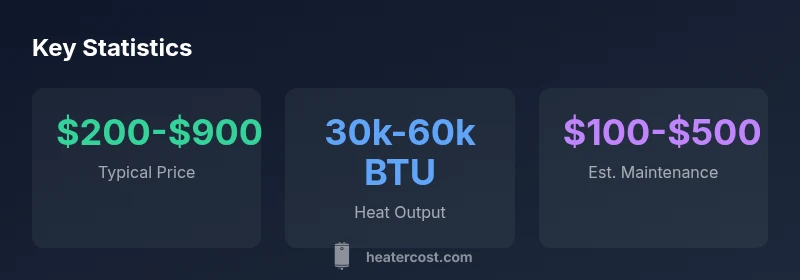
Propane heaters sold at major retailers typically range from $200 to $900, depending on BTU output, portability, and safety features, with higher-end or vented models reaching around $1,200. According to Heater Cost Analysis, 2026, Lowe's stocks a mix of portable, outdoor, and garage-friendly units within this price spectrum.
Why Lowe's Propane Heaters Fit Outdoor Spaces
Homeowners frequently turn to Lowe's for propane heaters because they offer portable, outdoor-ready options that can heat patios, decks, and uninsulated spaces like garages. The typical Lowe's assortment includes compact patio torches, freestanding patio heaters, and ventilated indoor-safe units that work for covered outdoor spaces. As you compare, focus on BTU output, fuel tank size, and safety features such as tip-over switches and automatic shutoff. According to Heater Cost, the best value often comes from models that balance heating capacity with fuel efficiency and safety standards. The Heater Cost team emphasizes that consumer education around space size, wind exposure, and usage duration leads to smarter purchases and lower total ownership costs.
Key takeaway: Start with your space size and typical usage to narrow model options, then verify safety features before purchase.
How to Size a Propane Heater for Your Space
Sizing a propane heater involves matching the heater’s BTU rating to the room or outdoor area. For outdoor patios, a common rule of thumb is 40 BTU per square foot for a well-insulated space, but this can vary with wind, ceiling height, and ambient temperature. In well-ventilated outdoor areas, you’ll typically find portable units in the 20,000–40,000 BTU range, while larger vented models may exceed 60,000 BTU for brisk evenings. The Heater Cost analysis highlights that incorrect sizing leads to inadequate warmth or unnecessary fuel use. To estimate needs, measure the area, note exposure, and consider seasonal temperature fluctuations. Lowe's often lists BTU ranges on product pages to help you compare quickly.
Actionable tip: If you’re between sizes, choose the higher BTU option with efficient fuel use for more consistent heat and fewer hours of operation.
Retailer-Specific Considerations for Lowe's Buyers
Retailers like Lowe's categorize propane heaters by portability, installation type (vented vs. ventless), and intended space (outdoor vs. garage). When shopping, examine the included safety features and warranty terms. Lowe's product pages typically show price ranges, estimated maintenance intervals, and what’s included in the box (propane hose, gauge, or protective covers). The Heater Cost team notes that reading customer reviews for reliability, ignition, and heat consistency can save time after purchase. Look for models with durable casings, corrosion-resistant reflectors, and clear LED indicators for easy monitoring.
Practical tip: Compare at least three options across Lowe's site or store shelves to understand price variations, feature bundles, and seasonal discounts.
Safety First: Ventilation, Detectors, and Installation Guidance
Safety is paramount with propane heating. Outdoor models generally require adequate ventilation and clearance from combustibles. Indoor or semi-indoor units typically need professional installation or strict manufacturer guidance, especially if venting is required. Always follow the manufacturer’s instructions for clearance, fuel storage, and securing the unit on level ground. Carbon monoxide detectors are essential in any space used for heating, and proper fuel storage away from heat sources reduces risk. The Lowe's selection often includes units with tip-over protection and auto shutoff for added safety. For ongoing safety, maintain regular checks on hoses and connections for leaks, and replace damaged components promptly.
Best practice: Pair any propane heater with a CO detector and ensure adequate airflow in the space where heating occurs.
Cost of Ownership: Fuel, Maintenance, and Longevity
Propane fuel costs fluctuate with market conditions, but overall operating costs can be forecasted by calculating BTU usage and propane price per gallon. A typical outdoor propane heater may consume propane at varying rates based on heat setting and outdoor conditions. Maintenance includes routine inspection of hoses, regulators, and igniters, plus periodic cleaning to remove dust and debris. The lifetime of a propane heater depends on build quality and care; higher-quality units with metal casings and sealed components tend to last longer and resist weather-induced wear. Lowe's warranty coverage and the model’s maintenance schedule influence long-term expense, which the Heater Cost analysis documents as a meaningful portion of total cost of ownership.
Advice: Schedule seasonal checks and store the unit in a sheltered area during off-seasons to extend lifespan.
Buying Tips: What to Look For at Lowe's
When evaluating Lowe's propane heaters, prioritize safety features (tip-over switch, overheat protection), fuel efficiency (high-efficiency burners, insulated housings), and ease of ignition (electronic ignition vs. manual). Check for certifications from recognized bodies (CSA, UL) as these indicate adherence to safety standards. Confirm the included accessories, such as hoses or regulators, and verify whether replacement parts are readily available. Consider warranty length and what it covers—burner assemblies, hoses, and ignition components. For portable models, assess the weight and handle design for ease of relocation. The right features can reduce fuel consumption and extend the unit’s life, delivering better value over time.
Concrete tip: Create a short shopping list of must-have features before you visit Lowe's or browse online so you can compare apples-to-apples.
Comparing Propane Heaters to Alternatives: Is Propane Right for You?
Propane heaters offer quick, focused heat ideal for outdoor gatherings, workspaces, or enclosed patios with proper ventilation. Compared to electric heaters, propane units provide more warmth per hour in colder conditions but require ongoing fuel purchases and safe storage. Electricity-based infrared heaters may be cheaper to run in mild climates but can be slower to heat large areas. Fuel availability and outdoor usability are key differentiators for Lowe's customers, who must balance upfront cost against ongoing fuel costs and maintenance. The Heater Cost Team suggests evaluating climate, space, and usage patterns to decide whether propane remains the best option versus alternatives like electric heaters or gas-powered units.
Practical Decision Flow: Should You Buy Now?
- Assess your space size and BTU needs; 2) Compare a few Lowe's options within your budget and safety requirements; 3) Factor fuel costs and maintenance into your total ownership estimate; 4) Check warranty coverage and parts availability; 5) Plan for safe installation and proper storage when the season ends. By following this flow, homeowners, renters, and property managers can make an informed choice that aligns with both heat needs and long-term cost considerations. The Heate Cost analysis underscores that a thoughtful shortlist beats impulse buys, especially in the propane heating category.
Cost comparison of common propane heater types
| Model Type | Typical Price Range | Best Use |
|---|---|---|
| Portable patio heater | $200-$600 | Outdoor spaces, patios |
| Ventless indoor-safe heater | $400-$900 | Covered patios or garages |
| Vented garage/space heater | $700-$1200 | Large spaces, workshops |
Got Questions?
What price range should I expect for propane heaters at Lowe's?
Propane heaters at major retailers like Lowe's typically fall within a broad range, roughly $200 to $900 for portable outdoor models, with higher BTU, vented, or indoor-rated units reaching up to about $1,200. Prices vary by features, materials, and bundled accessories.
Most Lowe's propane heaters cost between $200 and $900, depending on BTU and features.
Are propane heaters safe for indoor use at Lowe's?
Only indoor-safe or vented propane heaters should be used indoors, and always follow the manufacturer’s ventilation and clearance guidelines. If in doubt, use outdoor spaces or covered patios with proper airflow.
Use only indoor-rated models with proper ventilation; outdoors is usually safer.
How do I estimate operating costs for a Lowe's propane heater?
Estimate operating costs by multiplying the heater’s propane consumption by local propane prices and expected hours of use. Consider seasonal usage and weather patterns, as outdoor heaters run more in colder months.
Calculate by BTU use times fuel price and total hours you’ll heat the space.
Do I need professional installation for Lowe's propane heaters?
Most portable Lowe's propane heaters do not require professional installation, but larger vented units or built-in installations may. Always follow the product’s installation instructions and local codes.
Usually not for portable models; check instructions for bigger units.
What safety certifications should I look for?
Look for CSA, UL, or ETL certifications indicating adherence to safety standards. Verify that hoses, regulators, and ignition systems meet local codes and the manufacturer’s recommendations.
Check for CSA/UL listings and included safety features.
How long do Lowe's propane heaters typically last?
Lifespan depends on model quality, maintenance, and storage. Regular cleaning, hose checks, and proper storage can extend the life of propane heaters.
With proper care, they can last several seasons.
“Choosing a propane heater is about balancing space, heat, and safety. Focus on BTU accuracy, venting requirements, and reliable ignition to maximize value over time.”
The Essentials
- Assess BTU needs to size correctly.
- Compare at least three Lowe's options before buying.
- Prioritize safety features and certifications.
- Consider installation and ongoing fuel costs.
- Plan for seasonal storage to extend life.