Lasko Tower Heater: A Practical Guide for Homeowners
Explore how a Lasko tower heater can safely and cost-effectively heat small spaces. This guide covers sizing, efficiency, placement, maintenance, and safety considerations for homeowners.


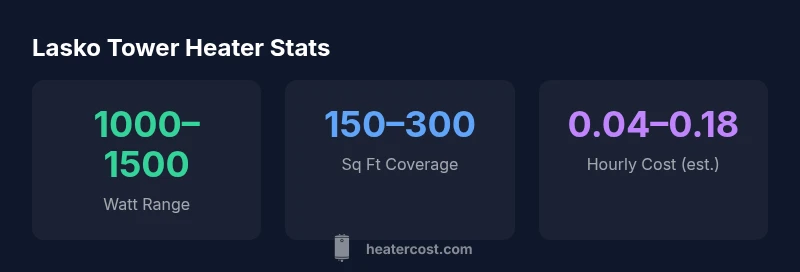
A Lasko tower heater typically runs on 1000–1500 watts and heats compact spaces efficiently as a supplementary heat source. Use thermostat control to avoid overheating and compare running costs. See our detailed guide for setup, safety, and energy considerations.
What is a Lasko Tower Heater and When to Use It
A Lasko tower heater is a compact, vertical space heater designed to warm small to mid-sized rooms. For homeowners, renters, and property managers, it offers a practical way to target drafty corners, bedrooms, or living areas without firing up a full central heating system. In many homes, these devices serve as an economical supplementary heat source during shoulder seasons or on milder winter days. According to Heater Cost, these units are especially useful in rooms that do not require year-round heating but suffer from seasonal cold snaps. When used correctly, a Lasko tower heater can improve comfort and reduce overall heating costs by allowing you to set back central heat in unused spaces while keeping occupied rooms comfortably warm.
How a Lasko Tower Heater Works
Most Lasko tower heaters use a ceramic element or oil-free heating coil paired with a fan to distribute warm air. A built-in thermostat helps maintain a chosen temperature, and many models offer oscillation to spread heat across a wider area. Safety features typically include a tip-over switch and an overheat protection circuit. The heater draws electricity from a standard household outlet, which means it is best suited for temporary or supplemental heating rather than continuous use as a primary heat source. When selecting a unit, homeowners should consider wattage range, noise level, and the presence of a programmable timer for energy savings.
Key Features to Look for in a Lasko Tower Heater
Important features to evaluate include adjustable thermostat control, multiple heat settings (low/medium/high), and oscillation for even heat distribution. Look for tip-over protection, reinforced grilles, and clear indicator lights. A compact footprint with a narrow profile helps it fit into small spaces without obstructing walkways. If you expect longer use, consider models with a built-in timer or programmable thermostat to optimize energy use. For renters and property managers, a model with a robust warranty and noise-conscious operation is often preferable in shared spaces.
Energy Costs and Efficiency: What to Expect
Electric space heaters like Lasko tower heaters are generally inexpensive to run for short durations but are less cost-efficient for long-term heating compared with central systems. Running at high settings can raise electricity bills quickly, whereas lower settings with thermostat control can maintain comfort with modest energy use. Efficiency depends on room insulation, door drafts, and how well the heater’s heat output matches room size. For budgeting, use conservative estimates that factor in ambient temperature, room leakage, and activity level in the space.
Safety and Placement Guidelines
Position the heater on a flat, heat-resistant surface away from water, fabrics, and flammable materials. Keep at least three feet of clearance around the unit, and never run on soft surfaces like carpets that can block airflow. Use a GFCI outlet in damp or humid spaces if you must place the heater nearby. Regularly inspect cords for damage, replace damaged units promptly, and never operate a heater with a damaged grille. In bathrooms or laundry rooms, consider specialized devices with extra moisture resistance and safety certifications. Always follow the manufacturer’s instructions for installation and use.
How to Choose the Right Model for Your Space
Start with room size: select a heater that matches or slightly exceeds the square footage you intend to heat. If you frequently heat multiple rooms, a larger unit with a programmable thermostat and timer may be worth the investment. Consider noise level for bedrooms and study areas; quieter models are more comfortable for nighttime use. Look at warranty length and customer reviews focused on reliability and customer service. If you live in a rental, prioritize units with stable performance, safe shutdown features, and ease of storage when not in use.
Maintenance and Longevity Tips
Keep the external surfaces clean and free of dust to maintain airflow. Periodically check the cord for fraying and avoid coiling the cord tightly around the unit. Store the heater in a dry place when not in use to prevent moisture damage. Regular dusting of fans and air vents can improve efficiency and extend the life of internal components. If the unit becomes excessively loud or emits unusual smells, discontinue use and consult the warranty or a professional technician. Routine checks can help prevent breakdowns during peak heating periods.
Common Myths About Tower Heaters Debunked
Myth: Tower heaters can fully replace central heating in a large home. Reality: They’re designed for supplemental heating in small to medium spaces, not whole-house heating. Myth: They are unsafe for continuous overnight use. Reality: With models that include automatic shutoff and proper placement, overnight use can be safe, but always consider energy costs and sleep comfort. Myth: Higher wattage always means better warmth. Reality: Room size, insulation, and heat distribution matter more than wattage alone. A well-sized heater with proper controls often performs best.
Practical Setup Scenarios for Different Rooms
In a chilly bedroom, place the heater away from the bed and near the foot of the room to create a warm, ambient edge without overheating. In a living room, use oscillation to distribute heat evenly across seating areas, and pair with window insulation improvements to reduce drafts. In a small home office, a compact unit can maintain comfortable temperatures during work hours without running the central system. Always tailor the setup to your room dimensions and insulation quality, and re-evaluate after a few evenings of use to ensure comfort and energy efficiency.
Cost and performance overview for common use cases
| Mode | Estimated Cost per Hour | Room Coverage | Typical Heat Output (W) |
|---|---|---|---|
| Low heat | $0.03–$0.06 | 150–250 sq ft | 1000 |
| Medium heat | $0.04–$0.08 | 150–300 sq ft | 1200 |
| High heat | $0.10–$0.18 | 100–200 sq ft (short-term) | 1500 |
Got Questions?
Is it safe to leave a Lasko tower heater running overnight?
Yes, if you choose a model with automatic shutoff, place it on a flat, stable surface, and keep flammable materials away. Always follow the manufacturer’s guidelines and ensure the space is well-ventilated. For prolonged use, consider a thermostat with a timer to automate shutdown.
Yes, with proper safety features and placement. Always follow the manual and keep the area clear of flammables.
Can a Lasko tower heater replace central heating in a home?
Tower heaters are designed for supplemental heating, not as a full replacement for central heating in larger homes. They work best for targeted warmth in individual rooms or zones.
They’re intended for supplemental heat, not whole-house heating.
Are Lasko tower heaters suitable for humid areas like bathrooms?
Most standard models are not designed for bathrooms or high-moisture environments. If you need heating in a damp area, look for units labeled as moisture-resistant or opt for a heater designed for bathroom use with appropriate safety ratings.
Not typically for bathrooms—use a unit rated for moisture if needed.
What maintenance is required for a Lasko tower heater?
Regularly dust vents and grills, inspect the cord for wear, and store the heater in a dry place when not in use. If you notice unusual noises or smells, stop using it and consult the warranty terms.
Dust vents, check the cord, and store properly when not in use.
How do I compare models to ensure energy efficiency?
Compare watts, thermostat control, programmable features, and runtime of each mode. Look for energy-saving options like timers and automatic shutoff. Read reviews focused on real-world energy use.
Compare wattage, controls, and energy-saving features across models.
What room size is ideal for a Lasko tower heater?
Most models are effective for rooms around 150–300 square feet when used as a supplementary heat source. For larger spaces, consider additional heaters or a different heating solution.
Ideal for about 150–300 square feet as a supplement.
“A well-chosen Lasko tower heater can provide warmth without overheating a room, but efficiency depends on proper sizing and placement.”
The Essentials
- Choose the right size for your room to maximize efficiency
- Use thermostat control and timers to save energy
- Prioritize safety features like tip-over and overheat protection
- Oscillation improves heat distribution in shared spaces
- Regular maintenance extends heater life and reliability