Lasko Heater Review: Performance, Safety, and Value
A data-driven review of Lasko heaters, covering warmth, safety, energy use, maintenance, and value for homeowners, renters, and property managers.


Definition: The Lasko heater family comprises compact, affordable space heaters designed for targeted warmth in small rooms or work areas. They emphasize quick heat, simple controls, and built-in safety features like overheat protection and tip-over shutoff. While not meant to heat entire homes, they’re a practical option for supplemental warmth and personal comfort.
What is a Lasko heater?
Lasko heaters are among the most recognizable budget-friendly space heaters in the market. They focus on portability and quick warmth, typically using ceramic or radiant heating elements to deliver targeted heat in small-to-medium rooms. The design philosophy centers on simple controls, compact form factors, and user-friendly safety features such as tip-over switches and automatic shutoffs in case of overheating. In real-world use, homeowners often rely on Lasko heaters to warm a chilly office, a chilly bedroom, or a drafty living space without running central heating. Because Lasko models come in tower, compact cube, and compact base configurations, you can choose a form factor that fits your setup—from under-desk use to bedside tables—without sacrificing mobility or basic functionality.
Brand reliability and product range
When evaluating a brand like Lasko, factors such as durability, warranty coverage, and model variety matter as much as raw heat output. Lasko’s catalog spans ceramic tower heaters, compact models, and specialty units (such as oscillating versions) designed for quick warmth in small spaces. The advantage for homeowners and property managers is a broad selection that covers many use cases, from dorm rooms to offices, with predictable heat delivery and straightforward maintenance. That said, budget lines can vary in build quality and heat consistency. The Heater Cost team notes that while mid-range models tend to balance price and performance, ultra-cheap variants may cut corners on safety features or component longevity.
Energy efficiency and heating performance
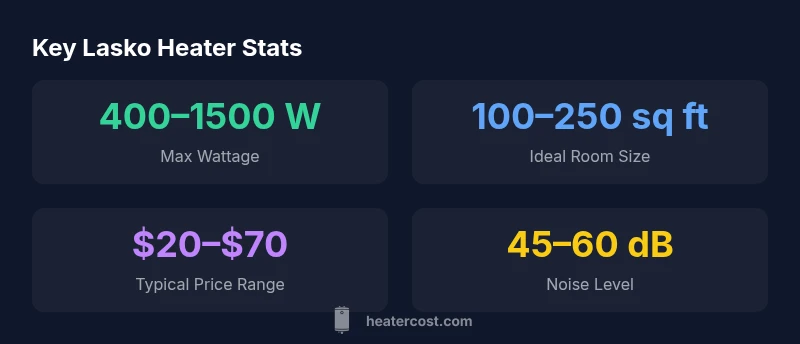
Energy efficiency for space heaters hinges on heat delivery method and runtime. Lasko typically leans on ceramic elements for rapid warming, which provides quick heat but can be best used for short bursts or consistent, small-area heating. Users should expect stronger performance in small rooms (roughly 100–250 square feet) and reduced effectiveness in larger spaces. In practice, the most energy-efficient choice within the Lasko lineup is often a model with adjustable thermostat and multiple heat settings, allowing you to cap heat output and minimize waste. For renters and homeowners, this means you get predictable warmth without the higher operating costs associated with oversized heaters.
Safety features and maintenance
Safety is a core concern for space heaters, and Lasko models typically include features like tip-over protection, cool-touch housings, and overheat protection. Regular maintenance is simple: keep the grill clean to prevent dust buildup, ensure the cord is in good condition, and inspect the unit for signs of wear after heavy use. Cleaning should be done with the unit unplugged; never use water directly on heating elements. Position heaters away from beds, drapes, and other flammable materials, and never leave a running heater unattended for extended periods. Following these practices helps extend the life of the unit and reduces risk during operation.
Operating costs and energy considerations
When considering operating costs, remember that Lasko heaters are best suited for supplemental heating rather than whole-room central heating. Costs scale with wattage and run time. Most models offer low-heat and high-heat settings, often with a built-in thermostat to avoid continuous full-power operation. In practice, accurate cost expectations come from using the thermostat effectively and limiting run time. For households aiming to balance comfort with budget, place the heater in the room you most want heated and avoid heating unused spaces. This targeted approach helps manage monthly energy bills while keeping rooms comfortable.
How to choose a Lasko heater for your space
Selecting the right Lasko model starts with room size and heat requirements. For small spaces, a compact unit with 400–1000 W output often suffices, while larger small rooms may benefit from models up to 1500 W. Key features to prioritize include adjustable thermostat, energy-saving settings, safety shutoffs, and a robust grill design for easy cleaning. Consider noise tolerance in bedrooms or offices; many ceramic models operate quietly enough for listening to music or conference calls, but some fans can introduce noticeable sound. Finally, evaluate how you’ll position the heater—away from foot traffic, on a stable surface, and near an electrical outlet capable of handling the load.
Real-world usage scenarios and best practices
In everyday use, homeowners report the best results when pairing Lasko heaters with a small-space zone heating approach. Place the unit in the doorway of a chilly room or near the seating area to create a comfortable microclimate quickly. For bedrooms, choose a model with auto shutoff and a cool-touch exterior. Offices benefit from oscillating models that distribute warm air evenly. To maximize safety, never run a space heater on a rug or near curtains, unplug when leaving the room, and avoid daisy-chaining power strips.
Comparisons with similar brands and value benchmarks
Compared to other budget-friendly brands, Lasko often excels in availability and a broad selection of form factors. Some competitors may offer higher-tech features like remote control or programmable schedules, but Lasko keeps focus on core warmth, portability, and straightforward operation. For buyers prioritizing price-to-performance, Lasko typically provides reliable warmth with minimal setup friction. When evaluating value, consider model features, warranty length, and the retailer’s return policy, as these factors influence long-term satisfaction as much as heat output.
Placement, safety, and best-practice guidelines
Smart placement can dramatically improve perceived warmth without increasing energy use. Position heaters on hard, flat surfaces and away from fabric, paper, or bedding. Keep a clear radius around the unit to reduce tipping risks. Use a model with a thermostat to prevent overheating, and if possible, combine with draft blockers to maximize heat retention. These practices ensure comfortable spaces while preserving safety and reducing unnecessary energy costs.
Authority sources and external references
To support consumer decisions, consult authoritative safety and energy guidance. Reputable sources include the Consumer Product Safety Commission for heater safety guidelines, and the U.S. Department of Energy for general energy-use awareness and efficiency tips. Industry publications and university extension pages also offer objective guidance on space heater use and room heating strategies. Referencing these sources helps homeowners distinguish between promotional claims and practical, safety-first recommendations.
What to expect regarding long-term value and brand guidance
In the long run, a Lasko heater purchased for targeted warmth in small rooms can deliver solid value, especially when used as a supplemental heat source. The key to value is choosing a model aligned with room size, safety needs, and user habits. For property managers, consider bulk purchases of units with clear safety guidelines and maintenance plans to reduce call-backs related to poor heat distribution or safety concerns. Overall, Lasko heaters are a dependable choice for quick warmth in compact environments when used responsibly.
The Good
- Affordable entry price with broad availability
- Compact form factors fit small spaces well
- Simple controls and reliable safety features
- Wide range of models (tower, compact, specialty)
Negatives
- Not suited for whole-home heating
- Build quality can vary across budget models
- Some models may be louder than ultra-quiet units
- Heat distribution may be uneven in larger rooms
Best fit for budget-conscious buyers seeking quick, localized warmth in small rooms.
Lasko heaters offer practical warmth at a budget-friendly price. They excel in small spaces and are easy to use, but they’re not designed to replace central heating in larger areas. For targeted comfort and simple maintenance, they remain a strong value proposition.
Got Questions?
Are Lasko heaters safe to use in bedrooms?
Yes, with proper precautions. Look for tip-over and overheat protection, place the heater on a flat, nonflammable surface away from bedding and curtains, and unplug when not in use. If used overnight, ensure the model has a shutoff timer or auto-off feature.
Yes, but always place it away from fabrics and never leave it running unattended in a bedroom.
Do Lasko heaters use a lot of energy?
Energy use depends on wattage and run time. They’re designed for spot heating, so operate at moderate wattage and use a thermostat to limit heat output. For energy-conscious scenarios, combine with proper insulation and limit run time.
Energy use varies; use the thermostat and target smaller spaces for efficiency.
What features should I look for when choosing a Lasko heater?
Prioritize an adjustable thermostat, multiple heat settings, tip-over protection, and overheating shutdown. Cool-touch housing and a compact, stable base help safety and placement, while easy cleaning features reduce maintenance.
Seek adjustable heat, safety shutoffs, and easy maintenance for best results.
Are Lasko heaters noisy?
Most models are designed to be reasonably quiet during typical use, but some fan-driven units may produce noticeable sound. If you need near-silent operation, look for models advertised as quiet or with lower dB ratings.
Some models may hum a bit; check the dB rating if quiet operation is a must.
How should I maintain a Lasko heater?
Dust the grill regularly, keep the cord intact, and unplug before cleaning. Periodically inspect for wear on the power cord and switches. Store in a dry area and avoid water exposure to prolong life.
Dust the grill, inspect the cord, unplug before cleaning, and keep dry.
Is Lasko better than other budget brands?
In many cases, Lasko offers a broader model range and easier accessibility at similar price points. However, some competitors may provide advanced features like programmable timers. Compare heat settings, safety features, and warranty length to decide which is best for your situation.
Lasko is often a solid value, but compare features and warranties with peers.
The Essentials
- Choose compact Lasko models for small spaces
- Prioritize thermostat and safety features
- Use as supplemental heat, not primary heating
- Maintain dust-free grills for optimal performance
- Verify placement to maximize warmth and safety