How to Choose a Heater for Your Home
Learn how to choose a heater for your home with practical steps, comparing heater types, sizing, efficiency, costs, and installation considerations to maximize comfort and long-term savings.


According to Heater Cost, choosing the right heater for your home starts with understanding space, climate, and goals. This guide outlines heater types, sizing methods, energy efficiency, and cost considerations to help homeowners, renters, and property managers pick a solution that delivers comfort and long-term savings. It also cites trusted sources and practical budgeting tips.
What to know before choosing a heater
Before you buy, map out the basics: the size of the spaces you want to heat, the level of insulation, and your climate. A bigger home or a colder climate will require more heat and may benefit from a different system than a small, well-insulated apartment. Consider how often you’ll use the heater, what rooms will be heated, and whether you want zoned control. Finally, set a realistic budget that accounts for installation costs, ongoing energy bills, and maintenance needs. In many homes, upgrading insulation or sealing drafts yields faster, more cost-effective warmth than simply increasing heater size. This upfront planning reduces the risk of overspending on a heater that isn’t well suited to your home.
Understanding heater types
Heaters come in several core categories, each with distinct pros and cons. Electric resistance units (like baseboard or panel heaters) are simple to install but can be costly to run in larger spaces. Heat pumps, including air-source and ground-source options, deliver warmth efficiently and can double as cooling in summer, but initial costs are higher. Gas furnaces provide strong heating for larger homes and colder climates, often with lower energy costs per BTU in regions with cheap gas; however, they require venting, professional installation, and ongoing maintenance. Boilers, radiant floors, and specialty units (like pellet stoves) fill niches for comfort, efficiency, and aesthetics. The right mix depends on climate, home design, and budget.
How space and climate affect your choice
Your climate zone and space layout should drive the heater choice. In milder areas with good insulation, a compact heat pump or electric resistance heater may suffice. In colder regions or older homes with drafts, a more robust system (gas furnace, boiler, or geothermal heat pump) often delivers reliable warmth with manageable operating costs. Consider room-by-room heat distribution; you may heat living areas differently from bedrooms. For renters or small homes, zoned electric or mini-split systems can provide targeted comfort without major remodeling.
Sizing: avoiding over- and under-sizing
Sizing is the single most important factor for comfort and efficiency. An undersized heater struggles to reach the desired temperature, running constantly and wasting energy. An oversized unit heats quickly but creates uncomfortable temperature swings and wasted heat. Use a professional load calculation or trusted online calculators to estimate the required BTUs for your space, factoring in insulation, windows, ceiling height, occupancy, and climate. When possible, opt for modular or multi-zone solutions that let you tailor heat to each area rather than a single big appliance.
Efficiency and operating costs explained
Efficiency ratings (like AFUE, HSPF, COP, and SEER for heat pumps) indicate how much of the input energy actually becomes usable heat. Higher efficiency generally lowers operating costs, but initial price and installation complexity also matter. It’s important to compare life-cycle costs, not just upfront price, because efficient equipment often pays back over time through lower energy bills. Heater Cost analysis shows that pairing an appropriately sized unit with modern thermostats and smart controls yields meaningful savings versus aging, poorly insulated systems.
Fuel options: electric, gas, and propane
Electric heaters are easy to install and perfect for spaces without gas lines, but can be costly to run in large areas. Gas furnaces and boilers deliver powerful heating in colder climates and can be cheaper per BTU when natural gas prices are favorable. Propane is common in rural areas lacking natural gas; it can be convenient but typically costs more per BTU and requires storage tanks. Consider fuel availability, delivery logistics, and safety requirements when selecting a fuel type.
Installation considerations and safety
Installation quality affects performance, safety, and warranty validity. Fuel-burning units require proper venting, carbon monoxide detectors, and sometimes permits. Electric systems may need dedicated circuits and appropriate clearances from combustibles. Professional installation ensures correct sizing, wiring, ventilation, and control integration. Regular maintenance—filter changes, duct cleaning, and safety checks—extends system life and reduces the risk of breakdowns. Always verify local codes and inspection requirements before purchasing.
The role of insulation and home envelope
A well-sealed, well-insulated home heats more efficiently. Before upgrading a heater, seal air leaks around doors and windows, insulate attics and walls, and consider weather-stripping and draft stoppers. A tighter envelope lowers heat loss, letting a smaller, more efficient heater do the job. Insulation improvements often yield quicker comfort gains and lower energy bills, sometimes enabling a smaller, cheaper heater with better performance.
Comparing upfront costs vs long-term savings
Upfront price matters, but long-term savings are driven by operating costs. A cheaper unit that runs inefficiently can cost more over its life than a higher-cost, efficient model. When comparing, include installation, energy usage, maintenance, and expected lifespan. Look for units with favorable warranties and readily available replacement parts. A balanced, total-cost view helps avoid overspending on features you won’t use.
Smart heating features and zoning basics
Smart thermostats and zoning systems enable precise comfort control and energy savings. A smart thermostat learns your schedule, adjusts heat based on occupancy, and can integrate with home automation. Zoning divides a home into heated zones, reducing heat in unused areas and improving comfort in occupied spaces. If you’re upgrading, prioritize compatibility with existing smart devices and ensure that the system supports future energy-saving features.
How to evaluate warranties and service
Warranty length and coverage vary widely; read the fine print for exclusions and required professional maintenance. Consider the availability of local service technicians and parts, as well as the manufacturer's reputation for reliability. Proactive maintenance plans can reduce unexpected repairs and help preserve warranty protection over time.
Quick decision checklist you can use today
- Confirm space size and climate needs. - List fuel preferences and installation feasibility. - Compare efficiency ratings and expected operating costs. - Check warranty terms and service coverage. - Plan for insulation improvements if needed. - Choose a modular or zoned solution for flexibility. - Verify permit requirements and installation timelines. - Schedule a professional assessment to finalize sizing.
Tools & Materials
- Energy bill and local energy rates(Current monthly energy usage and rate to estimate operating costs)
- Home size and room layout (sq ft)(Total heated area and floor plan to assess zoning needs)
- Current insulation details (R-value, drafts)(Attic, walls, and floors to gauge heat loss)
- Access to a heat-load calculator or BTU chart(Helpful for precise sizing; professional guidance is best)
- Notebook or device for calculations(Record comparisons and decisions)
- Safety equipment (CO detectors, ventilation assessment)(Important for fuel-burning heaters and overall safety)
Steps
Estimated time: 60-90 minutes
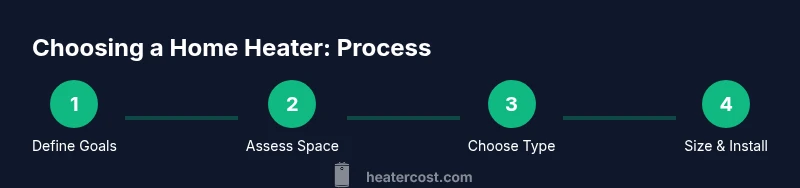
- 1
Define your heating goals
Identify the rooms to heat, your comfort targets, and whether you want energy savings or rapid warming. Clarify if you need simultaneous heat in multiple zones or a single-area focus. Document preferred temperature ranges for different times of day.
Tip: Write down your top three goals to guide the decision process. - 2
Assess space and climate
Measure heated space, note ceiling height, window quality, and typical winter temperatures. A northern exposure or many large windows increases heat loss, shaping heater choice and sizing. Consider future changes to space use.
Tip: Take photos or sketches of each room to visualize heat distribution. - 3
Learn heater types
Review electric, gas, and heat-pump options, plus radiant and boiler-based solutions. Compare installation complexity, fuel availability, and typical lifecycle costs. Prioritize options that fit your climate and space constraints.
Tip: Create a quick pros/cons list for the top two choices. - 4
Size your heater correctly
Use a reputable load calculation or BTU chart to determine required heating capacity. Avoid oversizing (inefficient cycling) and undersizing (poor comfort). Cross-check results with a professional.
Tip: Prefer modular or multi-zone systems for better balance across rooms. - 5
Estimate operating costs
Calculate annual energy use for each option using local rates and efficiency ratings. Consider seasonal variability and potential subsidies or tax credits.
Tip: Factor in maintenance costs and expected lifespan when comparing options. - 6
Check installation requirements
Identify whether venting, gas lines, or electrical upgrades are needed. Verify permit requirements and contractor qualifications before purchase.
Tip: Request a written installation plan and timeline from your installer. - 7
Compare warranties and service
Assess warranty length, what it covers, and service availability in your area. Short service windows can add risk if repairs are needed.
Tip: Choose a model with easy-to-find replacement parts and local technicians. - 8
Make a decision and plan installation
Select the model that best balances size, efficiency, and cost. Schedule installer appointments and prepare your home (clearances, access, and venting checks).
Tip: Keep copies of all manuals, receipts, and warranty letters for future reference.
Got Questions?
What is the most energy-efficient heater for a small room?
For small, well-insulated rooms, a compact electric heater or a small heat pump can be very efficient due to limited space and minimal heat loss. Always compare the efficiency ratings and expected operating costs for your climate.
For small rooms, look at electric or compact heat pumps and compare efficiency ratings to estimate ongoing costs.
How do I determine the right size for my home?
Use a detailed heat-load calculation or reputable online BTU calculator. Include climate, insulation, window quality, and space layout. Avoid relying on room-by-room guesses; professional guidance helps ensure accuracy.
Use a heat-load calculation and consider the whole home, not just individual rooms.
Are gas heaters safe for indoor use?
Gas heaters require proper venting, regular maintenance, and functional carbon monoxide detectors. Follow all local codes and hire licensed professionals for installation.
Gas heaters can be safe indoors with proper venting and CO detectors, plus professional installation.
Should I consider a heat pump if I live in a cold climate?
Yes. Modern cold-climate heat pumps are designed to extract heat efficiently at lower outdoor temperatures. Look for models rated for your coldest expected conditions and pair with supplemental heating if needed.
Yes—many heat pumps perform well in cold weather; check cold-weather ratings.
What is the difference between BTU and COP?
BTU measures heat output, while COP indicates efficiency for a given heating mode. Higher COP means more efficient heating per unit of energy, which lowers operating costs over time.
BTU tells you heat output; COP shows efficiency. Higher COP means lower energy use per heat unit.
What about installation costs and permits?
Installation costs vary with system type and home layout. Some installations require permits and inspections; verify requirements with your local authority and obtain a written plan from your installer.
Installation costs depend on the system; permits may be required—get a written plan from your installer.
Watch Video
The Essentials
- Size the heater using a proper heat-load calculation.
- Consider climate, space layout, and insulation first.
- Prioritize energy efficiency to reduce operating costs.
- Factor installation, maintenance, and warranty into the total cost.
- Explore zoning and smart controls for best comfort.