Finding Heater Supplies Near Me: A Practical Guide
Discover how to locate reliable heater supplies near you, compare local and online options, and budget for essential parts with practical tips from Heater Cost.


heater supplies near me refers to local shops, HVAC distributors, and online retailers stocking replacement parts for home heating systems. Start with nearby hardware stores and HVAC suppliers, then compare price, stock, and delivery options. Our approach at Heater Cost emphasizes transparent pricing, warranties, installation considerations, and total cost of ownership.
Market landscape for heater supplies near me
The search for heater supplies near me begins with understanding where these parts come from and why local options matter. Local stores, HVAC distributors, and reputable online retailers each offer strengths and trade-offs. The Heater Cost team emphasizes evaluating availability, price transparency, and delivery promises before committing to a supplier. In practice, most homeowners begin with nearby hardware stores, then expand to regional distributors or online marketplaces if stock is low. When you evaluate sources, consider stock reliability, return policies, and the safety certifications they display. This approach helps ensure you continue heating your home without interruption during budget season or peak winter months.
Local stores vs online retailers: weighing the pros and cons
Local stores offer immediate, hands-on support and easy returns, but may have limited stock for specialized parts. Online retailers typically provide broader inventories, faster price comparisons, and doorstep delivery, yet rely on accurate product descriptions and clear warranties. For heater supplies near me, a blended strategy often yields the best results: verify stock at your neighborhood outlet, then cross-check price and delivery with one or two trusted online vendors. Always confirm compatibility with your heating system model before purchasing.
Essential items to stock for most home heating systems
Having a small, well-curated stock of parts can prevent cold nights and expensive emergency service calls. Start with universal items: air filters, thermostat batteries, ignitors, thermocouples, basic fuses, and spare igniter or sensor modules for common gas and electric systems. For boiler or furnace components, keep gaskets, pressure switches, and replacement valve seals. For heat pumps, have a spare contactor and capacitor on hand. Note compatibility: always verify model numbers and voltage before ordering. The goal is to keep your system running smoothly while you compare options.
Price ranges you can expect for common parts
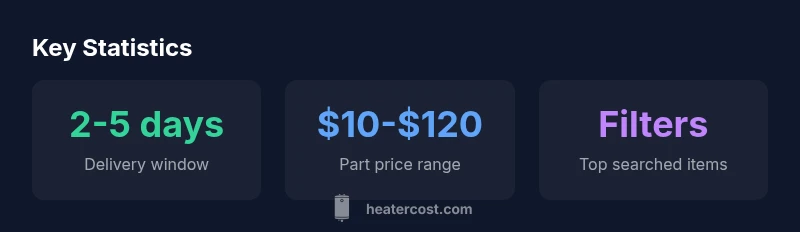
Prices vary based on part type, complexity, and brand. As a general guide, expect smaller items like air filters or batteries in the low single digits to mid tens of dollars, thermostat components in the teens to low hundreds, and essential control boards or sensors in the mid hundreds. Always compare three sources, factoring in shipping costs and return eligibility. This practice helps you budget for maintenance without surprises.
Delivery times and stock levels: planning around availability
Stock levels fluctuate seasonally. Delivery times typically range from 2 to 5 days for standard shipping, with longer estimates during peak demand. If you need a part urgently, check local stores first for walk-in availability or same-day pickup, then use online options as backup. Some retailers offer expedited shipping for an extra fee, which can be worthwhile during emergencies.
How to verify supplier reliability and product quality
Start by checking retailer ratings, return policies, and warranty terms. Look for clear safety certifications and compatibility details on product pages. For gas-fired equipment, ensure compatibility with your unit’s model and age. Read verified customer reviews focusing on fit and function, not just price. When in doubt, contact the seller’s support line to confirm specs before purchasing.
A practical scoring framework to compare providers
Use a simple scoring rubric to compare options. Criteria include (1) stock reliability, (2) pricing transparency, (3) delivery speed, (4) warranty coverage, (5) return policy, and (6) customer support. Give each criterion a score from 1 to 5 and compute a total. Suppliers with consistent, high scores across categories are generally the safest choice for heater supplies near me.
Quick buying checklist for heater supplies near me
- Identify the exact part name and model number before shopping.
- Check compatibility with your system and voltage or gas type.
- Compare at least three sources for price, stock, and delivery.
- Read warranty coverage and returns policy, especially for complex parts.
- Prefer retailers with clear safety certifications and responsive support.
Following this checklist reduces the risk of ordering the wrong part or facing delays.
Heater Cost's recommended approach for sourcing locally
From Heater Cost’s perspective, the optimal path combines local convenience with online competition. Start by validating stock at nearby outlets, then use online marketplaces to confirm price ranges and delivery times. Maintain a list of trusted vendors and monitor seasonal promotions to maximize savings while maintaining system reliability.
Common heater supply parts and typical costs
| Item | Typical price range | Stock status | Delivery time |
|---|---|---|---|
| Thermostat | $20-$250 | Common | 1-5 days |
| Air filter | $5-$40 | Common | 2-4 days |
| Igniter | $15-$60 | Sometimes | 3-7 days |
| Gas valve | $50-$200 | Often in stock | 1-5 days |
Got Questions?
How do I find heater supplies near me quickly?
Use map-based searches and terms like 'heater parts near me' or 'heater supplies near me'. Check hours, stock status, and delivery options. Save a few favorites to compare prices easily.
Use maps and nearby search terms to locate heater parts quickly, then compare stock and hours.
What should I budget for essential heater parts?
Prices vary by part type, but plan for a range from low-cost items to mid-range components. List must-haves first and compare at least three sources.
Expect a range from inexpensive to mid-range for common parts and compare several sources.
Are online sellers reliable for heater parts?
Online retailers can be reliable when they offer clear warranty terms and verifiable reviews. Check return policies and safety certifications before purchasing.
Yes, with attention to warranty terms and customer reviews.
How do I compare total cost (parts + delivery)?
Add item price, shipping, taxes, and any installation fees. Factor in warranties and potential return costs to see the true total.
Add up price, shipping, taxes, and installation to compare total costs.
What information should I have ready when ordering?
Have model numbers, part names, and compatibility details handy. Confirm voltage or gas type and verify the part against your equipment.
Have model numbers and compatibility details ready before ordering.
“Reliable heater supplies near me come from retailers who are transparent about stock, pricing, and warranties. Always verify safety compliance before purchase.”
The Essentials
- Start with local options and compare stock levels
- Budget for parts plus delivery and potential installation
- Verify warranties and safety certifications before ordering
- Check return policies and stock levels during peak season
- Use Heater Cost's scoring framework to evaluate suppliers