Heater or Heated Blanket: Cost, Comfort, and Safety
Compare a space heater and a heated blanket to decide which warms your space efficiently. This guide covers energy use, safety, costs, comfort, and practical tips for homeowners, renters, and property managers.


The quick answer is that a space heater and a heated blanket serve different warmth needs. A heater provides rapid, whole-room warmth with higher running costs and more space considerations, while a heated blanket delivers targeted comfort with lower energy use and fewer ongoing energy risks when used properly. For most homes, choose based on space, safety preferences, and typical usage patterns.
The core difference: space heater vs heated blanket
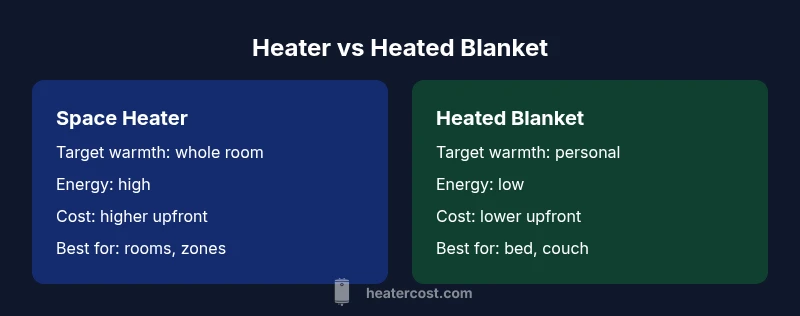
In any comparison between a heater or heated blanket, the central distinction is what portion of your space you want to warm and how you want to allocate energy. A space heater energizes an entire room or specific zone, delivering rapid warmth but typically at higher operating costs. A heated blanket targets personal warmth, consuming far less energy and avoiding most climate side effects of blowing air. From the homeowner's perspective, this trade-off between room-scale comfort and personal heat is the first decision you make when evaluating your heating needs. According to Heater Cost, the best choice depends on space, occupancy, and safety preferences, not just upfront price. When used correctly, both options can enhance comfort without breaking the bank. In this article, heater or heated blanket options are weighed against room size, typical usage patterns, and seasonal needs to help you pick the right approach.
Use-cases by space and season
Your living arrangement and climate largely determine which approach works best. In a compact studio or dorm room, a directional space heater with tip-over protection can quickly raise comfort levels without heating an empty area. In a two- or three-bedroom apartment, a single heater might struggle to keep all zones comfortable, while a heated blanket can keep one person warm on the couch or in bed without running a heater all night. In larger homes, a heater used for a living area or workspace may be more efficient than heating every room; but the blanket remains valuable for late-night comfort in bedrooms. The Heater Cost team notes practical seasonal usage: during shoulder seasons, a blanket can suffice for moderate evenings, while deeper winter demands may justify supplemental heating. Always balance comfort against energy costs and safety considerations for each space.
Energy costs and efficiency
Energy efficiency is a major factor when choosing between a heater or heated blanket. Heaters are rated by wattage, and a typical space heater can draw a significant amount of electricity when used for extended periods. Heated blankets operate at low wattage, delivering warmth directly to the user with less heat loss to surrounding air. The cost impact depends on usage duration, insulation, and room temperature goals. Based on Heater Cost analysis, 2026, ongoing room heating generally costs more per hour than personal heat devices, especially in small or well-insulated spaces. If you only need warmth for a short activity or in a specific corner of a room, a heated blanket is usually the more economical option. Save energy by using timers and eco modes where available, and avoid running a space heater in unoccupied rooms.
Safety first: precautions and best practices
Safety should drive the decision as much as cost or comfort. Space heaters require clearance from furniture, curtains, and flammable materials, and most models include tip-over and overheat protections. Never leave a space heater unattended in a child or pet area or when you sleep. Heated blankets, meanwhile, can pose burn risks if set too high or left on for extended periods. Choose blankets with automatic shut-off, keep the controller accessible, and inspect for frayed cords or damaged elements. Always follow the manufacturer's guidelines, and consider a plug-strip with surge protection for your heater. In all cases, using a dedicated outlet and avoiding extension cords reduces fire risk and electrical hazards. By integrating sensible safety practices, you can enjoy warmth with lower risk.
Comfort, control, and user experience
Comfort is subjective, but the experience of using a heater differs from a heated blanket in predictable ways. Space heaters offer adjustable heat output, oscillation to distribute warmth, and sometimes air purifying functions. Heated blankets emphasize personal control, often with multiple heat settings and preheat options. The comfort experience also depends on noise levels; some heaters produce a noticeable hum, while many modern units are quiet. For households with shared spaces, a blanket may feel more convenient for late-night warmth without disturbing others. The Heater Cost team emphasizes evaluating how often you need heat, where you spend most time, and whether you value quick warmth versus targeted warmth.
Practical considerations: placement, storage, and setup
Placement matters for safety and comfort. A heater should sit on a stable, non-flammable surface with a clear clearance of at least a few feet from walls and furniture. If you have children or pets, a compact model with protective grills and tip-over switches is essential. A heated blanket should be used on a clean surface and never folded while powered, to avoid overheating. When not in use, store blankets in a dry, cool place and unplug heaters when not needed. Both options benefit from a simple setup routine: inspect the cord, ensure outlets are in good condition, and test safety features before first use. This approach minimizes risk and improves long-term reliability.
Temperature control and features worth seeking
Seek models with intuitive controls, clear temperature readouts, and timers. For heaters, look for features such as anti-tip sensors, oscillation, eco mode, and automatic shut-off after a period of inactivity. For heated blankets, look for adjustable heat zones, auto-off after several hours, and integrated overheat protection. Some products offer Bluetooth or app-based control; assess whether those features add real value in your home. Align the features with your daily routine—seasonal shifts, sleep schedules, and whether you want to preheat a room or preheat a bed.
Cleaning, maintenance, and lifespan
Routine care extends safety and lifespan. Heaters require periodic dusting of vents, verification of the plug and cord for wear, and replacement of filters if applicable. Heated blankets should be laundered according to care instructions and checked for wear or frayed wiring. Both devices are safer when kept indoors, away from moisture, and stored properly when not in use. Establish a maintenance calendar and set reminders for seasonal checks. The goal is to keep warmth reliable and safe over years of use.
Real-world scenarios: apartments vs large homes
In a tight apartment, a single heater placed in a central living area can warm the space quickly, while someone else in the unit may prefer a heated blanket for overnight warmth. In a two-story house, you might reserve the heater for downstairs social areas and use heated blankets for bedrooms. For renters who move frequently, a portable heater may offer more flexibility than a more expensive heating system. The main takeaway is to balance heating needs with portability, safety, and energy use.
Cost-value and buying guidance
Your decision should be guided by total cost of ownership and practical value. Heaters require larger upfront cost, more space, and sometimes higher energy bills; heated blankets have lower upfront cost and minimal space requirements. If you expect to heat multiple rooms or maintain a constant comfort level, a heater may deliver higher perceived value. If you want warmth for just one person, with less risk and lower energy use, a heated blanket could be the better value. Use case, room size, and safety profile to guide the choice and consider a hybrid approach for maximum comfort with minimized risk. The Heater Cost team notes that most households benefit from owning both devices for different needs across seasons.
Brand and model considerations (non-promotional)
There is no single best model for all homes. Look for safety certifications, thermal performance, warranty terms, and real-world user reviews. Compare features rather than brand prestige alone. For property managers, vet models for compliance with local safety standards and ensure easy replacement parts. Focus on energy efficiency ratings, even if you are primarily shopping for a blanket or a heater. Avoid models with weak wiring or questionable insulation. A careful comparison helps you choose the device that best fits your routines and constraints.
Quick-start checklist before you buy
Before you commit to a heater or heated blanket, run through this practical checklist to ensure you choose the best fit for your home:
- Define your space and usage: room size, whether warmth is for a single person or a whole area; note whether you need rapid warmth or sustained comfort.
- Compare energy usage by wattage and expected hourly costs; calculate how many hours you expect to use per day to estimate monthly costs.
- Check safety features: tip-over protection, auto shut-off, cord durability, and if the model has overheat protection.
- Consider maintenance: cleaning requirements for blankets and vent care for heaters; plan for replacement parts.
- Look for adjustable heat settings and timers, plus noise levels if you live in a quiet space.
- Plan storage and storage conditions for blankets and heater; ensure a safe, dry place to store when not in use.
Comparison
| Feature | Space Heater | Heated Blanket |
|---|---|---|
| Target warmth area | Whole room/zone | Personal warmth |
| Energy usage | High power draw during operation | Low wattage |
| Purchase cost range | $25–$250 | $20–$120 |
| Maintenance needs | Vent cleaning and cord checks (as applicable) | Care label washing and cord check |
| Best for | Heat a room quickly and evenly | Personal warmth with low energy use |
The Good
- Heaters provide fast, room-wide warmth
- Heated blankets use less energy for personal comfort
- Flexible use in different rooms and situations
- Lower upfront costs for blankets and simple operation
Negatives
- Heaters can raise energy bills if used long or in poorly insulated spaces
- Space heaters pose safety risks if left unattended or used improperly
- Heated blankets can cause burns if misused or used at very high settings
- Blankets heat one person, not the entire room
Space heaters excel for room-wide warmth; heated blankets excel for personal warmth and energy savings
If you need to heat an entire space, a space heater is the better choice. If warmth for a single person with lower energy use is the priority, a heated blanket is often the best fit. For many homes, a hybrid approach provides flexibility.
Got Questions?
What is the main difference between a heater and a heated blanket?
The main difference is that a heater warms an entire space, while a heated blanket warms the user directly. Heaters are better for room-wide comfort, while blankets are more energy-efficient for personal warmth. Consider your space, usage patterns, and safety priorities when deciding.
The main difference is room-wide warmth versus personal warmth, so choose based on space and safety needs.
Which is cheaper to run for a single person?
Generally, a heated blanket consumes far less energy per hour than a space heater. If you’re heating a single person or a small area for short periods, the blanket is usually the cheaper option. For longer or larger-area use, a heater may be more cost-effective overall depending on insulation and usage patterns.
For one person, heated blankets usually cost less to run, especially for short or late-evening warmth.
Is it safe to use a heated blanket overnight?
Heated blankets can be safe overnight if you follow manufacturer guidelines and use models with auto shut-off and appropriate heat settings. Avoid folding or placing heavy objects on the blanket and check cords regularly for wear. If you have mobility or sensation concerns, consult a clinician before extended use.
Yes, but only with an auto-off feature and proper use; always follow the maker’s guidelines.
Can I use a heater and blanket together?
Yes, you can use both in a room, but avoid overheating and ensure safe placement. Use the heater for ambient warmth while a blanket provides personal comfort. Monitor energy use and maintain safe distances from flammable materials.
You can, as long as you manage heat levels and safety rules to prevent overheating.
What safety features should I look for in a space heater?
Look for tip-over protection, overheat protection, a cool-touch exterior, and sturdy cord construction. A programmable timer and auto shut-off add convenience and reduce risk when you’re away from the unit.
Seek tip-over and overheat protections, plus a timer for safe, unattended use.
How long do heaters or blankets last?
Lifespan varies with usage, maintenance, and quality, but many units last several years with proper care. Replace worn cords, frayed fabrics, or malfunctioning thermostats promptly to maintain safety and performance.
With good care, both heaters and blankets can last several years.
The Essentials
- Assess room size to decide warmth scope
- Weigh energy costs against comfort needs
- Prioritize safety features on every device
- Consider a blended approach for seasons
- Review total cost of ownership before buying