Heater for Outdoor Patio: Sizing, Costs, and Practical Guidance
Learn how to choose the right heater for an outdoor patio, size it correctly, compare fuel options, and estimate operating costs with Heater Cost's expert guidance for homeowners and property managers.


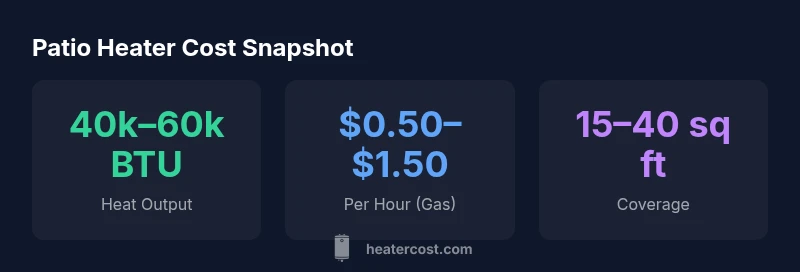
For a typical outdoor patio, a propane or electric infrared heater is the most cost-effective option, with common heat outputs in the 40,000–60,000 BTU range for larger patios and around 9,000–25,000 BTU for smaller setups. According to Heater Cost, selecting the right heater depends on space, wind exposure, and fuel availability, so sizing and safety margins matter.
Why sizing matters for an outdoor patio heater
Choosing the right heater for an outdoor patio starts with how much warmth you actually need and how the space is used. The keyword heater for outdoor patio appears often in buying guides because size directly affects comfort, energy use, and cost. Start by measuring usable seating zones and noting wind exposure, shade, and screen walls that can influence heat retention. A small, wind-exposed balcony may be comfortable with a 9,000–20,000 BTU electric infrared unit or a compact propane heater, while a larger, open patio typically benefits from a 40,000–60,000 BTU propane or natural gas unit. According to Heater Cost, improper sizing leads to either chilly corners or wasted energy. In practical terms, map out each seating cluster, estimate typical evening temperatures, and then choose a heater that can deliver consistent warmth without overheating adjacent areas.
Fuel types: propane, natural gas, electric—pros and cons
Fuel choice often drives both upfront cost and ongoing operating expenses. Propane heaters are portable and versatile, with strong heat output suitable for mid- to large-area patios. Natural gas units tend to have lower per-hour fuel costs if a line is available, but installation is fixed and more permanent. Electric infrared heaters are quiet, clean, and easy to install in covered areas but rely on household electricity and can have higher operating costs in areas with high electricity rates. The Heater Cost analysis highlights that the best option often depends on space configuration, access to fuel, and local energy prices. Wind resistance, maintenance needs, and safety considerations also influence which fuel type makes the most sense for your patio scenario.
Sizing guidelines and practical rules of thumb
A practical approach uses a BTU-per-square-foot rule, adjusted for wind and enclosure. A common starting point is 40–60 BTU per square foot for open, windy spaces and 20–40 BTU per square foot for sheltered, smaller zones. For electric infrared heaters, watts-per-square-foot guidelines (roughly 40–60 W per square foot in moderate climates) can be useful. If you have multiple seating zones, consider a modular strategy: one heater for each zone rather than one large unit covering the entire area. The key is to ensure you can maintain a comfortable 2–3 degrees Celsius difference between the seating area and the outdoor environment, which reduces perceived cold and energy waste. Heater Cost’s framework emphasizes validating assumptions with space measurements and local conditions before purchase.
Wind and weather impact on outdoor heat
Open patios suffer from convection losses when wind speed increases. Wind can dramatically reduce perceived warmth, which means you may need a higher BTU output or a heater placed behind a windbreak. Orientation matters: position the heater to face the seating area while avoiding direct exposure to the strongest wind corridors. Protective screens, pergolas, or strategic fencing can improve efficiency. In exposed locations, plan for a hotter setting than a sheltered space to maintain comfort on chilly evenings. The practical takeaway is to test warmth at the farthest seating point and adjust placement accordingly.
Cost and energy efficiency considerations
Operating costs depend on fuel type, climate, and usage frequency. Gas-fired outdoor heaters typically cost less per hour than electric models, but this varies by local energy prices. Electric infrared units offer precise on/off control and clean operation but may incur higher hourly electricity charges in regions with high rates. A core takeaway from Heater Cost’s analysis is to estimate annual operating costs using your local fuel prices, then factor in heater efficiency and expected usage to determine the most economical choice over the heater’s lifespan. Look for high-efficiency models, proper insulation from drafts, and features like adjustable heat output to optimize energy use.
Safety, installation, and warranty basics
Safety first: maintain recommended clearances from walls, furniture, and overhangs, and never operate a heater in a totally enclosed space. If you’re mounting a unit, ensure professional installation follows local codes. Always use a windscreen or protective barrier where appropriate and verify that venting and clearance requirements are met to avoid fire hazards. Regular maintenance — including cleaning burners, checking valves, and inspecting hoses for leaks — extends lifespan and reduces risk. Review warranty terms, especially for permanent installs, to understand coverage and service expectations. Heater Cost emphasizes following manufacturer guidance and local regulations for a safe outdoor heating setup.
Installation, maintenance, and warranty basics
Portable patio heaters offer flexible placement and quick setup, while built-in or ceiling-mounted units require careful installation planning. For portable models, store away from rain and moisture when not in use and use protective covers to prevent corrosion. Maintenance routines include cleaning burners and reflectors, checking gas lines or electrical connections, and scheduling annual inspections if the heater is a higher-end model. Warranty terms often reflect installation type and usage conditions, so keep receipts and installation records. Adhering to professional recommendations and manufacturer guidelines helps protect investment and safety over time.
Scenario planning: small balcony vs. large open patio
- Small balcony (80–150 sq ft): A compact electric infrared heater or a portable propane unit with a modest BTU output can keep you comfortable on cool evenings. Use a windbreak and place the heater to heat the primary seating area without creating glare or heat 'hot spots'.
- Covered porch or gazebo (150–350 sq ft): A mid-range propane or natural gas heater in the 40,000–60,000 BTU range typically works well, with protection from direct wind and rain. Consider adding a second unit if you have multiple zones.
- Large open patio (350+ sq ft): Two smaller heaters placed to cover distinct seating clusters can outperform a single large unit while offering flexibility. If allowed by space, an electric system with zoning controls may provide efficient, controllable warmth. In all cases, assess wind patterns and heat distribution with actual usage to fine-tune placement and output. The Heater Cost approach recommends a phased purchase and real-world testing to optimize comfort and cost.
Patio heater types: heat output, cost, and space coverage
| Fuel Type | Typical BTU Range | Operating Cost per Hour | Ideal Space (sq ft) |
|---|---|---|---|
| Propane | 40,000–60,000 BTU | $0.50–$1.50 | 20–80 |
| Natural Gas | 60,000–100,000 BTU | $0.25–$0.75 | 25–100 |
| Electric Infrared | 3,000–6,000 W | $0.20–$0.60 | 40–180 |
Got Questions?
What size heater do I need for my patio?
Start with your patio area in square feet and adjust for wind and layout. A small balcony may do well with a 9,000–20,000 BTU electric unit or a compact propane heater, while larger patios often require 40,000–60,000 BTU propane or natural gas, with adjustments for wind exposure. Verify against local guidance and use a simple heat-output calculator if available.
Measure your space, consider wind, and use a step-up BTU range to find a heater that fits your needs.
Are outdoor patio heaters safe under a covered area?
Yes, but you must follow the manufacturer’s clearance distances and ensure adequate ventilation. For enclosed or semi-enclosed spaces, electric infrared heaters are often safer, while gas units should be avoided in tightly sealed areas without proper ventilation. Always check local codes and use protective screening as needed.
Make sure you have proper ventilation and follow the heater’s clearances before use.
What maintenance is recommended for patio heaters?
Regular cleaning of burners and reflectors, checking hoses or connections for leaks (gas models), and scheduling annual professional inspections for higher-end units are recommended. Keep spark guards clear and protect units from rain when not in use to extend lifespan.
Clean and inspect yearly, and cover the heater when it’s not in use.
Which fuel type is cheapest to operate?
Fuel costs vary by location and energy prices. Gas often offers lower per-hour operating costs in many markets, while electricity prices can be cheaper in areas with low rates. Compare your local fuel prices and unit efficiency to estimate annual costs for your patio setup.
Gas is usually cheaper per hour, but it depends on local prices and the heater’s efficiency.
Can I install a patio heater myself?
Portable, freestanding units are designed for easy setup and removal. Built-in or wall-mounted heaters require professional installation and must follow local codes. Always read the installation manual and consult a licensed technician for permanent installations.
Some heaters are DIY-friendly, others need a pro—check local codes before wiring or mounting.
“Choosing the right outdoor heater starts with matching heat output to your space and wind conditions, then prioritizing fuel efficiency to keep operating costs reasonable.”
The Essentials
- Size the heater to match space and wind exposure
- Compare fuel options to estimate annual operating costs
- Prioritize proper clearances and wind protection
- Optimize heat placement to minimize heat loss
- Schedule seasonal maintenance and use weatherproof covers