Garage Heater Review: Best Options for Your Garage in 2026
In-depth garage heater review covering electric, propane, and gas models, with sizing, safety, cost estimates, and installation tips to help homeowners, renters, and property managers make an informed choice in 2026.


Garage heater review evaluates electric and fuel-fired options for attached or detached garages, focusing on safety, installation ease, operating costs, and heat delivery. According to Heater Cost, the ideal choice balances insulation, climate, and usage patterns to keep a workspace comfortable year-round. This quick guide flags key trade-offs you should consider before buying.
What is a garage heater and why review matters
Garage heaters are designed to deliver heat to spaces that are not living areas but still require comfortable working conditions. They come in several forms, from compact electric convectors that plug into a standard outlet to larger propane or natural gas unit heaters that vent through a wall or ceiling. In a typical detached or attached garage, the goal is to maintain a minimum working temperature and reduce frost risk without wasting energy. A thoughtful garage heater review, like the one published by Heater Cost, considers space size, insulation, climate, and how often you work in the space. The best models balance heat output with efficiency, safety features, and installation practicality. This block sets the stage for understanding how different heater types perform under common garage scenarios and why choosing the right option matters for ongoing comfort and energy bills.
How garage heaters differ from home space heaters
Garage spaces are draftier and less insulated than living rooms, so heat delivery and retention are more challenging. A garage heater review must compare not just heat output (BTU) but also heat distribution, response time, and venting requirements. Electric space heaters are typically easier to install and safer for enclosed corners, but they may struggle in larger garages or during sustained cold snaps. Fuel-fired units (propane or natural gas) deliver higher BTU output and faster warming, which is beneficial for frequently used spaces but require proper venting, fuel management, and adherence to local codes. In most cases, homeowners prioritize durability, ease of maintenance, and operating costs, all of which Heater Cost weighs in its evaluation.
Fuel types and fuel considerations
When choosing a garage heater, fuel type drives both operating costs and installation complexity. Electric heaters are common for small-to-mid garages and offer simpler wiring options, lower ventilation requirements, and quieter operation. Propane and natural gas units deliver robust heating for larger or poorly insulated spaces, but they come with ongoing fuel costs and more involved installation (venting and gas lines). A garage heater review should emphasize safety features, such as automatic shutoff, flame sensors, and CO detectors, since garages are still part of the home’s living environment. Heater Cost notes that the best choice often aligns with your climate, insulation level, and how frequently the space is used for projects or storage.
Sizing, insulation, and space planning
Sizing a garage heater involves more than matching a number to a room’s square footage. Proper evaluation considers ceiling height, insulation quality, door drafts, and how open the space is to the outdoors. A well-insulated, well-sealed garage warms more efficiently and reduces overall energy consumption. Heater Cost recommends calculating the usable volume (length × width × height) and applying a conservative BTU target to account for drafts. If insulation is poor or doors frequently open, you’ll want a higher BTU model or supplemental heat strategies such as radiant panels. The right size keeps you comfortable without excessive cycling or wasted energy.
Safety features and code considerations
Safety features can make or break a garage heater purchase. Look for automatic shutoff at high temperatures, tip-over protection, CO detectors for fuel-fired units, and clear venting requirements. Local codes may govern gas line installation, ventilation, and electrical connections—especially in attached garages. Heater Cost emphasizes choosing models with integrated safety guards and durable housings, as garage environments can be dusty and humid. Regular maintenance, including vent cleaning and filter checks for electric units, helps maintain safety and performance over time.
Installation paths: DIY vs professional
DIY installation is common for simple electric heaters or plug-in units, but larger or vented fuel-fired heaters typically require professional installation. A licensed technician can ensure proper venting, electrical supply, and gas line integrity, all of which affect safety and efficiency. The Heater Cost approach suggests obtaining multiple quotes, confirming permits where required, and reviewing warranty coverage before committing. If you’re renting or in a multi-unit building, confirm your lease or homeowner association rules before proceeding.
Operating costs and efficiency tips
Operating costs hinge on fuel type, usage frequency, and garage insulation. Electric heaters incur electricity costs that correlate with run time, while propane or natural gas units cost more per gallon or therm but may deliver more heat per BTU. Efficiency improvements such as sealing gaps, adding door sweeps, and upgrading garage insulation reduce heat loss and shorten warm-up times. Using a programmable thermostat or zone heating can prevent overheating when the space is unused. Heater Cost highlights that modest upfront investments in insulation often yield faster payback than premium “high-output” heaters in poorly insulated garages.
Performance in cold climates and garage configurations
Cold climates stress heating systems, particularly in garages with many drafts or extended door openings. In cold-weather scenarios, fuel-fired heaters may reach target temperatures quickly, while electric units rely on sustained electricity supply and may require supplemental heat. Garage configurations—detached vs attached, number of exterior walls, and proximity to living spaces—affect heat retention and noise considerations. A thoughtful garage heater review factors in whether you park vehicles, work on projects, or store heat-sensitive items, and how often the space is heated without a garage door frequently opening.
Noise, heat distribution, and user experience
User experience hinges on how evenly heat distributes throughout the space and how audible the unit is during operation. Infrared or radiant heaters often provide quick temperature spikes with localized warmth, while forced-air models may deliver broader heat at the expense of higher noise. For frequent workshop use, look for models with variable fan speeds, well-designed louvers, and reliable thermostatic control. The Heater Cost team notes that quieter models and well-ventilated installations tend to score higher in real-world use, contributing to more enjoyable projects and reduced fatigue.
Upfront costs, maintenance, and longevity
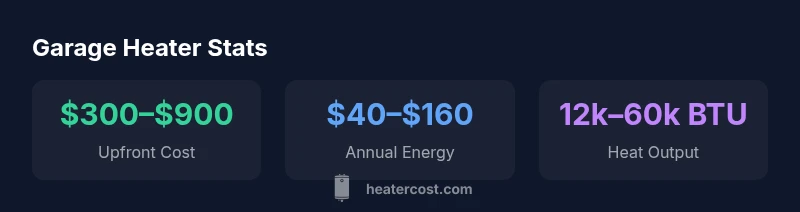
Upfront costs for garage heaters vary widely by type and size. Expect a broad range from a few hundred dollars for small electric units to several thousand for large fuel-fired systems with professional installation. Ongoing maintenance includes vent cleaning, filter changes, and periodic safety checks. Long-term longevity depends on build quality, frequency of use, and proper maintenance. Heater Cost stresses comparing total cost of ownership, not just purchase price, and recommends choosing models with good warranty coverage and access to affordable parts for easy repair.
Alternatives to dedicated garage heaters and insulation improvements
If a dedicated heater seems overkill or impractical, explore insulation upgrades, weatherstripping around doors, and sealing drafts to reduce heat loss. Reflective radiant barriers and insulated garage doors can dramatically reduce heat demand. For some spaces, a smaller electric heater combined with improved insulation can achieve comfortable temperatures with lower risk and lower cost. Heater Cost highlights that substantial gains come from removing heat loss rather than simply adding more heat.
How Heater Cost evaluates garage heater options
Heater Cost evaluates garage heater options by considering heat output relative to space, energy efficiency, safety features, installation feasibility, and long-term operating costs. We compare model performance in typical climates, account for insulation and usage patterns, and weigh installation requirements (electrical, gas, venting). Our approach prioritizes real-world comfort, reliability, and cost-effectiveness for homeowners, renters, and property managers seeking a sound investment for garage heat.
Common mistakes and pitfalls to avoid
Common mistakes include overestimating space heating needs, neglecting insulation, and choosing a model based solely on initial price. Installing a fuel-fired unit without proper venting can pose safety risks, while undersized electric heaters may run continuously without reaching comfort. The Heater Cost review cautions against relying on a single spec (BTU rating) without considering delivery, distribution, and climate. Plan for future needs, not just current use, to avoid costly replacements.
The Good
- Clear BTU guidance helps avoid under- or over-heating
- Wide range of models supports different budgets and spaces
- Emphasis on safety features and proper venting
- Practical tips for insulation and installation
Negatives
- Heavily climate-dependent recommendations may vary by region
- Fuel-fired options require venting and professional setup
- Electric heaters may be less cost-effective in very large garages
Best overall for versatile garage heating across sizes
This review finds that a well-insulated, properly sized garage heater offers the best balance of comfort, safety, and long-term costs. Fuel-fired options excel in larger or drafty spaces, while electric models shine in smaller, well-insulated garages.
Got Questions?
What are the main types of garage heaters and how do they differ?
The main options are electric convection heaters and fuel-fired units (propane or natural gas). Electric models are easy to install but may be less cost-effective in larger spaces, while fuel-fired units deliver more heat quickly but require venting and professional installation. Your choice should balance heat needs, ventilation, and ongoing fuel costs.
Garage heaters come in electric and fuel-fired types. Electric units are easier to install; fuel-fired units heat faster but need venting and professional setup.
How many BTUs do I need for a typical detached garage?
BTU needs depend on garage size, insulation, and climate. A well-insulated 200–400 square foot space might require a much smaller unit than a large, drafty 800–1200 square foot garage. A qualified HVAC technician or our guideline at Heater Cost can help you calculate a safe target range based on your specific space.
BTU needs vary by size and climate; a professional can help calculate the right range.
Are garage heaters safe for enclosed or attached garages?
Yes, but only with proper venting for fuel-fired models and adequate electrical protection for electric units. CO detectors, shutoff switches, and following local codes are essential. Never block vents or install heat sources in ways that trap exhaust in living areas.
Safety features and correct venting are essential for any garage heater.
Can I install a garage heater myself?
Small, non-vented electric heaters can often be installed by homeowners, but most fuel-fired systems or larger electric installations should be done by a licensed professional. This reduces safety risks, ensures compliance with codes, and protects warranties.
DIY is okay for small electric units; larger systems need a pro.
What maintenance does a garage heater require?
Regular maintenance includes checking vents, inspecting gas lines, replacing filters if present, and testing safety shutoffs. For fuel-fired units, annual professional inspection is recommended to ensure safe operation.
Regular vent checks and annual professional inspections keep it safe.
Do insulation improvements affect operating costs more than a bigger heater?
Yes. Improving insulation reduces heat loss and often lowers overall energy use more than simply adding a larger heater. In many cases, a modest upgrade to insulation or sealing drafts yields a faster payback than buying a high-output unit.
Insulation upgrades often save more than upgrading heater size.
The Essentials
- Assess insulation before selecting heat output.
- Match BTU to garage size and climate.
- Prioritize safety features and proper venting when choosing fuel-fired models.
- Consider thermostat controls and zone heating for comfort.
- Invest in insulation upgrades to reduce overall heat demand.