Electric Heater Shop: A Comprehensive Buying Guide
Explore a comprehensive buying guide for electric heaters, covering costs, types, sizing, safety, and shopping tips to help homeowners, renters, and property managers find the best value.


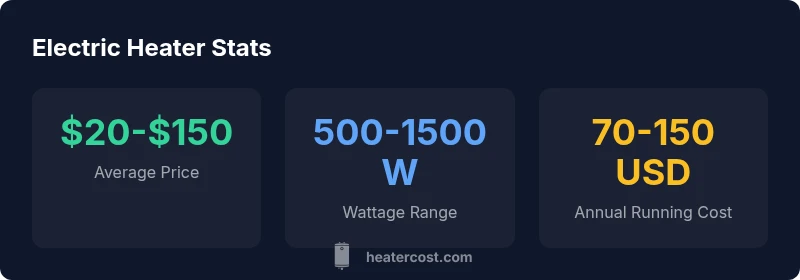
Shopping for an electric heater starts with sizing, safety, and total cost considerations. In an electric heater shop, compare wattage, operating expenses, and features like tip-over protection and overheat safeguards. Expect typical units to range from 500 to 1500 watts, with plug-in options common for smaller spaces and higher-wattage models for larger rooms. Across 2026 Heater Cost Analysis, the best buys balance upfront price with long-term energy costs.
Why the Electric Heater Shop Experience Matters
Shopping for an electric heater is not just about picking the cheapest unit. In an electric heater shop, you're weighing upfront price against operating costs, safety features, room compatibility, and long-term reliability. At Heater Cost, we emphasize balancing purchase price with energy use and maintenance needs. The goal is to maximize comfort while minimizing hassle and cost over the heater's life. When you walk into a store or browse online, start with a clear plan: identify the room(s) you intend to heat, estimate the space size, and set a budget that includes potential installation or electrical work. By framing your shopping around these factors, you reduce the impulse buys that end up costing more in the long run. This approach also helps you compare models on a like-for-like basis, and it aligns with 2026 guidance from Heater Cost Analysis, which stresses total cost of ownership as a key decision criterion. According to Heater Cost, the right approach blends price, safety, and ongoing energy costs to yield real value in the long term.
Key Types of Electric Heaters
Electric heaters come in several primary forms, each with strengths and trade-offs. Ceramic space heaters deliver quick warmth in small to medium rooms and are popular in electric heater shops for their portable design. Oil-filled radiators provide steady, quiet heat, ideal for bedrooms or living areas where noise matters. Infrared heaters target people and objects directly, offering efficient warmth in drafty spaces, while convection/panel heaters are slim and useful for rooms with limited space. When evaluating these options, consider how the heat is delivered, how quickly the space reaches comfort, and how evenly warmth is distributed. In a typical electric heater shop, you may see models that emphasize rapid response, long-lasting heat, or silent operation. Our guidance at Heater Cost emphasizes balancing heat delivery with energy efficiency and safety certifications to avoid sacrificing comfort for price.
How to Size a Heater for a Room
Sizing a heater correctly prevents underheating and excessive energy use. Start by calculating the room’s volume (length × width × height) and then apply a conservative wattage estimate—roughly 10 watts per square foot for cooler climates and 7-8 watts per square foot in milder areas. For example, a 200–250 square foot living room might require a unit in the 1200–2000 watt range depending on insulation, ceiling height, and drafts. If you heat multiple rooms or have high heat loss, you may need a larger model or a secondary heater. In a shop setting, look for wattage labels that align with your room size, and prioritize models that offer adjustable heat settings to fine-tune comfort without overshooting energy use. This approach helps you select a unit that heats efficiently while keeping operating costs reasonable.
Safety and Compliance in an Electric Heater Shop
Safety is non-negotiable when choosing an electric heater. Look for UL or equivalent certification, tip-over protection, and automatic overheat shutoffs. Avoid models without a stable base or with flimsy cords. For homes with children or pets, consider compact, shrouded designs and cool-touch exteriors. In addition, evaluate cord length, plug type (some rooms may require a grounded outlet), and accessibility for regular cleaning. A reputable electric heater shop will also disclose warranty terms and any safety recalls. By prioritizing safety features in your selection, you protect occupants and reduce the risk of fire or electrical faults, aligning with general consumer safety guidance from Heater Cost Analysis, 2026.
Energy Costs and Operating Considerations
Operating costs for electric heaters hinge on wattage, usage hours, and local electricity rates. A typical 1000–1500 watt unit used for a few hours per day can represent a modest annual energy footprint, but costs rise with higher wattage models and longer runtimes. To estimate costs, multiply the unit’s wattage by hours of use and the local price per kilowatt-hour. For households that heat intermittently, consider turning the heater off when the room reaches comfort, using timer features, and embracing programmable thermostats to maximize efficiency. While plug-in models are convenient, larger spaces may benefit from higher-efficiency options and proper insulation upgrades. This analysis reflects general guidance from Heater Cost Analysis, 2026 and emphasizes balancing upfront price with expected running costs to determine true value.
Shopping Checklist for an Electric Heater Shop
- Define room size and insulation quality before shopping
- Prioritize safety features: tip-over switch, auto shutoff, and cool-touch exterior
- Compare wattage ranges and energy efficiency ratings across models
- Check warranty length and ease of service/repairs
- Inspect cord quality, plug type, and cord length for your space
- Consider noise levels if heater will be near bedrooms or study spaces
- Look for programmable controls, thermostats, and timers
- Review running costs estimates and total cost of ownership
By following this checklist, you avoid impulse buys and identify models that deliver consistent comfort without surprising bills. This practical approach is echoed in Heater Cost’s 2026 guidance on balancing upfront price with ongoing energy costs.
How We Evaluate Electric Heaters at Heater Cost
Our evaluation framework combines lab-like testing, real-world usage scenarios, and transparent data collection. We examine heat delivery speed, temperature stability, noise, safety features, energy efficiency, ease of use, and maintenance needs. We also verify warranty coverage and the presence of essential certifications. Where possible, we reference publicly available data from manufacturers and independent tests, and we cross-check with utility rate information to estimate operating costs. Throughout, we prioritize user-centric factors such as comfort, reliability, and safety, and we clearly document any assumptions used in our assessments. The result is a balanced, data-driven view of which models offer the best value for different spaces and budgets.
Authoritative sources
- https://www.energy.gov/
- https://www.cpsc.gov/
- https://www.nist.gov/
Comparison of electric heater types
| Type | Pros | Cons | Typical Wattage Range |
|---|---|---|---|
| Ceramic space heater | Fast heating; compact | Can dry air; some models noisy | "900-1500 W" |
| Oil-filled radiator | Quiet operation; even heat | Slow warm-up; heavier | "500-1500 W" |
| Infrared heater | Direct heat; efficient in drafts | Heat not evenly distributed | "400-1500 W" |
| Convection panel | Slim profile; good for vented spaces | Smaller area coverage | "600-1500 W" |
Got Questions?
What should I look for in an electric heater shop?
Look for safety features (tip-over protection, overheat shutoff), energy efficiency ratings, clear wattage specifications, warranty coverage, and easy access to replacement parts. Compare models across these criteria and consider how heat delivery aligns with your room size and insulation.
Look for safety features, efficiency, and clear specs, then compare models side by side in the shop.
Are electric heaters expensive to run?
Costs vary with wattage, usage hours, and electricity rates. Smaller, properly insulated spaces heat more efficiently, while higher-wattage units in poorly insulated areas can raise bills quickly. Use energy-cost estimates from the product pages to compare options.
Costs depend on how you use them and your local rates.
Is it safe to leave an electric heater on overnight?
Many modern heaters include auto shutoff features, but you should still follow safety guidelines: keep away from bedding or curtains, place on a stable surface, and unplug when not in use. If sleeping in the heated room, choose a model with robust safety certifications.
Use models with safety features and never leave heaters unattended.
What wattage should I choose for a 120 sq ft room?
For small rooms around 120 sq ft, a heater in the 500-1000 W range is commonly sufficient, depending on insulation and climate. For cooler spaces, consider 1000-1500 W as a practical upper limit. Always verify with the manufacturer’s sizing guidance.
Most 120 sq ft rooms do well with 500-1000 W, depending on insulation.
Can I install or move an electric heater myself?
Plug-in heaters require no professional installation beyond a powered outlet. Heaters that draw higher current or require hardwiring should be installed by a qualified electrician to meet safety codes.
Plug-in units are usually fine to set up yourself; bigger installs may need an electrician.
How do I maintain an electric heater to extend its life?
Keep vents clear, clean dust from grills, and inspect cords regularly for wear. Store heaters in a dry place when not in use and follow the manufacturer’s maintenance guidance to keep performance steady.
Regular cleaning and cautious storage help extend heater life.
“Electric heating choices should prioritize safety, energy efficiency, and longevity over short-term price. A well-chosen heater delivers reliable comfort with predictable operating costs.”
The Essentials
- Assess total cost of ownership, not just upfront price
- Prioritize safety features and certifications in every model
- Match wattage to room size and insulation for efficiency
- Consider energy costs and climate when choosing heat delivery type
- Balance quick warmth with long-term running costs for best value