Schluter Heated Floor: Costs, Installation, and Maintenance
A data-driven guide to schluter heated floor systems, covering costs, installation steps, tile compatibility, and maintenance for homeowners and pros.


schluter heated floor systems deliver radiant warmth beneath tile or stone, using a thin Schluter membrane and electric heating mats. A thermostat controls comfort, and professional electrical work is often required. Costs and timing vary by room size, substrate, and tile choice, but homeowners typically gain even heat distribution and comfort with careful planning.
How Schluter Heated Floor Systems Work
schluter heated floor systems rely on electric radiant mats embedded beneath tile to produce warm, even heat across floor surfaces. The most common configuration uses Schluter Ditra-Heat or Ditra-Heat-DUO mats installed over a suitable subfloor, then covered with thinset and a ceramic or porcelain tile finish. The heating elements are controlled by a compatible thermostat wired to a dedicated circuit. The system distributes heat evenly, reducing cold spots and creating a comfortable walking surface, especially in bathrooms and kitchens. For homeowners, the installation approach must ensure proper subfloor preparation, moisture management, and correct sensor placement to optimize performance and longevity. In practice, Schluter heated floor requires careful planning, including room size, insulation quality, and tile thickness, to achieve consistent warmth without overheating. The tile choice, substrate, and electrical load all influence efficiency. As a result, the overall comfort level depends on proper integration with the rest of the home’s heating strategy. The result is a comfortable, energy-conscious upgrade worth considering when tile is your surface of choice.
What Sets Schluter Heated Floor Apart for Tile Projects
A schluter heated floor can offer several advantages that matter in tile installations. First, the Ditra-Heat membrane acts as an uncoupling layer, reducing tile cracking caused by substrate movement while allowing heat to pass through efficiently. Second, the system’s thin profile preserves floor height, which helps when transitioning from rooms with varied elevations. Third, waterproofing and vapor management are integrated into the Ditra system, offering peace of mind in moisture-prone areas such as bathrooms. Finally, heat distribution tends to be more uniform across tiled surfaces, improving comfort underfoot. When compared with other radiant floor options, schluter heated floor emphasizes compatibility with tile finishes and a straightforward installation workflow, provided the subfloor is adequately prepared. For homeowners evaluating options, the key trade-offs often revolve around cost, installation complexity, and heat-up times in relation to tile choice and room use. Overall, schluter heated floor presents a practical pathway to warmer tile spaces without adding excessive floor height.
Step-by-Step Planning for a Schluter Heated Floor Installation
Planning a schluter heated floor starts with defining the goal: comfortable, even warmth under tile. Begin by mapping zones that will be heated, then estimate room sizes to determine total mat length. Confirm access to a dedicated electrical circuit and a compatible thermostat that can manage multiple zones if needed. Obtain any required permits, especially for larger projects or multi-room renovations. Engage a licensed electrician to verify panel capacity and wiring requirements. Practically, prepare a floor plan showing mat layout, thermostat placement, and sensor locations. Finally, align tile selection, thinset, and curing times with Schluter’s guidelines to ensure reliable performance and warranty compliance. Document measurements and conditions so labor can proceed efficiently on installation day.
Subfloor Prep and Moisture Management for schluter heated floor
Successful schluter heated floor installation hinges on a dry, stable subfloor. Before mats are laid, test the substrate for moisture and structural integrity. If the subfloor is plywood or oriented strand board (OSB), ensure it is rated for wet areas and properly acclimated. Cementitious backer units or cement boards are common underlayment choices, with a moisture barrier where needed. In kitchens and bathrooms, moisture control is paramount; use vapor barriers and appropriate sealants to prevent moisture from affecting the mat and thinset. The Ditra membrane adds a robust uncoupling layer, but it cannot compensate for severe substrate movement. Addressing cracks, high spots, and unevenness beforehand reduces the risk of tile cracking after installation and preserves the system’s long-term performance.
Tile Selection and Thinset Guidelines for schluter heated floor
Tile selection matters when using schluter heated floor. Porcelain and ceramic tiles are common choices because of their durability and low porosity, but natural stone can work with proper setting materials and a heat-tolerant thinset. Verify tile thickness aligns with the mortar bed and Ditra-Heat clearances, following Schluter’s recommended ranges. Use a latex-modified thinset suitable for electric radiant systems, and ensure proper curing conditions during installation. Temperature sensors and thermostat connections must be routed without kinks to prevent overheating or wiring damage. For best results, consult Schluter’s tile and heating recommendations and work with a certified installer who understands heat loading, floor assembly, and expansion joints.
Wiring, Thermostats, and Electrical Considerations for schluter heated floor
Electrical planning is critical for schluter heated floor systems. Most installations require a dedicated circuit, appropriate breaker sizing, and a thermostat compatible with radiant floor heating. If you’re installing multiple zones, plan each zone’s thermostat control and ensure interlocking safety features. Ground fault circuit interrupters (GFCI) may be required in wet areas, and a licensed electrician should handle wiring and termination at the panel. Always verify heat cable or mat specifications, warranty requirements, and sensor placement per the manufacturer’s instructions. A well-planned electrical setup improves response time, energy efficiency, and system longevity.
Maintenance, Longevity, and Troubleshooting for schluter heated floor
Schluter heated floor systems typically require minimal ongoing maintenance. Clean surfaces as you would with standard tile floors, avoiding harsh chemicals that could degrade the membrane. If heat distribution becomes uneven or a section fails to warm, check sensor alignment, thermostat programming, and circuit integrity first. Loose connections or damaged mats require professional service. Regular inspections after the first year help catch subfloor moisture issues or wear. With proper maintenance and timely repairs, schluter heated floor systems can provide reliable warmth for many years, maintaining tile integrity and comfort.
Cost Considerations: Budgeting for a schluter heated floor
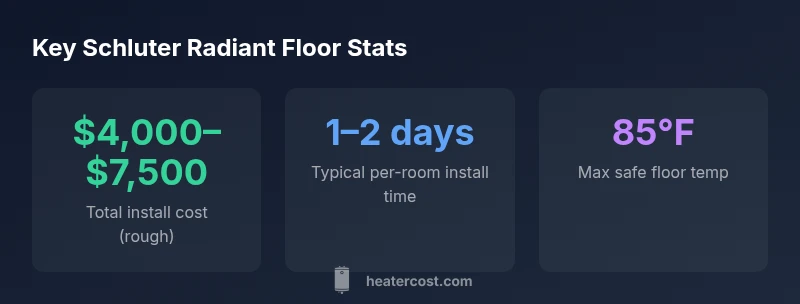
Budgeting for a schluter heated floor involves more than the price of mats. Material costs, subfloor prep, waterproofing, tile selection, and professional labor all contribute to the final figure. While ranges vary by room size and local labor rates, you can expect to plan for a multi-room project to spread fixed costs and potentially reduce per-room expense. Factor in thermostat upgrades, electrical panel capacity, and any permits or inspections that may be required. A realistic plan includes contingencies for subfloor repairs or tile replacements if moisture or movement is detected during prep. Understanding these elements helps you set expectations and compare quotes effectively.
Real-World Scenarios: When schluter heated floor makes sense
bathrooms and kitchens are the most common targets for schluter heated floor systems due to the combination of moisture exposure and standing comfort needs. In small, high-traffic areas with tile floors, a schluter heated floor can dramatically improve comfort without adding noticeable floor height. Larger areas like laundry rooms or mudrooms may benefit from zone-based heating to maximize energy efficiency. For remodels where existing tile is being replaced, consider how the heating system integrates with the overall building’s insulation and heating strategy. A thorough assessment of subfloor integrity, tile choice, and electrical capacity will determine if schluter heated floor is the right move.
Comparison of radiant floor options with Schluter Ditra-Heat as a tile-friendly solution
| Option | Floor Type | Heat Delivery | Typical Subfloor Prep |
|---|---|---|---|
| Schluter Ditra-Heat | Tile floors (ceramic/porcelain) | Electric radiant mat underlayment | Moisture barrier + thinset layer |
| Hydronic radiant floor | Concrete slab / framed floors | Hot water tubing in a concrete or gypsum layer | Extensive subfloor work and boiler system |
| Traditional electric mat | Tile floors | Electric mat only | Subfloor moisture control |
Got Questions?
What is Schluter heated floor and how does it work?
Schluter heated floor refers to a tile-friendly radiant system that uses electric heating mats beneath tile, integrated with a Ditra-Heat membrane and a thermostat. Heat is distributed evenly across the floor, offering underfoot comfort. Proper subfloor prep and electrical connections are essential for performance and safety.
Schluter heated floor is a tile-friendly radiant heating system using electric mats and a thermostat for even warmth underfoot.
Is Schluter heated floor compatible with porcelain or ceramic tile?
Yes. Schluter Ditra-Heat is designed for ceramic and porcelain tiles, providing uncoupling and moisture protection while enabling radiant heat. Always follow tile manufacturer guidelines and Schluter installation specs for best results.
Yes—porcelain and ceramic tiles work well with Schluter Ditra-Heat when installed per guidelines.
What electrical work is required to install Schluter Ditra-Heat?
A dedicated circuit, thermostat, and proper wiring are typically required. A licensed electrician should size the panel, run wiring, and connect the thermostat to the heating mats, ensuring compliance with local codes.
You’ll need a dedicated circuit and a licensed electrician to handle wiring and the thermostat.
Can Schluter heated floor be installed over plywood subfloors?
Yes, but only with appropriate underlayment and moisture control. Subfloor prep is critical to prevent movement and cracking, and some installations may require additional backerboard or leveling compounds.
It can be installed over plywood with proper underlayment and prep, but follow guidelines closely.
What maintenance is required for Schluter heated floor?
Maintenance is minimal—regular cleaning and periodic checks of the thermostat and sensors. If heat distribution changes or a zone malfunctions, consult a licensed installer to inspect panels and wiring.
Very little maintenance is needed beyond routine cleaning and periodic checks.
How should I estimate the cost of a Schluter heated floor project?
Costs vary by room size, subfloor prep, tile choice, and labor. Use a realistic range and request multiple quotes from installers to compare material costs, preparation needs, and timeline.
Get multiple quotes that include mats, underlayment, tile, and labor.
“Schluter heated floor systems can deliver exceptional comfort under tile when planned with proper subfloor prep and electrical capacity.”
The Essentials
- Plan subfloor prep before mat installation
- Choose tile and thinset compatible with radiant heat
- Use a dedicated circuit and proper thermostat control
- Expect a modern, energy-conscious warmth underfoot