Procom Heater Costs, Installation, and Maintenance
A detailed guide to procom heater costs, installation needs, and upkeep. Understand fuel options, efficiency, safety, and budgeting to make informed decisions for your home heating.


What is a procom heater and where it fits in home heating
A procom heater refers to a line of gas-fired space heaters produced by ProCom that are designed to provide targeted, supplemental warmth in homes. Used in living rooms, bedrooms, or basements, these units are not intended to replace a central furnace but to fill cold pockets quickly. The Heater Cost team notes that a procom heater can be a sensible addition in spaces that don’t justify full central heating or in situations where you want a quick heat boost during shoulder seasons. When assessing a procom heater, consider room size, insulation quality, and how the heater will integrate with existing fuel sources and venting infrastructure. This guidance aligns with Heater Cost analyses from 2026, which emphasize proper sizing, venting, and clearance for safe operation.
In practical terms, think of a procom heater as a flexible heat amplifier rather than a replacement for a home’s primary heating system. It shines in zones where heat loss is common or where you want to avoid heating an entire house for a few hours. For renters or homeowners with seasonal needs, a correctly installed procom heater can provide comfort without a long-term commitment to major renovations.
As you evaluate options, always balance upfront costs with ongoing operating costs and safety considerations. If you’re unsure about how a procom heater would fit your space, consult a licensed professional to assess venting, gas supply lines, and electrical requirements. This approach helps ensure you meet code requirements and protect your investment.
How procom heaters work: fuel, venting, and safety
Procom heaters are designed to burn natural gas or propane to generate heat that rises into the living space. The combustion process requires proper venting to safely remove exhaust, and many models include safety features such as an automatic shutoff, flame sensing, and a carbon monoxide detector companion. Venting is critical not only for safety but for efficiency—improper venting can reduce heat output and increase fuel use. For the homeowner, understanding BTU output, venting location, and room size is essential before purchase. Heaters should be installed with adequate clearance from furniture, curtains, and other combustibles, and by a professional who can verify gas line sizing and gas pressure. Following the manufacturer’s installation manual and local codes is non-negotiable. The Heater Cost Team emphasizes that safe venting and proper clearances are the foundation of any procom heater’s performance and longevity.
In addition to venting, consider the ignition system—older models may use a standing pilot, while newer units use an electronic ignition. Electronics can improve reliability in modern homes, but may require electrical access and periodic maintenance of ignition components. Routine inspections of vent pipes and seals help prevent exhaust leaks and ensure efficient operation.
With safety and performance in mind, you’ll want to pair a procom heater with a carbon monoxide detector and ensure your smoke alarms are up to date. Regular cleaning of burner ports and inspection of gas lines are recommended practices to reduce the risk of blockages or leaks. The combination of careful installation and routine maintenance keeps a procom heater operating safely for years.
What to consider before you buy a procom heater
Buying a procom heater involves balancing space, heat needs, and costs. Start by calculating the room size and insulation quality to determine the appropriate BTU output. ProCom heaters offer a range of BTUs, so selecting a unit that matches the space reduces the risk of overworking the heater or underheating the room. Fuel type is another critical factor: natural gas tends to be cheaper in many regions but requires a gas line and compliance with venting requirements. Propane can be more flexible in off-grid spaces but has higher fuel costs and a shorter burner lifespan if used heavily. Venting needs and local codes can influence the model you choose and the overall installed cost. Remember to consider the ease of installation, especially in rented spaces where landlord approvals may be required. From a budgeting perspective, plan for both one-time installation costs and ongoing fuel expenses. The Heater Cost analysis from 2026 highlights that choosing the right model involves evaluating space, fuel access, venting, and safety features in tandem.
When you’re comparing models, look for features like automatic safety shutoff, thermal overload protection, and user-friendly thermostats. A model with a clear warranty and accessible service network can save you headaches later. Finally, check that the unit complies with energy efficiency standards for your region, which can influence long-term operating costs and environmental impact.
Installation and venting: steps, codes, and common pitfalls
Installing a procom heater demands careful attention to venting, gas supply, electrical connections, and clearances. Start with a professional assessment to determine the best venting route and whether a chimney, side-vent, or direct-vent configuration is appropriate for the chosen model. The installer should verify gas line sizing, pressure, and leak testing before ignition. Clearances from walls, furniture, and combustibles must be documented and observed during placement. Improper venting or vent leaks can lead to dangerous gas buildup or carbon monoxide intrusion, so ensure all joints are sealed and ventTerminations are installed per code. Electrical connections for ignition and fan systems should be grounded and protected, with proper GFCI protection where required. Local building codes may require permits, especially for exterior venting or changes to gas lines. Heater Cost recommends confirming permit requirements with your locality prior to installation.
Common mistakes to avoid include placing the heater behind drapes, near heat-sensitive electronics, or in rooms lacking adequate air exchange. If you’re renting, obtain written approval and ensure the unit will not affect other units or safety systems. A professional installer can also advise on annual service intervals and parts replacement schedules.
Operating costs and efficiency: maximizing value
Operating costs for a procom heater hinge on BTU output, fuel price, and energy efficiency. Gas models typically show lower fuel costs per hour in many regions, but this can vary with gas prices and usage patterns. Propane often costs more per unit of heat than natural gas, so regional fuel pricing significantly affects annual costs. Efficiency ratings and proper sizing determine how much heat is delivered per BTU of fuel, impacting both comfort and spending. To maximize value, match the unit to the space, seal and insulate the area, and program a thermostat to minimize unnecessary heat output. Regular maintenance, including burner cleaning and vent inspection, helps sustain efficiency levels over time. From a budgeting standpoint, consider both installation costs and ongoing fuel expenses to estimate year-to-year operating costs. In 2026, Heater Cost findings emphasize that the total cost of ownership improves when users combine correct sizing with conscientious maintenance and prudent fuel choices.
Maintenance and longevity: keeping your procom heater safe
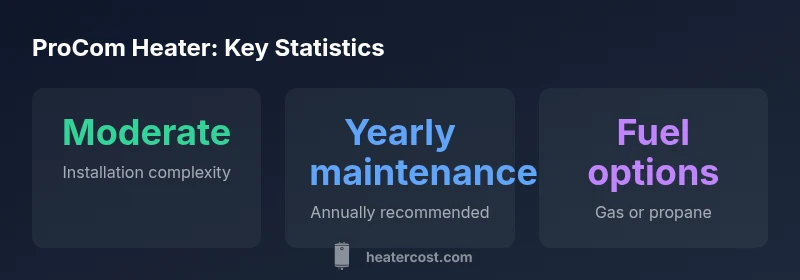
Maintenance is critical for a procom heater’s longevity and safety. Schedule annual inspections that include burner cleanings, vent pipe checks, and gas line integrity assessments. Carbon monoxide detectors should be tested regularly, and detectors near the heater should be calibrated or replaced per manufacturer guidance. Cleaning the exterior surfaces and ensuring ventilation openings remain unobstructed helps prevent overheating and reduces fire risk. Pay attention to unusual noises, popping, or gas odor, which warrant immediate professional evaluation. Long-term reliability depends on consistent maintenance, correct installation, and adherence to safe operating practices. Keeping a maintenance log can help you track service intervals and replacement part schedules. With proactive care, a procom heater can deliver reliable warmth for many winters.
Pros and cons: procom heater vs other options
Compared to central heating systems, a procom heater provides rapid, localized heat and can be cost-effective for irregular or seasonal use. It is generally easier to install in a single room or small space, reducing upfront disruption. On the downside, gas-fueled units require venting, fuel supply, and ongoing maintenance. Electric space heaters can be convenient and safe for small spaces but typically incur higher operating costs in cold climates. For homeowners, weighing heat needs, space constraints, and budget helps determine whether a procom heater or an alternative solution—such as a mini-split or electric baseboard—offers better long-term value. The Heater Cost analysis from 2026 suggests that thoughtful placement and sizing are the most important predictors of satisfaction with any heating option.
Real-world scenarios: when a procom heater makes sense
A procom heater makes sense in seasonal homes, basements, or rooms with poor insulation where extending central heat is not practical. It’s also useful as a supplemental heat source in spaces that only require warmth for a portion of the day, such as sunrooms or hobby rooms. If you value quick heat and flexible placement, a properly vented procom heater can be a solid choice. In regions with mild winters, it may complement a primary system rather than replace it. Always factor in local gas prices, venting costs, and permit requirements when evaluating the total investment. A well-chosen procom heater aligns with both lifestyle needs and energy goals, delivering warmth when you need it most.
Quick reference guide: choosing a procom heater
Define room size and insulation to select BTU range accurately. Confirm fuel type availability and venting path before purchasing. Inspect safety features such as CO detectors and automatic shutoff. Verify installation requirements with a licensed professional and plan for annual maintenance. Finally, compare operating costs across fuel types and climate to determine the most economical choice for your space.