Dyson Heater and Fan: Cost, Performance, and Buying Guide
In-depth guide to Dyson heater and fan options, covering upfront costs, energy use by mode, heat distribution, safety, and practical buying tips for homeowners. Heuristic insights from Heater Cost.


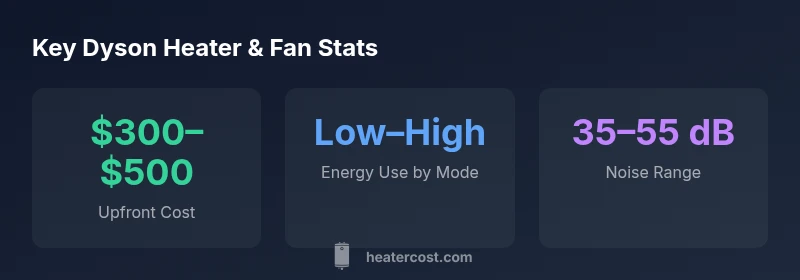
Dyson heater and fan upfront costs range roughly $300–$500, with energy use varying by mode and room size. For a concise comparison, click through to see our detailed model-by-model guide and real-world performance notes.
Dyson heater and fan: Core concept
Dyson heater and fan devices blend warmth with air movement to create targeted comfort in living spaces. Rather than blasting hot air from a conventional heater, Dyson units use an air multiplier design to circulate a wide, even stream of warmed air. This approach can reduce drafts near windows and corners without overheating a single zone, which appeals to homeowners seeking balanced comfort. For readers researching the dyson heater and fan category, expect a compact footprint, a carefully engineered aesthetic, and controls that emphasize precise temperature, oscillation, and safe shutdown features. According to Heater Cost, the core idea is to convert electrical energy into warm air and project it with a controlled jet, delivering steady comfort in mixed climates. In practice, many households find this architecture useful for a quick heat boost in mornings and for cooling during transitional seasons. The Dyson brand positions these devices as design-forward solutions that pair warmth with quiet operation and intelligent control.
Brand familiarity matters here: Dyson’s approach emphasizes reliable build quality and a visually minimal footprint that fits modern interiors. Read on to understand how this technology translates into real-world performance and homeowner value in the dyson heater and fan category, and how it stacks up against traditional heaters and standalone fans.
How the heat-and-air system works in Dyson devices
At the heart of Dyson heater and fan models is an air multiplier mechanism that accelerates ambient air through a small aperture, creating a smooth, high-velocity jet. The resulting airflow distributes warmth more evenly than a typical heater, reducing hotspots and cold pockets. Safety features typically include overheat protection, tip-over shutoff, and automatic sensors that limit heat output in crowded spaces. Controls are designed for straightforward operation: adjustable heat levels, oscillation, and a cool-air option for transitional seasons. The energy efficiency of these devices often hinges on how you use them: running a low heat setting in a drafty room can be more cost-effective than maxing out a traditional heater. Heaters with integrated filtration or purification add another layer of value for allergy-prone households. In summary, this system emphasizes controlled warmth, quiet operation, and a design language that blends with contemporary interiors. For context, the dyson heater and fan line targets homes seeking multi-functionality without bulky equipment.
Cost considerations: upfront price, running costs, and value
When budgeting for a dyson heater and fan, upfront price is a major consideration. Typical price ranges fall between the mid three hundreds and the mid four hundreds, depending on features such as dual-mode operation, filtration, remote control, and oscillation range. Running costs will vary by how often you use the unit and which mode you select. In general, the eco-friendly, lower-heat modes tend to consume less energy over time than high-heat settings in small to medium rooms. For homeowners weighing options, it’s important to see running-cost projections for your space and climate. According to Heater Cost, evaluating both upfront price and long-term energy impact helps determine true value. This method aligns with a practical buying approach that compares Dyson against other space-heater and fan options, clarifying where the dyson heater and fan stands in a real-world cost-benefit framework.
Energy efficiency and operating modes
Dyson heater and fan devices typically offer multiple operating modes, including a heat-boost mode for cold days, and a cool-air setting for summer comfort. Efficiency depends on consistent use in appropriately sized rooms and proper directional placement. In practice, running at a moderate heat level with occasional oscillation can deliver comfortable warmth while limiting energy use. The design also tends to minimize noise relative to traditional heaters, though noise levels can vary based on fan speed and room acoustics. Users should consider the climate in which they live, the room size, and the desired comfort level when choosing a dyson heater and fan. For optimal results, select a model with heat distribution features that suit your space and check that the device’s energy profile aligns with your energy-cost goals. This balanced approach helps homeowners realize steady comfort without excessive energy expenditure.
Placement, safety, and user tips
Correct placement is essential for maximizing the benefits of a dyson heater and fan. Place the unit on a stable surface away from drafts, furniture, and walls at least several inches apart to promote clear air flow. Avoid enclosed alcoves that could trap heat and increase surface temperatures nearby. Safety features like auto-shutoff, tip-over protection, and child-proof controls enhance peace of mind in homes with kids and pets. When using the device for heating, keep doors to the room closed to concentrate warmth and prevent heat loss. Routine cleaning of vents and filters (if applicable) helps maintain airflow efficiency and prolongs device life. In sum, thoughtful placement and regular maintenance support consistent performance and longer device longevity in the dyson heater and fan lineup.
Dyson models and feature comparisons (dyson heater and fan)
The dyson heater and fan family covers variations that emphasize heat distribution, purification, and controlled airflow. Some models focus on rapid heat delivery in small rooms, while others emphasize quiet operation for bedrooms and living spaces. When evaluating options, consider factors such as oscillation range, filter type (if included), and whether the unit offers integrated air purification or thermostat-linked heat control. In practice, a model with broad oscillation and a simple control interface often delivers the best balance of comfort and ease of use for many households. Always verify the core features you value most, such as heat versatility, noise level, and maintenance requirements, to ensure the unit integrates smoothly into your home. The dyson heater and fan family is designed for flexible use across different rooms and seasonal needs.
Real-world performance: noise, heat distribution, and user experience
In typical living spaces, a Dyson heater and fan delivers steadier heat distribution thanks to its air-multiplier design, reducing hot spots and cold edges. Noise levels generally sit in moderate ranges, and performance improves when the unit is allowed to run for longer periods at moderate warmth rather than at full blast for short bursts. Heat output is influenced by room insulation and outdoor conditions; in well-insulated rooms, even modest heat settings can keep temperatures comfortable without excessive energy use. Homeowners often report that the device feels more like a comfortable ambience heater rather than a blast of hot air, which is a common complaint with older traditional heaters. This can translate into a more comfortable living environment with less energy waste.
Maintenance, warranty, and buying guidance (concluding notes)
Maintenance for a dyson heater and fan usually revolves around keeping vents clean and ensuring any filtration components (if included) are replaced on a recommended schedule. Warranties vary by model and region, so verify coverage terms during purchase. When deciding whether to buy a Dyson unit, consider your typical room size, climate, and whether you want a single, multi-function device or a specialized heating option. The Heater Cost team recommends comparing upfront costs, running costs, and long-term value alongside other space-heating solutions. For many households, a Dyson heater and fan offers a compelling blend of warmth, air movement, and design that fits modern interiors while providing practical energy-use behavior guidance. If you’re evaluating durability and return on investment, balance initial price against expected energy savings and maintenance needs over time.
Dyson heater and fan: quick data snapshot
| Category | Typical Range | What it measures |
|---|---|---|
| Upfront price | "$300–$500" | Initial purchase cost |
| Energy use (mode) | "Low/Med/High" | Energy consumption by setting |
| Noise level | "35–55 dB" | Acoustic footprint during operation |
| Heat distribution | "Wide/Even" | Quality of warmth across room |
Got Questions?
Are Dyson heater and fan units energy efficient?
Yes, they tend to be more energy-efficient than older space heaters when used for targeted heating in appropriately sized rooms. Efficiency improves with steady, moderate heat and proper air circulation.
Dyson heater and fan units can be quite energy-efficient when used for targeted heat in a properly sized room.
Can I use a Dyson heater and fan as my primary heat source?
For most homes, a Dyson heater and fan should supplement, not replace, a primary heating system, especially in very cold climates or poorly insulated spaces.
For many homes, it's best as a supplemental heater rather than the main heat source.
What maintenance does it require?
Regularly clean vents and replace any filtration components per the manufacturer’s schedule. Check cords and controls for wear, and ensure safe placement away from flammable materials.
Keep vents clean, replace filters if included, and check the unit periodically.
Is it safe for households with pets or kids?
Most models include safety features such as tip-over protection and overheat protection. However, keep the unit out of reach of curious children and pets when it’s operating or cooling.
It has safety features, but keep it out of reach of children and pets.
How loud is a Dyson heater and fan during operation?
Noise levels vary by model and setting, typically staying in a moderate range that’s acceptable for living spaces, especially at lower heat settings.
Noise is moderate and usually acceptable in living spaces, especially on lower settings.
What warranty comes with Dyson heater and fan devices?
Warranty terms vary by model and region; review coverage at purchase to understand parts, labor, and duration.
Check the specific warranty terms at purchase for parts and labor coverage.
“Dyson heater and fan units deliver targeted warmth with even air distribution, making them a solid option for drafts and small-to-medium rooms; however, homeowners should weigh upfront costs against long-term energy savings.”
The Essentials
- Compare upfront costs across Dyson options
- Use eco-friendly modes to save energy
- Place units for even heat distribution
- Check noise levels in relation to room size
- Review warranty and maintenance needs