Water Heater with Pump: Costs, Benefits, and Buyer’s Guide
Explore how a water heater with pump works, its costs, benefits, and practical guidance for homeowners, renters, and property managers seeking efficient hot water delivery.


A water heater with pump uses a circulating pump to move hot water from the tank through a dedicated return line, delivering hot water to taps quickly and reducing water waste. It can be retrofit or built into modern systems, and typically includes a timer or smart control, a check valve, and standard safety features.
Understanding what a water heater with pump is
A water heater with pump is a hot-water system that incorporates a circulating pump to move heated water from the storage tank through a dedicated return line back toward the heater and to fixtures. When a faucet is opened, the loop pushes hot water toward the point of use, reducing the amount of cool water wasted while waiting for hot water. This configuration is common in larger homes, homes with distant bathrooms, or in climates where long piping runs occur. The pump can be permanently installed as part of the heater, or added as a retrofit kit to an existing system. Controls range from simple timers to advanced smart thermostats that optimize run times based on usage patterns. For homeowners, the main appeal is faster hot water delivery, which lowers water waste and can improve comfort on-demand.
How recirculation pumps reduce wait time and water waste
Recirculation pumps actively push hot water through the loop, so when someone opens a hot-water tap, the system can deliver heat more quickly. The benefit is most noticeable in homes with long pipe runs or where fixtures are far from the heater. Modern pumps offer demand-based or timer-based operation, so you can tailor runtime to your schedule. In addition to saving water, properly insulated pipes and well-sealed connections minimize heat loss, ensuring the pump delivers efficiency rather than wasted energy. For many households, the result is less water wasted down the drain and a more comfortable experience when drawing hot water.
System types: retrofit vs built-in pumps
There are two common paths to adding a pump: retrofit kits that attach to an existing water heater, and models where the pump is integrated into a new or reconfigured system. Retrofit options are often less expensive upfront and can be installed with standard piping updates. Built-in pump configurations may include a dedicated return line, a built-in pump, and more sophisticated controls. When deciding, consider your existing plumbing layout, pipe insulation, and whether the home’s electrical panel can accommodate extra load. Integrated systems tend to offer better warranty alignment and streamlined installation, but may require more extensive plumbing changes.
Installation considerations: plumbing, electrical, and permits
Installing or retrofitting a water heater with pump involves plumbing work, electrical connections, and sometimes permits. A pro should inspect pipe insulation, check valve placement, and ensure the return line is correctly pitched to avoid air locks. Electrical needs vary by pump amperage and control type; some setups can use existing circuits, while others require dedicated breakers. Local codes may require permits, inspections, and an approved venting plan if you’re combining changes with heating appliances. Budget time for a site assessment, material quotes, and a final inspection.
Sizing, performance, and energy efficiency
Pump sizing should match the home’s hot-water demand and piping layout. Undersized pumps may not significantly improve delivery, while oversized units can waste electricity. Efficiency depends on pump speed, control strategy, pipe insulation, and tank temperature settings. Pair pumps with insulatedReturn lines and smart controls to maximize energy savings. Consider whether a recirculation loop is necessary for all fixtures or only for select zones, as a partial loop can be a cost-effective compromise.
Costs: purchase, installation, and operating costs
Total costs comprise the pump unit, control system, piping modifications, and labor. Retrofit options are usually less expensive upfront than full-system rebuilds, but both require professional installation for safety and code compliance. Ongoing operating costs depend on pump run time and electricity rates. Some homeowners offset energy use by scheduling intermittent pump operation or using passive demand-control options. A clear estimate should itemize parts, labor, permits, and any necessary insulation upgrades.
Maintenance and reliability: what to expect
Regular maintenance keeps a pump-driven system running smoothly. Purge and inspect the check valve, inspect the return line for leaks, and verify pump seals. Inspect insulation and reduce heat loss around the tank and piping. Periodic professional service can catch issues before failures occur and ensure the system remains compliant with safety standards. If a pump fails, you’ll typically notice reduced hot-water delivery or unusual noises, which call for professional inspection and possible replacement.
Installation tips: choosing a pro and timeline
Choose a licensed plumber or HVAC technician with experience in recirculation systems. Ask about warranties, permit handling, and the expected timeline. A typical retrofit may take a day or two depending on existing pipe routing and electrical scope. For new builds, integrate the pump and loop from the design phase to minimize rework and maximize efficiency. Request a written estimate that includes parts, labor, and any potential refrigerant or venting considerations if applicable.
Common myths and practical tips for homeowners
Myth: A pump always saves energy. Truth: Savings depend on usage, loop design, and proper controls. Myth: Retrofits are unreliable. Truth: A well-installed retrofit can be dependable with proper maintenance. Practical tip: Insulate all hot-water pipes, set a reasonable tank temperature, and use smart scheduling to maximize benefits without wasting energy.
Comparison of water heating configurations with pump options
| System Type | Avg Installation Cost | Typical Energy Impact | Hot Water Wait Time Impact |
|---|---|---|---|
| Traditional Tank | $800-$2,000 | Baseline | Baseline |
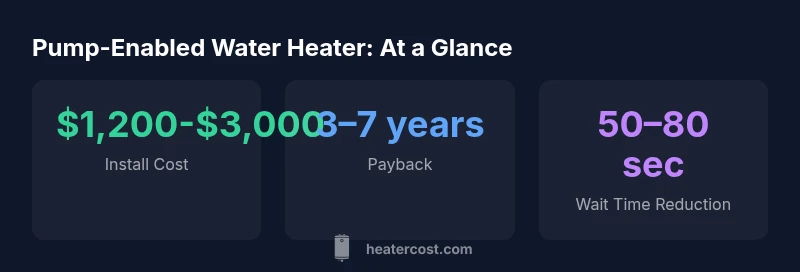
| Water heater with pump | $1,200-$3,000 | Moderate savings | Significantly reduced wait time |
| Tankless with pump | $1,500-$4,000 | High efficiency | Very fast hot water |
Got Questions?
What is a water heater with pump and how does it work?
It uses a recirculation pump to move hot water through a loop back to fixtures, delivering hot water faster. When you open a hot water tap, the loop pushes hot water toward the faucet, reducing wait times and water waste. Proper controls ensure the pump runs only when needed.
A recirculating pump moves hot water in a loop so hot water is ready at taps, saving water and time.
Can I retrofit a pump to an existing water heater?
Yes, many retrofit kits can be added to existing heaters, but proper piping and electrical connections are required. A pro should assess loop routing and valve placement to ensure efficiency and safety.
You can retrofit a pump, but you’ll likely need professional help for proper piping and wiring.
Do recirculating pumps save energy?
Recirculating pumps reduce water waste and associated heat losses, but electricity use varies with run time and control strategies. Savings depend on usage patterns, insulation, and whether the pump operates only when needed.
They can save energy if you control when the pump runs and insulate the pipes.
What should I consider when choosing a pump system?
Consider loop design (full vs. partial), compatibility with your heater, insulation quality, and the availability of smart or timer-based controls to maximize efficiency and convenience.
Look at loop design, compatibility, and smart controls when choosing a pump.
How long does installation take and what permits are needed?
A typical retrofit or new installation may take a day or two, depending on scope. Local permits and inspections may be required; confirm with your installer and local building department.
Most installs take one to two days; check local permit requirements with your contractor.
“A water heater with pump can improve comfort and reduce water waste when sized correctly and paired with smart controls. Quality installation and proper sizing are essential for true energy savings.”
The Essentials
- Choose a pump-enabled setup for faster hot water delivery.
- Costs vary by home, controls, and labor.
- Recirculation pumps save water with proper controls.
- Regular maintenance improves reliability and efficiency.
- Use a licensed installer for permits and warranty.