Water Heater Shower: Costs, Types, and Maintenance
Explore water heater shower options, compare storage and tankless systems, estimate installation and operating costs, and learn maintenance tips to keep hot water reliable and efficient.


A water heater shower describes the setup where hot water is supplied to the shower from a home's water heating system. The configuration can involve a traditional storage tank, a tankless on-demand unit, a heat pump water heater, or a solar-assisted system. Each option affects how quickly hot water reaches the shower, how much energy is consumed, and the upfront cost. For homeowners and renters evaluating a remodel or new construction, understanding this distinction is essential for comfort, reliability, and total cost of ownership. In this guide, we examine how these systems work, what trade-offs they present, and how to choose the best fit for your home. According to Heater Cost, choosing the right water heater shower setup has meaningful implications for energy bills and long-term maintenance. The key is to map demand, climate, and installation constraints to the most cost-effective solution.
What is a water heater shower?
A water heater shower describes the setup where hot water is supplied to the shower from a home's water heating system. The configuration can involve a traditional storage tank, a tankless on-demand unit, a heat pump water heater, or a solar-assisted system. Each option affects how quickly hot water reaches the shower, how much energy is consumed, and the upfront cost. For homeowners and renters evaluating a remodel or new construction, understanding this distinction is essential for comfort, reliability, and total cost of ownership. In this guide, we examine how these systems work, what trade-offs they present, and how to choose the best fit for your home. According to Heater Cost, choosing the right water heater shower setup has meaningful implications for energy bills and long-term maintenance. The key is to map demand, climate, and installation constraints to the most cost-effective solution.
How shower hot water is heated: tanked vs tankless
The fundamental difference between tanked and tankless systems is when the water is heated. Tanked systems store hot water in a reservoir and release it as needed, which can provide instant hot water but incurs standby heat loss. Tankless systems heat water on demand using a heat exchanger, which can reduce wasted energy but may require higher flow rates to meet simultaneous hot water needs. In practice, many homes use a hybrid approach combining a storage heater with a small stand-by buffer or a point-of-use heater for peak loads. The choice affects recovery times, hot-water delivery during peak usage, and the complexity of installation. The heater type also influences what you pay upfront and in ongoing energy costs. Heater Cost's analysis shows that the relative savings depend on usage patterns, climate, and how well the system is matched to household needs.
Types of water heaters for showers
There are several configurations that homeowners consider for showers:
- Storage tank water heaters (gas or electric) that hold hot water in a tank and deliver it as needed.
- Tankless on-demand water heaters (gas or electric) that heat water as it flows through a heat exchanger.
- Heat pump water heaters that use ambient heat to heat water more efficiently than traditional electric units.
- Solar thermal systems with a back-up heater to provide hot water using solar energy when available.
- Hybrid systems that combine heat-pump efficiency with a small storage tank for quick recovery.
Each type has distinct installation requirements, efficiency profiles, and upfront costs. Heater Cost notes that the best choice depends on hot-water demand, climate, electrical/gas infrastructure, and local energy pricing.
How to estimate your hot-water demand
Estimating demand starts with understanding your shower and overall hot-water use. A single shower typically consumes hot water at a rate that depends on the showerhead and water pressure. If your household often uses more than one hot-water appliance at the same time, you will need a larger system or staged heating. A practical approach is to calculate the flow rate you expect during peak use and then compare this to the capacity of the heater you are considering. For storage tanks, look at the First Hour Rating (FHR) to ensure the unit can supply enough hot water during the first hour after daily usage. For tankless systems, consider the maximum gallons per minute (GPM) you may need when multiple fixtures run simultaneously. This kind of sizing minimizes cold-water sandwich effects and ensures consistent comfortable showers.
Energy efficiency and operating costs
Energy efficiency is a major factor in total ownership cost. Traditional electric storage heaters tend to have higher standby losses, while gas models may incur higher fuel costs depending on local prices. Tankless units offer the allure of continuous hot water with potentially lower operating costs, but the initial investment can be higher. Efficiency is often expressed as energy factor (EF) or uniform energy factor (UEF) in newer models, with higher numbers indicating less energy wasted. When evaluating options, compare EF/UEF ratings, installation complexity, space requirements, and ongoing energy costs. Heater Cost's analysis emphasizes that even small improvements in efficiency, when matched to a household's hot-water profile, can translate into meaningful savings over time. In addition, climate and seasonal usage patterns can affect performance, so consider annual energy cost projections rather than a single-month snapshot.
Installation considerations and cost ranges
Installation costs for a water heater shower vary widely by system type, fuel source, and complexity. A basic electric storage water heater might require less invasive work and cost less upfront than a high-efficiency gas tankless or solar-assisted system. Labor, venting, plumbing, and permit requirements can all influence price. To give you a sense of scale without promising exact totals, typical installed costs in many markets range from several hundred to several thousand dollars. For example, electric storage systems may start in the lower hundreds and go up to around a thousand dollars for simple replacements; gas tanked or tankless setups often run higher; solar-assisted configurations can be substantially more. Always obtain multiple quotes and verify local code compliance. Heater Cost's estimates reflect regional variation and the ongoing value of energy efficiency investments.
Maintenance, longevity, and upgrade paths
Longevity depends on the system type, water quality, and maintenance. Tank heaters pose corrosion risks and may require anode rod replacement to protect the tank, while tankless units have fewer corrosion concerns but may require regular descaling in hard water regions. Solar or heat-pump systems need periodic checks of refrigerant levels, solar collectors, and pump operation. Schedule annual or semi-annual maintenance with a qualified technician and follow the manufacturer's service intervals. Proactive maintenance reduces the chance of leaks, extends the life of components, and helps preserve efficiency. If you are upgrading, plan for compatibility with existing plumbing and electrical/gas lines, potential venting changes, and whether a hybrid approach better fits your home and budget. Heater Cost emphasizes evaluating total cost of ownership over initial price when planning long-term comfort.
Making the right choice for your home
The decision between tanked and tankless, electric and gas, or a hybrid system should be guided by hot-water demand, energy costs, available space, and budget. Start by calculating your peak hourly hot-water usage and then map that against the capacity of candidates. Consider installation constraints such as venting, electrical service, and potential retrofits. If you live in a cool climate with high hot-water demand, a heat-pump or solar-assisted system with back-up can deliver substantial energy savings over time. For renters, prioritize solutions that are portable, reversible, or allowed by the lease, focusing on efficiency and reliability. Heater Cost team suggests documenting your findings and seeking professional assessments to avoid common pitfalls like undersizing or oversizing, which lead to cold showers or wasted energy.
Practical tips for renters and small spaces
In apartments or small homes, space optimization becomes crucial. Look for compact tankless units or near-wall installations that minimize space and maximize efficiency. If permitted, install a point-of-use heater near the shower to reduce heat loss in long piping runs. When choosing a model, prioritize reliability, ease of maintenance, and existing utility connections. Regular flushing, checking for leaks, and scheduling professional inspections at least once a year can extend the life of the system and help you avoid emergency replacements. Finally, compare energy-saving features such as high EF/UEF ratings, insulation, and heat-pump assistance to find a setup that fits your budget and comfort needs while reducing utility costs.
Comparison of common water heater shower systems
| Model Type | Avg Lifespan | Typical Energy Use (kWh/mo) |
|---|---|---|
| Storage Water Heater (40 gal) | 8-12 years | 250-400 |
| Tankless Water Heater (On-Demand) | 20+ years | 50-150 |
| Heat Pump Water Heater | 10-15 years | 100-250 |
| Solar Thermal with Back-Up | 15-25 years | 0-100 |
Got Questions?
What is a water heater shower?
A water heater shower uses heated water supplied by a home's water heater. Depending on the system, hot water is stored in a tank or heated on-demand as it flows to the shower.
A water heater shower uses heated water from your heater, either stored or heated on demand, to deliver hot water to your shower.
Tankless vs storage: which saves more energy?
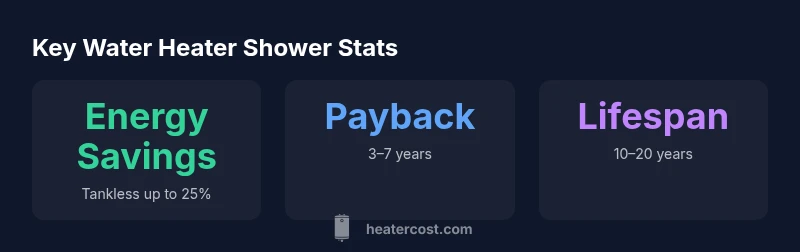
Tankless systems heat water on demand, reducing standby losses and often saving energy over time. Storage heaters keep a ready reservoir, which can be simpler and cheaper to install but may waste energy through standby heat.
Tankless heats on demand and saves energy; storage stores hot water and may waste energy when idle.
How do I estimate my hot-water demand?
Assess peak usage, number of showers, baths, and appliances using hot water. Use the First Hour Rating for storage heaters and flow rates for tankless units to determine capacity.
Count your simultaneous hot-water needs and match the unit to handle that demand.
What maintenance does a water heater shower require?
Annual flushing, check anode rod (if applicable), inspect venting and connections, and replace worn parts. Solar and heat-pump systems may require specialty maintenance.
Flushing and general checks keep your system efficient.
Can renters install a water heater shower?
Renters typically rely on landlord-provided systems. When allowed, consider portable or small tankless options or heat-pump upgrades with landlord approval.
Check with your landlord about installation options.
What is the typical payback period for upgrading?
Energy-efficient upgrades often pay back within several years, depending on usage, fuel type, and local energy prices.
Upgrades can pay for themselves in a few years if usage is high.
“Reliable hot water is a combination of right sizing, efficient technology, and sound installation. A well-matched water heater shower system can reduce energy waste and deliver comfort for years.”
The Essentials
- Start by calculating your hot-water needs
- Compare tanked vs tankless based on usage
- Consider installation space and costs
- Prioritize energy efficiency ratings
- Factor in maintenance when budgeting