Water Heater Pot: Costs, Use, and Efficiency Explained
Explore the cost implications, usage scenarios, and efficiency tips for the water heater pot. This guide clarifies terminology, compares heat sources, and helps homeowners make informed decisions.


Definition: A water heater pot is not a standard appliance term. In this guide, it refers to a portable pot used to heat small quantities of water with a compatible heat source (stovetop, induction, or portable heater). It’s used in camping, emergencies, and small kitchens; efficiency and safety depend on material, lid design, and insulation.
What is a water heater pot? Terminology and scope
The phrase "water heater pot" is not a widely used term in plumbing or appliance catalogs. In this guide, we treat it as a portable pot designed to heat small quantities of water using an external heat source, such as a gas burner, electric coil, induction plate, or camp stove. The concept is practical in homes with limited hot-water demand, in apartments without built-in hot water taps, or for emergency preparedness kits. Common materials include stainless steel, aluminum, and copper, each with its own heat response and durability. Lid design matters: tight-fitting lids reduce heat loss and speed up heating, while vented lids can prevent pressure buildup in sealed pots. The size of the pot correlates with the volume of water you can heat at once, which affects energy use and time. According to Heater Cost, clarifying this terminology helps homeowners estimate costs and safety requirements when evaluating different heat sources and pots.
Energy sources and efficiency considerations
The efficiency of a water heater pot depends on the heat source and the vessel design. Gas stoves heat quickly but can waste energy if burners run wide when you only need a small volume. Electric coils offer steady heat but may take longer for a boil. Induction plates are efficient for compatible pots, but the cookware must be designed for induction. A well-sealed lid minimizes heat loss, and a snug-fitting lid plus insulated handles reduces energy waste and risk of burns. Material choice matters: stainless steel heats evenly and resists corrosion, aluminum is lightweight but can dent, and copper conducts heat rapidly but costs more. For many households, the choice comes down to availability, safety features, and how often you heat small volumes of water. According to Heater Cost, choosing the right heat source and vessel can shave energy use by noticeable margins over time.
Cost considerations and budgeting
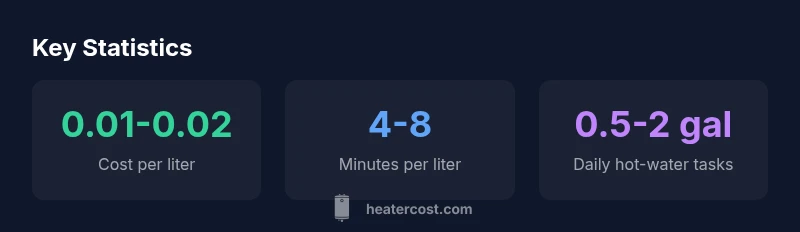
Estimating the cost to heat water with a water heater pot starts with energy use and local energy prices. A typical liter heated from near room temperature to a boil requires approximately 0.05-0.12 kWh, depending on starting temperature and pot efficiency. At common retail energy prices, this translates to about $0.01-$0.02 per liter. If you heat 2 liters per session, that’s roughly $0.02-$0.04 per session. When you add the upfront cost of the pot and any lids or insulation, you can compare scenarios by multiplying per-use energy costs by expected weekly uses to estimate monthly costs. Heater Cost analysis suggests focusing on efficiency offsets (lid use, heat retention, and matching heat source to pot material) to maximize value over time.
Practical usage scenarios and best practices
Use cases vary from quick hot-water needs like tea or instant meals to small-batch cleaning. Start by selecting a pot sized for the maximum water you intend to heat. Fill only to a safe level to avoid boil-over. Always use a heat source that matches the pot’s material and base geometry. Keep the lid on to trap heat and reduce heating time. Use a heat-safe trivet and insulated handles when moving a hot pot. For safety, never leave heating water unattended, and allow water to cool before storage or disposal. When using portable stoves, ensure proper ventilation and stable surfaces to prevent tipping. By following these practices, you can reduce energy waste and speed up heating, while keeping safety front and center.
Safety and maintenance
Safety is the top priority with any water-heating vessel. Always inspect handles, lids, and seals for wear before use. Use heat-resistant gloves and avoid placing metal tools in the pot while hot. Clean the pot after use to prevent mineral buildup, especially if you have hard water. If you notice discoloration or unusual odors, stop using the pot and consult manufacturer guidelines. Store pots with loose lids to prevent warping and keep the pot dry to avoid corrosion. A well-maintained water heater pot can last many seasons with minimal maintenance, particularly when you dry it after washing and avoid stacking heavy objects on top of it.
How to compare options and choose a model
When evaluating water heater pots, prioritize material durability, lid design, and compatibility with your heat source. Stainless steel offers durability and even heating, while copper provides excellent thermal conductivity but higher cost. A tight-sealing lid and ergonomic handles improve safety and usability. Consider stackable designs for limited cabinet space, and check for compatibility with induction or gas if you use modern stoves. Finally, estimate yearly energy use by multiplying the per-use energy by your anticipated weekly heats and comparing across models to determine the best overall value.
Real-world scenario and quick heuristics
Suppose you need 1.5 liters of hot water for coffee and soup. A medium-sized stainless pot with a snug lid on a gas stove could reach a boil in roughly 6-9 minutes, depending on burner size. If your home uses electricity, an induction-capable pot may reduce heating time to about 4-7 minutes. In both cases, keeping the lid on reduces energy waste by trapping heat. The key heuristic is to match pot size to your typical task volume and to use a lid and insulation to maximize efficiency. This approach helps you estimate both time and energy costs with reasonable accuracy.
Common mistakes to avoid
Avoid overfilling the pot, which can cause boil-overs. Don’t use a pot with damaged handles or warped lids. Don’t heat water longer than needed; heat to the desired temperature and turn off the heat early if you’re not consuming immediately. Avoid using incompatible heat sources without confirming pot compatibility. Finally, neglecting lid use increases heat loss and energy consumption, undermining efficiency goals. By steering clear of these mistakes, you’ll heat water more safely and efficiently.
Energy and heat-time scenarios for water heater pot configurations
| Scenario | Heat Source | Typical Time to Heat (min) | Energy Use/Unit | Notes |
|---|---|---|---|---|
| Stovetop pot heating water | Gas stove | 6-10 | 0.12-0.25 kWh per liter | Efficiency varies with burner size and pot design |
| Electric kettle style pot | Electric coil or hot plate | 4-6 | 0.09-0.18 kWh per liter | Typically faster for small batches |
| Induction plate pot | Induction | 3-7 | 0.08-0.16 kWh per liter | Requires compatible vessel; highly efficient |
Got Questions?
What is a water heater pot?
In this guide, a water heater pot refers to a portable pot used to heat small quantities of water with a suitable heat source. It is not a standard appliance term, but a practical concept for camping, emergencies, and small kitchens.
A water heater pot is a portable pot used to heat small amounts of water with a heat source like a stove or induction plate. It isn’t a standard term, but it’s useful for small tasks and emergencies.
Is a water heater pot energy-efficient?
Efficiency depends on heat source, pot material, lid use, and insulation. Using a tight lid and choosing material suited to your heat source improves efficiency. In general, induction-compatible pots with lids perform best for small-batch heating.
Efficiency depends on the heat source and how well you seal and insulate the pot. A lid and the right material make a big difference.
What costs should I expect for a water heater pot?
Initial pot cost varies by material and size, typically ranging from budget to mid-range. Per-use energy costs are small, commonly around a penny or two per liter, depending on energy prices and temperature rise.
Expect a range for the pot itself, and small energy costs per use, depending on how much water you heat and your energy price.
How do I use a water heater pot safely indoors?
Always use a stable surface, keep children away, and ensure adequate ventilation for any combustion heat source. Use heat-resistant gloves when handling hot vessels and never leave heating water unattended.
Use a stable surface, vent if needed, and keep kids away. Wear gloves and never leave the pot unattended while heating.
Do I need maintenance for a water heater pot?
Yes. Clean mineral buildup, inspect handles and lids, and store pots dry. If you see corrosion or leaks, discontinue use and consult guidelines.
Yes—clean regularly, check for wear, and store properly. Stop using if you notice damage.
Can I replace a water heater pot with a faucet's hot water?
A water heater pot is for small, batch heating. In many homes, you can combine hot water from a faucet with a pot for specific tasks, but it won’t replace a full hot-water system for large-volume needs.
It can supplement hot water, but it won’t replace a full hot-water system for bigger tasks.
“Before buying or using a water heater pot, quantify your daily hot-water needs and compare energy costs against the upfront price. Small gains in efficiency add up over time.”
The Essentials
- Define water heater pot clearly before shopping
- Match heat source to pot material for efficiency
- Use a lid to reduce energy use and speed heating
- Estimate costs based on volume and frequency of use
- Prioritize safety and maintenance to extend life