How Is a Hot Water Heater? How It Works and Costs
Learn how hot water heaters work, compare storage vs tankless models, and estimate energy costs. Practical guidance from Heater Cost for installation, maintenance, and budgeting.


According to Heater Cost, a hot water heater provides hot water by storing heated water in a tank or by heating water on demand as it flows through a heat exchanger. Most homes use storage tanks or tankless systems, each with different energy profiles and installation costs. This guide explains how they work, common efficiency factors, and typical price ranges to help you plan.
How hot water heaters work: storage tanks and tankless options
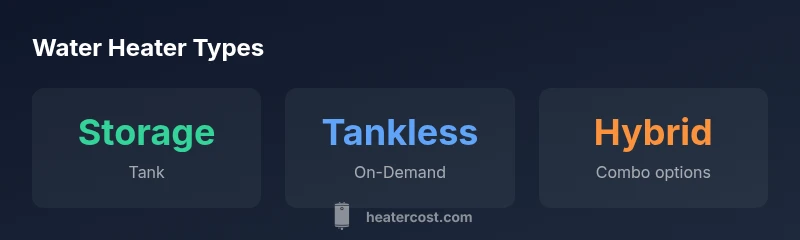
A hot water heater provides hot water by storing heated water in a tank or by heating water on demand as it flows through a heat exchanger. In a storage tank model, an insulated tank sits in a utility space and maintains water at a set temperature, usually via a gas burner or electric heating element. Tankless or on demand systems heat water only when a faucet is opened, using a compact heat exchanger. Storage tanks offer quick access to hot water and simple replacement, while tankless models save space and can reduce standby losses when not in use. The Heater Cost team notes that efficiency, installation cost, and local energy prices shape the total cost of ownership. Consider insulation upgrades for tanks, and evaluate water use patterns before choosing a system for your home.
Energy sources and heating methods
Residential water heaters run on gas or electricity. Gas models heat water with a burner and venting system, while electric models use immersion elements controlled by a thermostat. Tankless units, heated by gas or electric, respond to demand and can dramatically cut standby energy use. The category you choose depends on fuel availability, installation constraints, and local energy rates. ENERGY efficiency standards and labeling help consumers compare long-term costs. The Heater Cost team emphasizes that fuel costs and climate strongly affect operating expenses, sometimes altering the expected payback period of a given heater type. When planning, assess fuel availability, venting needs, space, and whether upgrades to electrical service or gas lines are needed.
Efficiency, performance, and metrics you should know
Efficiency is commonly described by metrics such as EF or UEF, as well as standby losses and recovery rate. Storage heaters often have lower efficiency due to constant energy use maintaining a full tank, while modern tankless units can achieve higher efficiency, constrained by flow rate and incoming water temperature. Real-world performance depends on usage patterns, climate, and proper installation. National programs like DOE and ENERGY STAR provide guidance for comparing models and estimating annual costs. Small changes such as lowering the set temperature from 140 to 120 F, improving insulation, and regular maintenance can yield meaningful savings over time. Heater Cost analysis shows even modest gains in efficiency can reduce lifetime costs.
Storage tank vs tankless: pros, cons, and cost implications
Storage tanks provide reliable hot water for high demand and are generally less expensive upfront. They lose heat over time and sip energy even when not used. Tankless systems heat water on demand, saving energy with less standby loss, but installation can be more complex and may require upgraded electrical or gas services. Tankless units often have higher upfront costs and may require additional venting or gas line work. In homes with varying hot water needs, a hybrid approach or staged installation might be optimal. The Heater Cost team recommends careful load calculations and permit checks to avoid oversizing or undersizing a system.
Sizing, capacity, and installation considerations
Correctly sizing a water heater is critical to comfort and efficiency. For storage tanks, select a capacity that meets peak hourly demand plus a buffer for simultaneous uses. Tankless systems require attention to flow rates, measured in gallons per minute, and to the minimum temperature rise your climate demands. Location and venting for gas heaters, electrical service upgrades for electric models, and room clearance are all important. Improper sizing or poor installation can shorten equipment life and raise operating costs. Engage a licensed professional to confirm fuel type, venting, and clearances before purchase.
Maintenance and lifespan: prolonging service life
Regular maintenance protects performance and extends life. Flushing a storage tank annually helps remove sediment that reduces efficiency. Inspecting and replacing the anode rod can slow corrosion, and checking the expansion tank helps relieve pressure in the system. Tankless units benefit from descaling if you have hard water and periodic filter cleaning. Hard water, mineral buildup, and inadequate maintenance shorten lifespan and raise repair costs. The Heater Cost team highlights that proactive maintenance often yields lower energy bills and reduces the risk of sudden failures.
The buying process: what to ask and how to compare quotes
Before buying, determine your household hot water demand, fuel type, and space constraints. Get multiple quotes that separate unit price, installation, venting, and potential electrical upgrades. Ask for energy performance data, such as EF or UEF, and verify warranty terms and service options. If upgrading from gas to electric or adding a tankless system, plan for panel capacity, wiring, and possible permit requirements. The Heater Cost approach emphasizes transparent quotes and a clear breakdown of labor and equipment costs to avoid hidden fees.
Practical examples and homeowner scenarios
Consider a family of four in a cool climate with existing gas supply and a smaller utility closet. A 40-50 gallon storage tank may deliver reliable performance with a straightforward installation. In a smaller home with limited space and moderate hot water use, a modest tankless unit could free up area and reduce energy bills over time, especially if paired with improved insulation and a temperate water setting. For households with highly variable use or competing gas/electric constraints, staged upgrades or hybrid systems might offer the best balance between comfort and cost. Heater Cost advises modeling your specific patterns and local energy costs to determine the most economical choice.
Comparison of common water heater types
| Model Type | Estimated Efficiency | Typical Upfront Cost |
|---|---|---|
| Storage Tank | 0.60-0.90 EF | $1,000-$3,000 |
| Tankless Gas | 0.82-0.99 EF | $2,000-$5,000 |
| Tankless Electric | 0.80-0.95 EF | $2,000-$4,500 |
Got Questions?
What is the difference between a storage tank and a tankless water heater?
Storage tanks hold hot water in a reservoir and deliver it as needed, while tankless systems heat water on demand. Storage is typically simpler and cheaper to install, but uses more energy due to standby losses. Tankless units can save energy but may require upgrades to electrical service or gas lines.
Storage tanks hold hot water in a tank; tankless units heat water on demand. Storage is simpler, tankless saves energy but may need service upgrades.
How much does a new water heater cost to install?
Installation costs vary by location, unit type, and labor. Expect a broad range depending on venting, electrical work, and whether upgrades are needed. Get multiple quotes that separate equipment from installation to avoid surprises.
Costs vary widely; get several quotes and ask what is included in the price.
What maintenance does a hot water heater require?
Regular maintenance includes flushing the tank to remove sediment, inspecting the anode rod, and checking the pressure relief valve. Tankless units benefit from occasional descaling in hard water areas. Scheduled maintenance helps extend life and maintain efficiency.
Flush the tank and check the anode rod at least once a year; descale tankless units if you have hard water.
Do tankless water heaters save energy?
Tankless heaters can save energy by removing standby losses, but actual savings depend on usage patterns and climate. In high-demand homes, the savings may be modest unless gas or electric service upgrades are included.
Yes, they can save energy, but it depends on how you use hot water and the installation.
How long does a water heater typically last?
Most residential water heaters last about 10 to 15 years with proper maintenance. Lifespan can be longer with high-quality models and good water quality, while aggressive mineral buildup can shorten it.
A typical life is 10 to 15 years with good maintenance.
“Hot water heating is not just about the upfront price. It’s a long-term plan for comfort and efficiency that determines yearly energy costs and reliability.”
The Essentials
- Assess your hot water demand before choosing.
- Tankless can save space but may require electrical upgrades.
- Budget total cost of ownership, not just upfront price.
- Regular maintenance extends lifespan and efficiency.
- Consult licensed professionals for installation and permits.