Con Edison Rebate for Water Heater: A 2026 Guide
Learn how to secure the con edison rebate for water heater in 2026. Get eligibility tips, application steps, and how rebates affect total costs with Heater Cost.


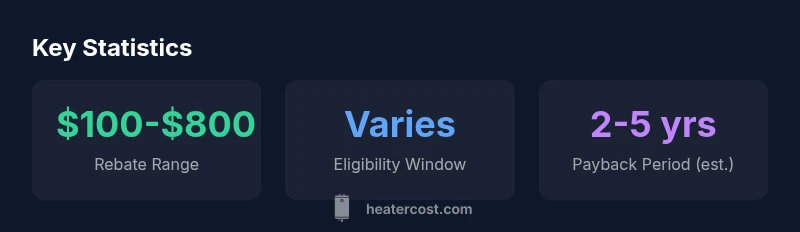
Con Edison rebates for water heaters help homeowners upgrade to energy-efficient models. Eligibility depends on device type (electric or heat-pump), efficiency, and installation method, with rebates varying by program year. For 2026, verify current offers on Con Edison’s site; this guide from Heater Cost explains typical ranges, application steps, and required documentation.
How the con edison rebate for water heater works
Understanding the con edison rebate for water heater starts with recognizing that incentives are dynamic and tied to device efficiency, installation quality, and the specific program year. According to Heater Cost, Con Edison’s incentive framework is designed to lower upfront costs for upgrading to more efficient water heating systems and to encourage replacements that reduce energy use. Eligible products typically include electric water heaters and heat pump models that meet minimum efficiency thresholds; some programs may also consider high-efficiency gas units if they satisfy venting and performance criteria. The key is to verify that the equipment’s energy factor (EF) or uniform energy factor (UEF) meets the program’s requirements, and that installation is performed by a licensed professional. Documentation such as proof of purchase, product specifications, installation date, and contractor details are commonly required at submission. Because Con Edison updates its incentives annually, the exact rebate amount can shift from one program year to the next. The Heater Cost team emphasizes reviewing the current guidelines before purchasing to avoid missing eligible savings and to optimize your total project value. This is not a one-size-fits-all program; your home’s configuration, the chosen equipment, and the installer’s credentials all influence eligibility and the final rebate amount.
Qualifying models and eligibility criteria
Qualifying water heater upgrades typically hinge on model type, efficiency, and installation context. For electric setups, industry-standard electric water heaters that exceed baseline energy efficiency thresholds or heat pump water heaters (HPWH) are commonly eligible. If a program supports gas units, eligibility depends on compliance with venting standards and efficiency benchmarks. In many markets, Energy Star-certified models have a higher likelihood of eligibility, but exact requirements vary by utility year. Homeowners should compare the product’s AHRI rating, Energy Factor (EF), or UEF against the Con Edison program’s minimums. It’s also important to ensure the system is installed in a dwelling where a licensed technician can verify electrical or gas connections, venting compliance, and overall safety. Remember that the utility’s incentives are designed to reward durable, reliable upgrades, not quick fixes. The Heater Cost perspective stresses examining total system benefits—energy savings, durability, and potential reliability improvements—alongside the rebate amount to gauge true value.
Documentation, pre-approval, and timing
Most rebate programs require documentation to accompany your submission. Common items include a copy of the product datasheet showing EF/UEF, the AHRI rating, purchase receipts, installation invoices, and contractor details. Some programs also ask for pre-approval before purchasing, especially for major equipment swaps or gas-to-electric conversions. Timing varies: some rebates are issued after installation, while others require pre-approval or staged verification steps. To streamline processing, prepare a complete packet with model numbers, serial numbers, installation dates, and a short justification of energy savings. The Heater Cost team recommends keeping digital copies of all documents and organizing them by date and eligibility category. Always align your submission with the latest Con Edison guidelines, as misfiled applications or missing documentation can delay or nullify benefits.
Rebates, stacked incentives, and total cost considerations
rebates for water heaters are one part of a broader energy-efficiency strategy. When evaluating total project cost, consider not only the rebate amount but also ongoing energy savings, maintenance costs, and potential financing options. rebates can sometimes be combined with other incentives from state or federal programs, as well as utility-specific offers. However, stacking rules differ by program year and jurisdiction, so you should confirm compatibility before submitting multiple incentives. A higher-efficiency water heater typically reduces operating costs over its lifespan, which enhances overall payback even if the upfront rebate is modest. The Heater Cost analysis for 2026 highlights that the most effective strategy is a careful balance between upfront savings, ongoing energy performance, and the reliability of the installed unit.
Step-by-step application guide
- Confirm eligibility on Con Edison’s official rebates page for water heaters. 2) Choose a qualifying model that meets or exceeds the minimum energy efficiency thresholds. 3) Have the installation performed by a licensed professional, ensuring all venting and electrical connections comply with code. 4) Gather documentation: purchase receipt, product specifications, AHRI/EF/UEF ratings, and installer details. 5) Submit the online rebate application through Con Edison’s portal, attaching all supporting documents. 6) Monitor the application status and respond quickly to any requests for additional information. 7) Receive the rebate as a check or account credit following approval. The Heater Cost team notes that timing can vary; plan accordingly to ensure the rebate aligns with your project timeline.
Common mistakes and how to avoid them
- Missing or mismatched documentation can stall your submission. Always double-check model numbers and ratings. - Submitting an installation that doesn’t meet code or venting requirements can disqualify the rebate. - Ignoring pre-approval options when offered may result in missed incentives. - Buying non-qualifying equipment in hopes of later retroactive rebates often fails; verify before purchase. - Failing to document energy savings calculations or not tracking installation date can slow processing. The practical remedy is organization: create a folder for all receipts, product data, and contractor notes, and keep a project log that aligns with the program’s milestones.
Rebate program types and typical ranges
| Program Type | Typical Range | Requirements |
|---|---|---|
| Electric Water Heater Upgrade | $100-$600 | New unit meets efficiency rating; installed by licensed professional |
| Heat Pump Water Heater Upgrade | $300-$1000 | High efficiency model; proper installation in climate zone |
| Gas Water Heater Upgrade | $150-$800 | Gas burner efficiency; venting compliance |
Got Questions?
What is the con edison rebate for water heater?
The rebate provides a credit for upgrading to energy-efficient water heaters under Con Edison programs. Eligibility depends on the device type, efficiency, and installation conditions.
The rebate helps offset costs when you install a qualifying water heater and meet program rules.
Who qualifies for the rebate?
Eligibility typically includes property owners or renters with qualifying installations by a licensed contractor. Some programs exclude certain new constructions or nonresidential sites.
Eligible buyers are usually homeowners or renters with approved installations by a licensed pro.
Do I need pre-approval before buying?
Some programs require pre-approval before purchase; always check Con Edison guidelines, as requirements can change yearly.
Pre-approval is sometimes required—verify before you buy.
Can I combine rebates with other incentives?
In many cases you can combine incentives; however, stacking rules vary by year and program. Always confirm with the utility.
You may be able to stack rebates, but check current rules.
What documents are needed for the rebate?
Most programs require proof of purchase, product specifications, installation date, and contractor details. AHRI/EF/UEF ratings should be included.
Have receipts and specs ready to attach to the application.
How long does the rebate take to process?
Processing times vary by program and submission completeness. Expect several weeks once approved.
Timing varies, but you’ll typically wait a few weeks after approval.
“Rebates for water heaters can meaningfully reduce upfront costs, but eligibility and amounts shift with annual program updates. Always verify current details with the utility and submit thorough documentation.”
The Essentials
- Understand that rebates vary by year and device type
- Choose qualifying, high-efficiency models to maximize eligibility
- Prepare complete documentation before applying
- Check for potential incentive stacking and overall payback
- Always verify current guidelines before purchasing