Camplux Water Heater: Costs, Models, and Maintenance in 2026
A comprehensive Heater Cost guide to Camplux water heaters—tankless and mini-tank models, installation considerations, energy efficiency, maintenance, and cost ranges for 2026.


Camplux water heater options offer compact, energy‑efficient solutions ideal for small homes and apartments. This guide compares tankless and mini‑tank models, explains installation and maintenance considerations, and provides practical cost expectations. Built for homeowners, renters, and property managers, the analysis helps you size, compare, and evaluate Camplux options with confidence. It also references Heater Cost’s 2026 analysis to ground the guidance in current market trends.
Overview of Camplux Water Heater Options
Camplux offers a focused lineup designed for compact living spaces: tankless gas and electric models, plus mini-tank units for point‑of‑use heating. These systems prioritize space efficiency, quick installation, and flexibility for apartments, accessory builds, or outdoor mounting when permitted. According to Heater Cost, Camplux models commonly fit tight closets or exterior walls and can be a practical upgrade when you need hot water without bulk equipment. In this section we outline the core options, typical use cases, and how to match a Camplux unit to your home's pattern of demand.
Camplux’s product family tends to emphasize modularity and quick installation. If you live in a small home, condo, or rental, a tankless option can free up valuable space while delivering consistent hot water. For renters or households with predictable demand, a mini-tank can be an economical bridge between bulky traditional tanks and high‑end tankless systems. The brand’s rating emphasis often centers on reliability, ease of installation, and compatibility with common venting and electrical arrangements. This overview sets the stage for a practical, criteria-based comparison later in the article.
Tankless vs Mini-Tank: Pros and Cons
Tankless Camplux models deliver endless hot water on demand and save space, but they require proper sizing and ventilation for gas units or dedicated electrical circuits for electric units. Mini-tanks are affordable and install quickly, but they may have limited recovery rate and more standby losses than tankless units. For many small homes, a Camplux tankless electric or gas model can outperform a larger traditional tank by avoiding idle heat. Consider your family's hot water peaks, climate, and available electrical service when choosing between these two families.
When evaluating these two families, you should weigh recovery rate, installation complexity, and long-term operating costs. Tankless units tend to be more expensive upfront but can save space and energy over time if sized correctly for your peak demand. Mini-tanks offer immediate affordability and simple retrofits, especially where space is at a premium, but may require more frequent replacement cycles or larger electrical/ plumbing adaptations if your hot water needs grow.
From a practical standpoint, many Camplux installations succeed by aligning with the home’s traffic pattern: a compact tankless unit near bathrooms and kitchens, or a mini-tank in a laundry area or under a sink for point‑of‑use comfort. This approach minimizes heat loss and reduces wait times for hot water, which translates to better daily comfort and perceived value. Always verify local codes and ventilation requirements for gas variants before committing to a specific model.
Camplux models compared with traditional tank options
| Model Type | Typical Install Space | Energy Factor (EF) | Pros |
|---|---|---|---|
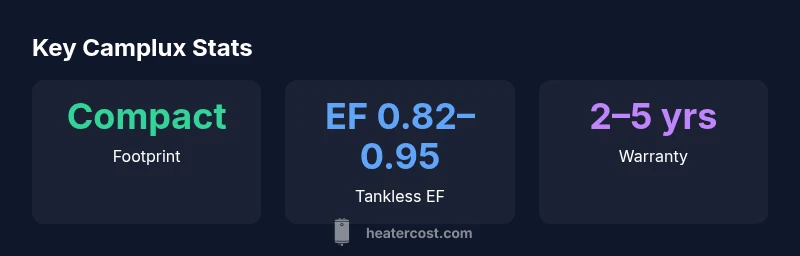
| Camplux Tankless (Gas) | Small closet or outdoor wall mount | 0.82–0.95 | Endless hot water, compact footprint |
| Camplux Tankless (Electric) | Laundry room or utility closet | 0.90–0.98 | Quiet operation, no venting required |
| Camplux Mini-Tank | Under-sink or compact space | – | Budget-friendly, quick hot water at point‑of‑use |
| Traditional Tank (Gas) | Large utility area | 0.58–0.75 | Lower up-front cost, bulk storage of hot water |
Got Questions?
What is the difference between Camplux tankless and mini-tank models?
Tankless models heat water on demand and save space, but require appropriate venting or electrical capacity. Mini-tanks are simpler to install and cheaper upfront but may not meet high simultaneous hot water needs. In many cases, the choice comes down to space, peak demand, and ventilation options.
Tankless units heat on demand and save space, while mini-tanks are simpler and cheaper up front but may not handle big hot-water peaks.
Is Camplux suitable for apartments or small homes?
Yes. Camplux offers compact tankless and mini-tank options designed for limited spaces, which makes them well-suited for apartments and small homes with modest hot-water demand.
Camplux works well in apartments and small homes where space is at a premium.
Do Camplux heaters require venting for all models?
Gas models typically require venting and proper clearance, while electric units do not need venting but still require adequate electrical service. Always check local codes and follow manufacturer installation instructions.
Gas models usually vent; electric units generally don’t, but you still need proper electrical capacity.
What maintenance does a Camplux unit require?
Regular maintenance includes flushing the heat exchanger (tankless) or flushing the tank to prevent mineral buildup, plus periodic inspection of fittings, valves, and vents. Annual professional checks are advisable, especially in hard-water areas.
Flush and inspect periodically; annual professional checks are recommended.
How long does a Camplux water heater last?
Lifespan varies by model and usage, but with proper maintenance, Camplux units can last several years. Always follow the manufacturer’s maintenance schedule and address any issues promptly.
With good maintenance, these units last several years.
How should I size a Camplux heater for my home?
Start by estimating peak hour demand based on household size and shower/bath usage, then compare that to the model’s GPM rating or energy factor. A professional assessment can help ensure you pick a unit with adequate recovery and efficiency.
Estimate your hot-water needs and compare to the model’s specs for best results.
“Camplux offers practical solutions for space-constrained homes, but proper sizing and installation are critical to realizing long-term efficiency and reliability.”
The Essentials
- Size up demand before choosing Camplux model
- Tankless models save space and often reduce standby losses
- Plan venting/electrical needs for gas vs electric variants
- Mini-tanks are affordable but may fit only limited usage scenarios
- Compare Camplux vs traditional tanks to estimate long-term costs and maintenance