How to Tell If Your Heater Core Is Bad: A Practical Troubleshooting Guide
Urgent guide to diagnosing a bad heater core: signs, steps, home checks, and when to call a pro. Learn safe, proven methods to identify leaks, heat loss, and coolant smells. Heater Cost analysis.


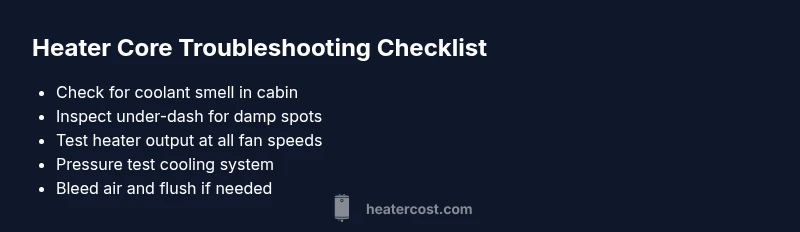
If you’re wondering how can you tell if heater core is bad, start with obvious signs: a sweet coolant smell, foggy windows inside the cabin, and weak or no heat despite a hot climate control setting. Quick checks include inspecting for coolant leaks, checking the coolant level, and performing a pressure test. If symptoms persist, seek a professional diagnosis.
Quick indicators you may be dealing with a failing heater core
When the heater core starts to fail, several telltale signs appear. You might notice a sweet, chemical odor inside the car cabin, which suggests leaking coolant. Fogged or hazy windows when the heater is on can indicate a coolant vapor seeping into the ventilation system. You may also experience weak cabin heat even when the engine temperature is normal or above normal, and you might see damp patches under the dashboard or on the passenger side footwell. According to Heater Cost, a malfunctioning heater core is commonly caused by coolant leaks, internal corrosion, or blockage from debris. Recognizing these symptoms early can prevent more expensive repairs later and helps you decide whether to flush, replace, or seek professional service.
wordCountForBlockCheck":null"/,
Steps
Estimated time: 45-90 minutes
- 1
Inspect for obvious leaks and odor
Begin with a visual inspection around the radiator hoses, heater hoses, and firewall for damp spots, crusty residue, or fresh coolant. Sniff for a sweet odor near the passenger footwell or under the hood. If you smell coolant, you likely have a leak that requires further testing.
Tip: Wear gloves and eye protection. Coolant leaks can be small but persistent. - 2
Check coolant level and condition
With the engine cold, check the reservoir and radiator fluid levels. A consistently low level can indicate a leak. Look for colored staining on the ground under the vehicle and check coolant color for signs of contamination.
Tip: Do not open the radiator cap when hot; allow the engine to cool first. - 3
Perform a cooling system pressure test
A pressure tester connected to the radiator cap or coolant reservoir can reveal leaks when the system is pressurized. If pressure drops quickly, your heater core or hoses may be compromised. This test can also help differentiate between a heater core leak and other coolant leaks.
Tip: If you don’t have the tool, a quick shop visit can perform this test safely. - 4
Test cabin heat and air distribution
Turn the heater on max and observe whether warm air is delivered consistently from the vents. If heat is weak or non-existent despite a normal engine temperature, suspect the heater core or related components like the blend door.
Tip: Check whether the blower fan operates normally at all speed settings. - 5
Check for fogging and moisture on windows
Continuous fogging on interior windows when the heater is on is a common sign of a heater core issue. Inspect for dampness near the passenger side and under the dash—these are typical leak pathways.
Tip: Capture photos of any moisture to document for a mechanic. - 6
Bleed and flush if needed
If tests indicate air in the system or minor blockages, gently bleed the cooling system and consider a controlled flush to remove rust and sediment.
Tip: Use the correct coolant type recommended by your vehicle’s manufacturer.
Diagnosis: Car heater produces little or no warm air and a sweet coolant odor in the cabin
Possible Causes
- highCoolant leaking from the heater core into the HVAC system
- mediumHeater core is clogged with rust, sediment, or scale
- lowAir trapped in the cooling system causing poor heater performance
Fixes
- easyPressure test the cooling system to locate leaks and confirm if the heater core is the source
- mediumBack-flush the heater core and replace coolant to clear clogs
- easyBleed the cooling system to remove air pockets and ensure proper circulation
Got Questions?
What are the most common signs that a heater core is failing?
Common signs include a sweet coolant odor inside the cabin, foggy windows, weak or no heat from the heater, damp patches under the dashboard, and a rising engine temperature. These indicate possible leaks or blockages in the heater core.
Look for a coolant smell, foggy windows, and weak cabin heat—these are typical signs of a failing heater core.
Can a bad heater core cause overheating?
Yes. If the heater core leaks coolant or restricts flow, the cooling system can lose capacity, causing the engine to overheat. It’s important to diagnose quickly to avoid engine damage.
A bad heater core can contribute to engine overheating if it disrupts coolant flow.
Is it safe to drive a car with a suspected heater core leak?
It’s not recommended to drive long distances with a suspected heater core leak because coolant loss can cause overheating and engine damage. Have the car inspected soon.
Try to limit driving and get the car checked as soon as you can.
Will radiator stop-leak fix a faulty heater core?
Stop-leak products may temporarily seal minor heater core leaks, but they are not a reliable long-term solution and can cause further clogging. Proper repair or replacement is usually required.
Stop-leaks aren’t a guaranteed fix and can create bigger problems over time.
How long does a heater core replacement take?
Replacement duration varies by vehicle, but most jobs take several hours and should be performed by a qualified technician due to dash removal and HVAC work involved.
Replacement is a multi-hour job that a pro should handle.
Can I prevent heater core problems in the future?
Regular cooling system maintenance, using the correct coolant, and addressing leaks early can prevent heater core problems. Schedule periodic inspections and flushing per your vehicle’s service schedule.
Regular cooling system care helps prevent heater core trouble.
Watch Video
The Essentials
- Inspect for a coolant smell and interior fog.
- Pressure-test cooling system to locate leaks.
- Bleed the system and check heat output before replacing parts.
- Seek professional diagnosis if you notice persistent leaks or overheating.
- Keep coolant levels topped and use manufacturer-recommended fluid.