Are Heater Cores Covered Under Warranty? A Homeowner Guide
Understand whether heater cores are covered by warranty, including HVAC heat exchangers and vehicle heater cores, plus exclusions, claim steps, and how to maximize coverage.


Yes, heater cores can be covered under warranty, but coverage depends on policy type and the root cause of the failure. For home heating systems, heat exchanger or heater-core coverage is common within the warranty term, provided the issue stems from manufacturing defects or material failure; leaks due to neglect or improper maintenance are typically excluded. Vehicle heater cores follow the applicable powertrain or comprehensive warranty, with many policies excluding wear, damage, or aftermarket modifications.
What counts as a heater core in different contexts
A heater core is a small heat exchanger that transfers heat from the engine or furnace to a passenger space or a home heating system. In a vehicle, the heater core is part of the cooling system and can fail due to corrosion, leaks, or blockages. In a home HVAC setup, the term often overlaps with the furnace’s heat exchanger or the dedicated heater core component tied to the air distribution system. When people ask, are heater cores covered under warranty, the answer hinges on whether you’re dealing with an automobile warranty or a residential HVAC warranty, and on the specific language of the policy. According to Heater Cost, understanding whether the failure qualifies as a covered manufacturing defect or is considered wear and tear is essential to determine eligibility.
For homeowners, warranties frequently frame coverage around heat exchangers rather than every single small part. This means a leaky or corroded heater core may be seen as a major component failure eligible for replacement under the terms of the warranty, whereas leaks caused by improper maintenance or neglect could be excluded. For vehicle owners, coverage generally aligns with the vehicle’s powertrain or comprehensive plan, with heater cores often treated as a separate issue that may be partially covered depending on the year, mileage, and policy details. The distinction between “defect” and “wear” is the key factor when you ask are heater cores covered under warranty across contexts.
How HVAC warranties typically handle heat exchangers
HVAC system warranties tend to separate coverage into two buckets: labor and parts. Heat exchangers, including heater cores, frequently receive extended coverage because failures there can be costly and originate from material defects rather than user actions. A typical HVAC warranty may offer several years for major components, with longer periods in some premium plans. When evaluating coverage, homeowners should look for language that specifies heat exchanger or heater core protection, the term length, and any required maintenance prerequisites. It’s also common to see exclusions for corrosion due to water quality, mineral buildup, or neglect, which can derail a claim. If you ask are heater cores covered under warranty in a practical sense, the answer depends on whether the issue falls under a covered defect and whether proper maintenance has been performed, as outlined in the policy.
Vehicle warranties and heater core coverage
In the automotive world, heater core coverage is usually tied to the overall warranty framework. Many manufacturers categorize heater core issues under the powertrain or a separate component warranty. The coverage can ranges from partial to full, and some policies extend corrosion-related problems specifically for heat exchangers. However, wear from engine heat, poor coolant quality, or prior damage often falls outside coverage. When a heater core fails, a dealership or insurer will typically require an inspection to determine whether the failure is due to a manufacturing defect or external factors. If the failure is deemed a defect, coverage may apply; if it’s misfueling, improper maintenance, or accidental damage, you may be responsible for costs. In short, the core question are heater cores covered under warranty for vehicles is answerable, but it requires reviewing the exact warranty language.
Common reasons heater cores are denied under warranty
Warranty denial can feel frustrating, but understanding common grounds helps you plan. Many denials hinge on: (1) improper maintenance or coolant neglect leading to corrosion, (2) pre-existing conditions or manufacturing defects outside the coverage window, (3) aftermarket modifications that void coverage, and (4) lack of proof of regular service. In the HVAC context, leaks caused by mineral buildup, improper sweating of joints, or rust due to poor water quality are frequent exclusion culprits. If you ask are heater cores covered under warranty, remember that coverage can shift with the policy’s stated exclusions, waiting periods, and service history. Keeping a clean service record and following manufacturer recommendations improves your odds of approval.
Steps to verify coverage and file a claim
To maximize your chances when a heater core issue arises, start by locating the warranty documents and identifying the exact coverage terms for heat exchangers. Gather receipts, dates of installation, service records, and a written description of symptoms (e.g., coolant odor in the cabin, cooling system leaks, or heat failure). Contact the dealer or insurer promptly, as many claims require timely notification. If denied, ask for a written explanation referencing the policy language, and consider requesting an internal review or third-party assessment. For those who are unsure whether the issue qualifies, review the warranty’s definitions of heat exchanger, manufacturing defect, and maintenance requirements, and consult the Heater Cost guidance for interpreting policy language. This proactive approach aligns with the key idea behind are heater cores covered under warranty and helps you avoid unexpected costs.
Reading the warranty terms: what to look for
When you read your warranty, focus on sections that specify heat exchangers or heater cores as covered parts, the duration, and any maintenance prerequisites. Look for exclusions that mention neglect, improper maintenance, mineral buildup, or corrosion. Check whether there are separate terms for home HVAC vs. vehicle warranties, as coverage often differs by context. Some policies require annual servicing, coolant or refrigerant checks, and proof of professional installation. If the text uses vague terms like “unforeseen failures” without defining them, push for a clarification or a glossary. Understanding these nuances helps answer the core question are heater cores covered under warranty in a way that reflects the policy you actually hold.
Maintenance practices to preserve coverage and avoid leaks
Proactive maintenance directly influences warranty outcomes. Follow recommended maintenance schedules, replace filters timely, and maintain proper coolant quality in vehicles to reduce corrosion risk. In HVAC systems, ensure water quality, clean or replace filters, and schedule regular professional inspections, especially before the heat season starts. Keeping detailed maintenance logs strengthens your claim when you need to prove that a heater core failure is not due to neglect. Remember, even if a policy mentions heater-core coverage, neglect can nullify claims. As you navigate the claim process, your preparedness—documented service history, adherence to maintenance intervals, and prompt reporting—will improve your odds when youare asked to prove are heater cores covered under warranty in your specific policy.
Real-world scenarios and recommended actions
Consider a homeowner whose furnace heat exchanger begins to leak after seven years of service. If the policy specifies heat exchanger coverage and maintenance was performed, the heater core repair may be approved under the HVAC warranty. A vehicle owner, meanwhile, might face partial coverage for a heater core leak if the issue is categorized under the powertrain warranty and the vehicle’s mileage remains within the policy limits. In both cases, gather documentation, contact the service provider promptly, and request a written estimate. If coverage seems limited, explore whether an extended warranty or an add-on plan offers broader heat-exchanger protection. Throughout these scenarios, the guiding principle is clarity on whether are heater cores covered under warranty for your situation, and how to leverage documentation to support your claim.
Warranty coverage overview by context
| Context | Typical Coverage | Common Exclusions |
|---|---|---|
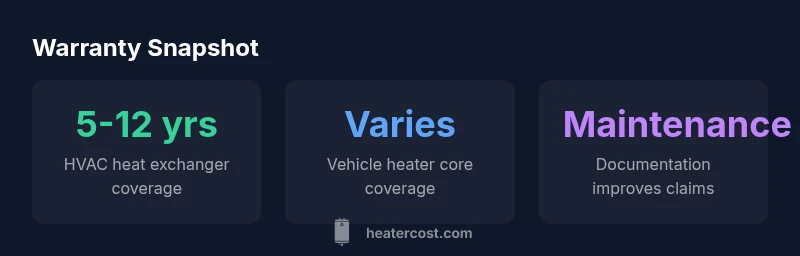
| HVAC system (home) | Heat exchanger/heater core coverage for 5-12 years (varies by policy) | Neglect, improper maintenance, pre-existing corrosion |
| Vehicle heater core | Coverage varies; often under powertrain or corrosion warranty | Wear and tear, improper maintenance, aftermarket modifications |
| Extended/warranty add-ons | Variable; may extend heat exchanger coverage | Non-coverage items, pre-existing conditions |
Got Questions?
Are heater cores covered under homeowners' HVAC warranties?
Yes, many HVAC warranties cover heat exchangers or heater cores for a defined term if the failure stems from manufacturing defects. Exclusions often apply for neglect or improper maintenance. Always check the specific policy language to confirm.
Most HVAC warranties cover heat exchangers if the leak isn’t from neglect. Always read your policy for exact terms.
Do vehicle warranties include heater core leaks?
Vehicle heater core coverage depends on the warranty type (powertrain, comprehensive, or corrosion). Some plans cover leaks caused by manufacturing defects; others exclude wear, neglect, or damage from accidents.
Coverage varies by plan. Check if the heater core is inside the powertrain or another covered category.
What parts are usually excluded from heater core coverage?
Common exclusions include neglect, improper maintenance, corrosion not caused by a manufacturing defect, and aftermarket modifications. Always verify what counts as a defect versus wear.
Watch for exclusions like neglect or aftermarket changes in your policy.
How can I verify coverage for a heater core repair?
Locate the warranty document, identify heat exchanger coverage, and review maintenance requirements. Contact the provider early, document symptoms, and request a written explanation if denied.
Start by checking the policy, then contact support with your maintenance records.
Does an extended warranty include heater cores?
Extension plans vary widely. Some add-ons broaden heat exchanger coverage, while others keep the original scope. Read the terms carefully and confirm whether heater cores are included.
Extensions differ—check terms to confirm heater-core coverage.
What should I do if coverage is denied?
Ask for a written denial citing policy language. Request a review or third-party assessment. Gather documentation and compare the decision against the policy definitions of defect and maintenance requirements.
If denied, request a formal explanation and review the policy terms.
“Warranty language around heat exchangers defines whether are heater cores covered under warranty; clear definitions of defects, maintenance requirements, and exclusions are essential for a fair outcome.”
The Essentials
- Review your policy for heat exchanger coverage before repairs
- Coverage varies by system (HVAC vs vehicle) and policy terms
- Maintain detailed service records to support claims
- Read the warranty definitions to understand exclusions